
About This Trek
Classic Everest Base Camp Trek
The 15-Day Classic Everest Base Camp Trek with Desire Adventures is the ultimate Himalayan pilgrimage. This iconic journey takes you deep into the heart of the Khumbu region, tracing the historic footsteps of legendary mountaineers like Sir Edmund Hillary and Tenzing Norgay Sherpa.
Walking alongside the rushing Dudh Koshi River, crossing high suspension bridges draped in prayer flags, and standing at the foot of the world’s highest peak, Mount Everest (8,848.86 m), is a life-changing experience that belongs on every adventurer’s bucket list.
Why You Need to Do This 15 Days EBC Trek?
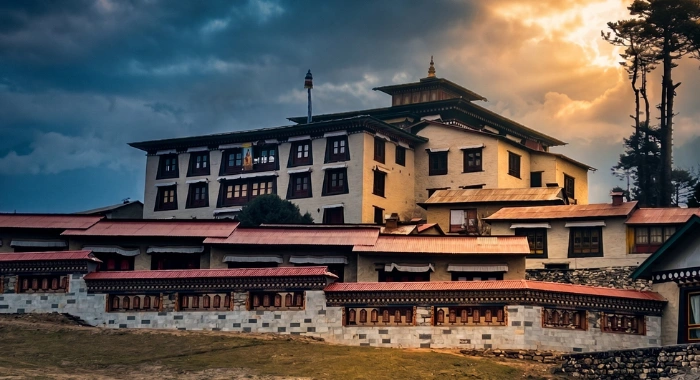
This trek is much more than just reaching a specific geographic point; it is a profound journey of personal discovery and cultural immersion. The route showcases a jaw-dropping landscape of towering 7,000 and 8,000-meter peaks, massive glaciers, and ancient Buddhist monasteries like the one at Tengboche. Beyond the scenery, the true heart of this trek lies in the opportunity to experience the warm hospitality of the Sherpa people, learn about their unique mountain culture, and witness their rich spiritual traditions firsthand.
Understanding the Difficulty Level: Is This EBC Trek Right for You?
One of the most frequent questions we receive from travelers is: “How hard is the Everest Base Camp Trek?”
We classify this trek as moderate to challenging.
- No Technical Climbing: You do not need any technical mountaineering skills, ropes, ice axes, or previous climbing experience. The entire route is a standard walking trail.
- The Real Challenge: The difficulty comes down to two factors: sustained physical exertion and altitude. You will be walking for 11 consecutive days, covering roughly 130 kilometers (80 miles) round-trip. Daily walks last between 5 to 8 hours over rocky, uneven mountain terrain with steep uphill climbs and long downhills.
- The Factor of Altitude: The trek starts at 2,840 meters in Lukla and reaches a maximum elevation of 5,545 meters at the top of Kala Patthar. As the air thins, every step requires significantly more effort than it would at sea level. However, because our 15-day itinerary includes two dedicated, built-in acclimatization rest days, this route is highly achievable for anyone with good physical fitness, a strong determination, and proper preparation.
Why Choose Desire Adventures for this Trek?
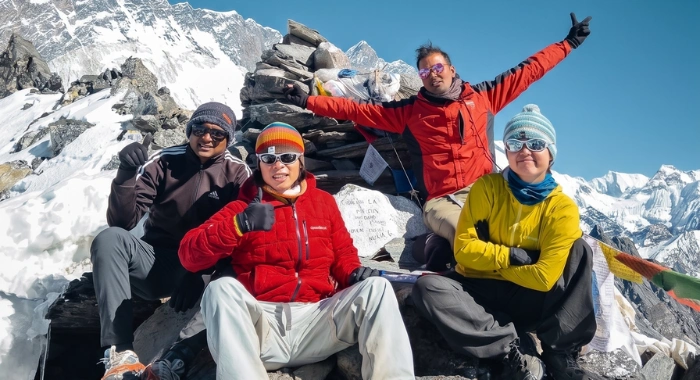
- Safety-First Altitude Management: We carry a comprehensive medical kit with a digital pulse oximeter on every trek to monitor your heart rate and oxygen levels daily.
- Expert Local Sherpa Guides: Our guides are government-licensed, fluent in English, and possess deep knowledge of local traditions, weather patterns, and safety protocols.
- Carefully Paced Itinerary: We provide two full acclimatization days (in Namche and Dingboche) to give your body the best chance of adapting to the high altitude comfortably.
- Complete Hydration & Nutrition: We offer unlimited purified drinking water daily and serve fresh seasonal fruits after dinner to keep your energy high.
- Responsible Travel Standards: We treat our porter and guiding teams with respect, providing them with fair wages, full insurance, and proper mountain gear.
What's covered
Includes & Excludes
✓ Included
- Arrival and departure transfer service (private vehicle)
- 2 nights accommodation with breakfast in Kathmandu (Tourist Star Standard Hotel) on a twin-sharing basis
- Kathmandu airport transfer for domestic flights (June to September and December to March) Private vehicle
- Ramechhap airport transfer for domestic flights (April to May and October to November) during the peak season, (private vehicle)
- Kathmandu - Lukla - Kathmandu direct flight (during June to September and December to March)
- Ramechhap - Lukla - Ramechhap flight (April, May and October, November) during the peak season
- All standard meals: (Breakfast, Lunch, and Dinner) during the trek
- Seasonal fruits, every day after dinner, during the trek
- All accommodation (lodge) during the trek on a twin-sharing basis
- 5 nights attached room with hot showers during the trek
- Unlimited purified drinking water (except Gorakshep) during the trek
- Sagarmatha national park entrance fee
- Local rural municipality entrance fee
- Government-licensed, English-speaking, experienced, and knowledgeable guide and his entire expenses
- A porter (One porter for each 2 members) and his entire expenses
- Insurance of guide and porter
- All required local and government taxes
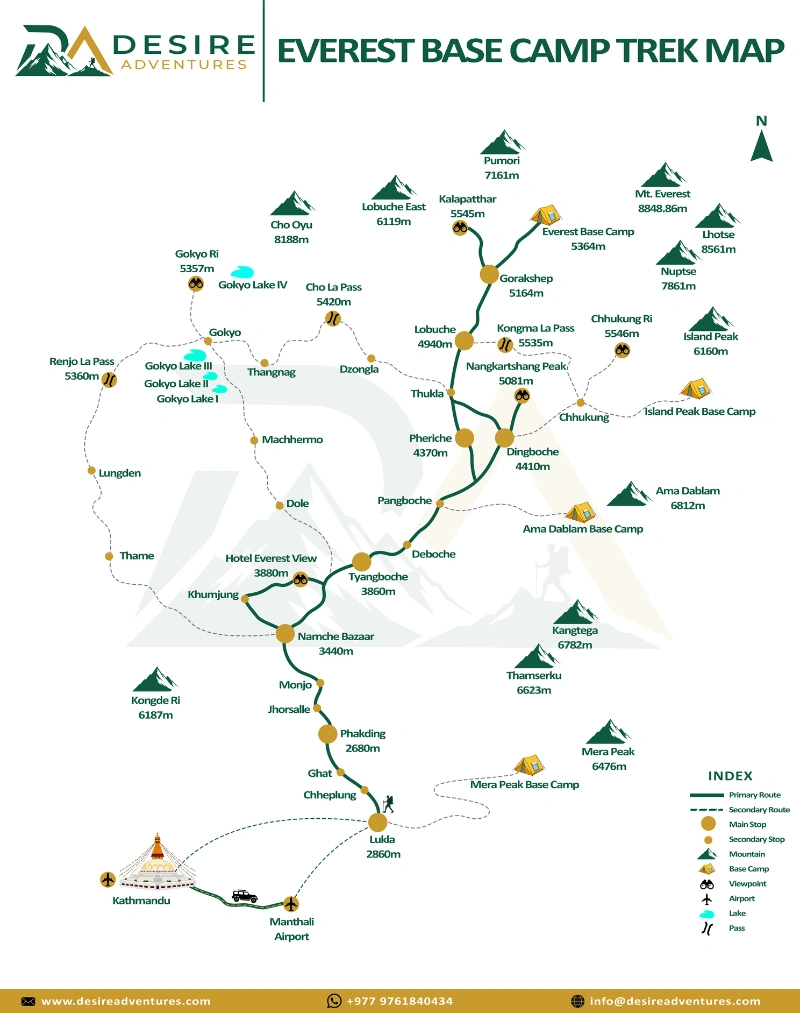
- Company duffle bag and trekking route Map
- Basic First-Aid Kit with Oximeter
- Adventure certificate upon completion of the trek
- Free coordination in emergency cases
- Farewell dinner
✕ Excluded
- Nepal arrival visa
- Meals in the city except breakfast and other mentioned farewell dinner
- Personal expenses like all kinds of drinks including mineral water, tea/coffee, alcoholic and soft beverage
- Extra Hot showers, Wi-Fi & battery charging, and laundry service while on a trek
- Extra baggage excess while flying to Lukla (only 15 kg included)
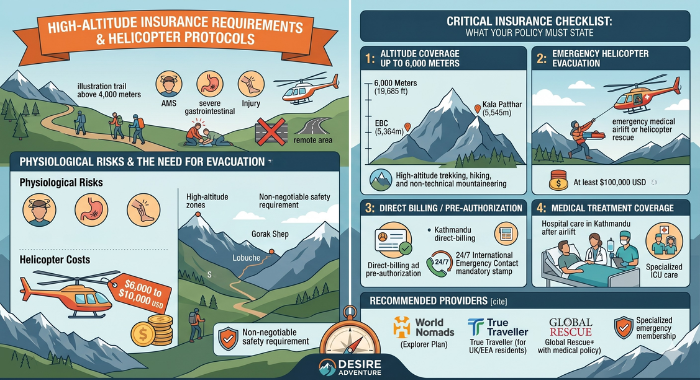
- Your travel insurance that covers Helicopter evacuation over 5000 meters and trip cancellation
- Any other extended trips and accommodation
- Accommodation and meals in Kathmandu in case of early return from the trek
- Tipping to staff (as an appreciation) to service providers and any other extending trips/accommodation
Day by Day
Full Itinerary
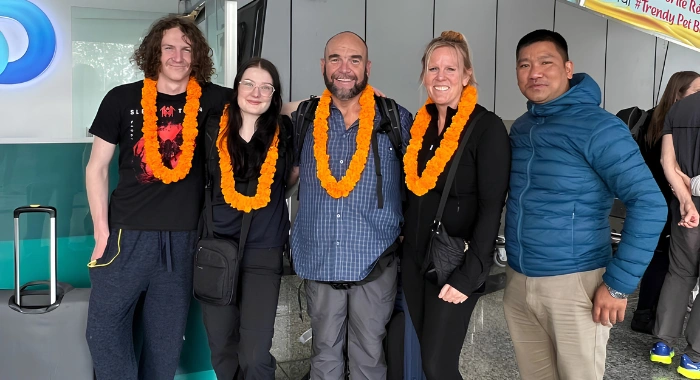
Your journey begins the moment you touch down at Tribhuvan International Airport. A representative from Desire Adventures will meet you outside the arrival terminal, handle your luggage, and transfer you to your hotel via a private vehicle.
After checking in, you have the afternoon free to rest and recover from your flight. In the evening, we host an in-depth pre-trip briefing. We will introduce your guide, review the day-by-day trail logistics, check your personal gear, and discuss vital safety and altitude protocols.
Insider Guide: Use this first evening to rent or purchase any missing gear in Thamel. Your guide can accompany you to trusted local shops to ensure you get high-quality down jackets or trekking poles at fair local prices rather than inflated tourist rates.
To avoid the severe air traffic congestion at Kathmandu's airport during peak trekking seasons, the Civil Aviation Authority routes Lukla flights out of Manthali Airport in Ramechhap. After breakfast, we board a comfortable private vehicle and drive east out of the capital.
The route follows the scenic BP Highway, winding along the Sun Koshi River and passing through terraced farmlands and small hillside villages. We arrive in Ramechhap by the afternoon, allowing you plenty of time to settle into your accommodation and rest before your early morning flight.
Insider Guide: The drive to Ramechhap involves numerous sharp bends. If you are prone to motion sickness, we highly recommend taking appropriate medication before leaving Kathmandu. Pack a small headlamp in your daypack, as power outages can occasionally occur in rural towns.
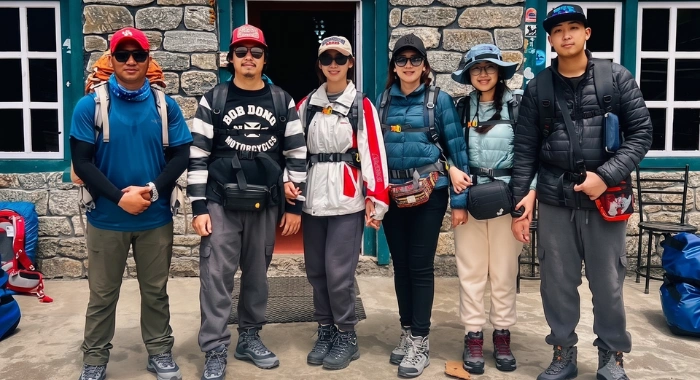
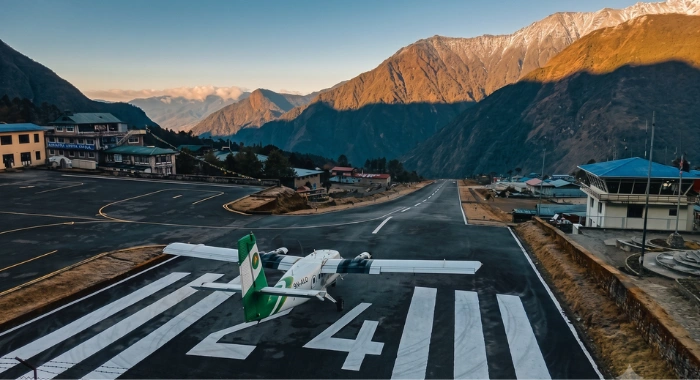
We head to the airport at dawn for the short, scenic flight to Lukla. This flight offers your first spectacular views of the snow-capped Himalayan peaks. Upon landing at the Tenzing-Hillary Airport, we meet our porter team, organize the duffle bags, and officially begin walking.
The trail exits Lukla and descends gradually through traditional villages, passing mani stones (Buddhist prayer stones) and prayer wheels. We follow the Dudh Koshi River valley, crossing our first high suspension bridges before reaching the riverside village of Phakding.
Insider Guide: Keep your camera or smartphone easily accessible during the flight, and try to secure a seat on the left side of the aircraft for the absolute best views of the mountain ranges as you approach Lukla.
Today's walk is beautiful but physically demanding. We trek along the banks of the Dudh Koshi River, crossing back and forth over spectacular suspension bridges, including the famous Hillary Suspension Bridge. We enter the Sagarmatha National Park at Monjo, where our team registers your permits.
After crossing the final bridge, the trail changes dramatically. We begin a long, steep, continuous uphill climb through pine forests to reach Namche Bazaar. This vibrant amphitheater-shaped town is the historical trading hub of the Sherpa people.
Insider Guide: The final two-hour climb up the Namche hill is your first real test of altitude. Take small, rhythmic steps and do not rush. Your guide will pace you smoothly, but remember to drink water continuously to counteract the drying effects of the altitude.
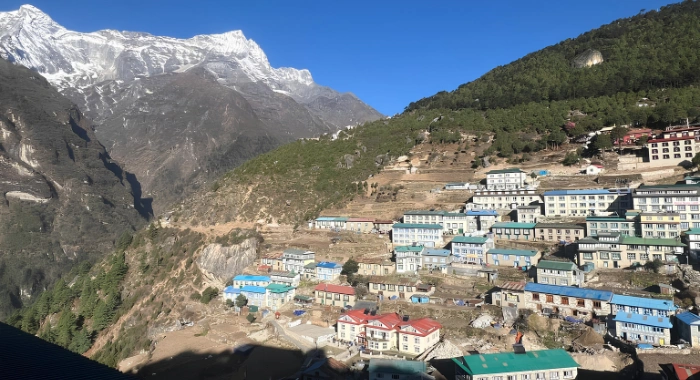
To ensure a safe and successful trek, we spend a mandatory acclimatization day in Namche. Resting completely is actually counterproductive; instead, we follow the medical rule of "climb high, sleep low." We take a morning acclimatization hike up the steep ridge above Namche to the luxury Everest View Hotel (3,880 m).
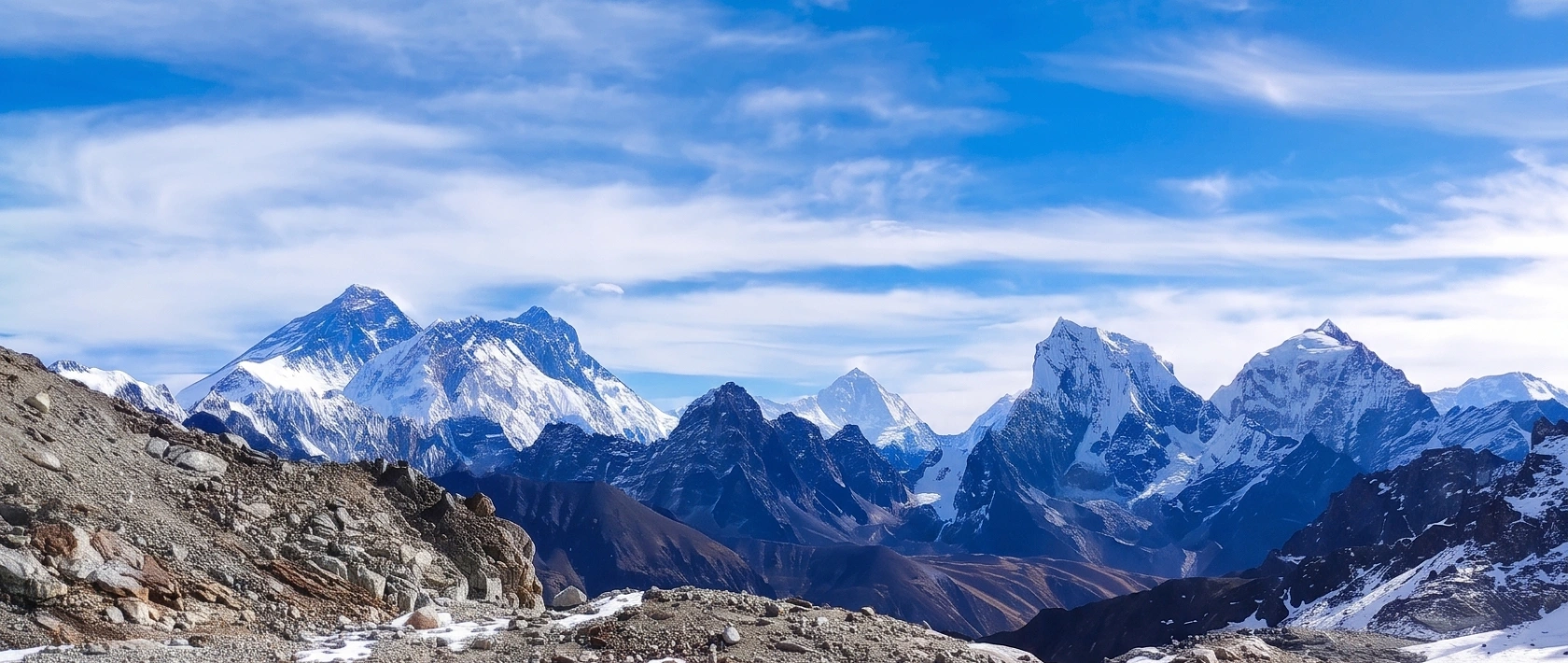
On a clear morning, this vantage point offers your very first panoramic view of Mount Everest, Lhotse, Nuptse, and Ama Dablam. After enjoying a hot drink with a view, we descend back to Namche for lunch, leaving the afternoon free to explore the local markets, bakeries, and Sherpa museums.
Insider Guide: Even if you feel perfectly fine, do not skip this acclimatization hike. Exposing your body to 3,880 meters today significantly triggers the production of red blood cells, which will make your walk over the next few days much more comfortable.
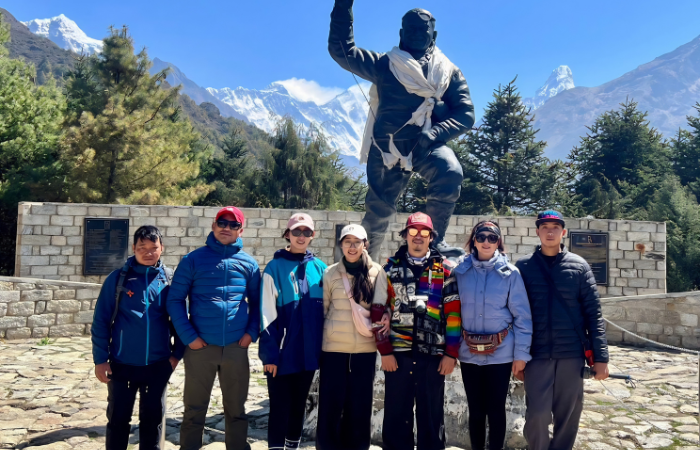
We leave Namche Bazaar on a beautiful, wide trail that hugs the side of the mountain. This section is relatively flat and offers sweeping views of Everest, Lhotse, and Ama Dablam. Keep an eye out for local wildlife, such as Himalayan thars and colorful Danphe birds (Nepal's national bird).
The trail then drops steeply down to the riverbed at Phunki Thenga, where we stop for lunch. After crossing the river, we face the main challenge of the day: a steady, steep two-hour climb up a forested ridge. The trail finishes at the saddle of Tengboche hill, home to the famous Tengboche Monastery, the spiritual heart of the Khumbu region.
Insider Guide: Take advantage of the flat trail in the morning to find your stride, but save your energy for the big climb after lunch. Once we reach Tengboche, your guide will take you inside the monastery to witness the afternoon monk prayers. It is a deeply peaceful experience, but remember to remove your shoes and hats before entering, and never take photos inside the main prayer hall.
In the morning, join the monks for morning prayers at the Tengboche Monastery, before breakfast. After breakfast, leaving Tengboche you will descend on a stone staircase to the bridge at Chaturje, through the forest. A big chorten awaits your arrival at the other side of the bridge. Crossing the bridge, you will now continue north on a gradually ascending trail up to Orsho.
From Orsho, the trail drops down to the bridge across the Khumbu River at Chuto. You will cross the bridge and climb for about 30 minutes along the bank of the Imja River to the settlement of Dingboche. The view of Island Peak, Peak 38 and Lhotse look stunning from Dingboche. Once at Dingboche, you will check into the lodge and spend the remaining time at leisure. We suggest exploring the settlement of Dingboche.
Insider Guide: As we pass 4,000 meters today, the wind can pick up significantly in the open Imja Valley. Keep your windproof outer jacket and a buff close at hand in your daypack. Pulling the buff over your mouth and nose helps protect your throat from the cold, dry mountain air, which is the primary cause of the infamous "Khumbu cough."
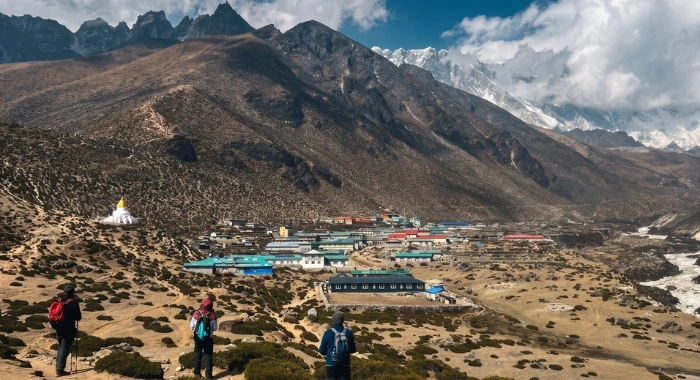
This is the second and the final acclimatization day of this trek. After breakfast, your private guide will take you for a guided acclimatization hike, either to Nangkar Tshang Gompa and a viewpoint above it or to Chhukung.
The Nangkar Tshang Gompa hike is an hour long climb past chortens and prayer flags to the ridge north of Dingboche. Take a tour of a collection of retreats built around the meditation cave of Sange Dorje, taking in the highlights with your guide. This trip also includes a hike to the viewpoint above the gompa, from where the view of Cholatse and Taboche, lake at the foot of Ama Dablam and Chhukung and Makalu look stunning.
A full-day hike to Chhukung in the upper Imja Valley is a longer acclimatization trek over desolate moraine to a series of stepping stones over Niyag Khola till Bibre. Chhukung is only 30 minutes away from Bibre. The surrounding view from Chhukung is amazing. However, for the most elegant view of the Ama Dablam, Baruntse and Makalu, we suggest climbing Chhukung RI.
After completing one of these acclimatization hikes, you will get back to the lodge in Dingboche for dinner and well earned rest.
Insider Guide: Nagarjun Hill is steep and loose underfoot. Use your trekking poles on both the ascent and descent to save your knees and maintain your balance. Do not worry about reaching the very top of the ridge; the main goal is simply to expose your lungs to the higher altitude for a couple of hours before heading back down to rest.
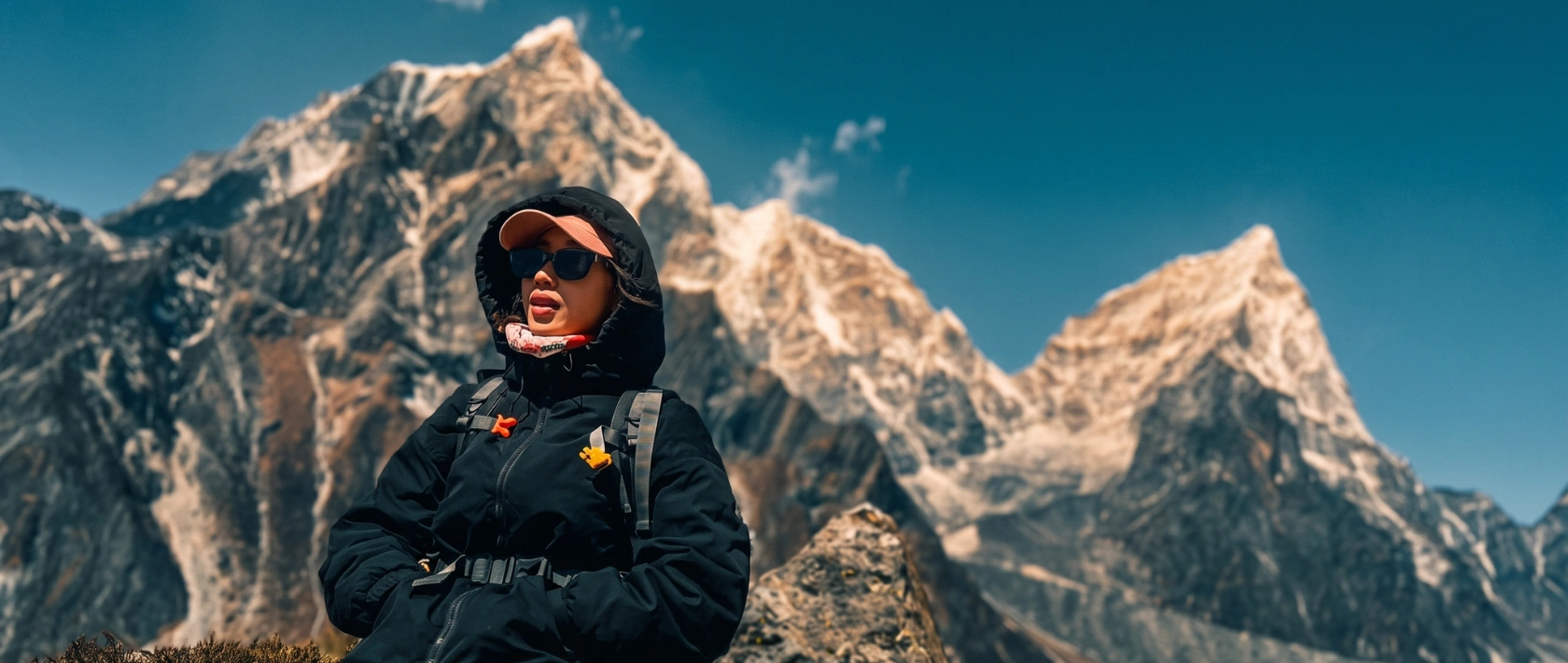
Enjoy your breakfast and get ready to trek to Lobuche. From Dingboche, you are presented with two trail options: one that crosses to Pheriche and continues to the Pheriche and Dingboche trail junction or the second one that slowly climbs along the ridge to the same trail junction, past Dusa.
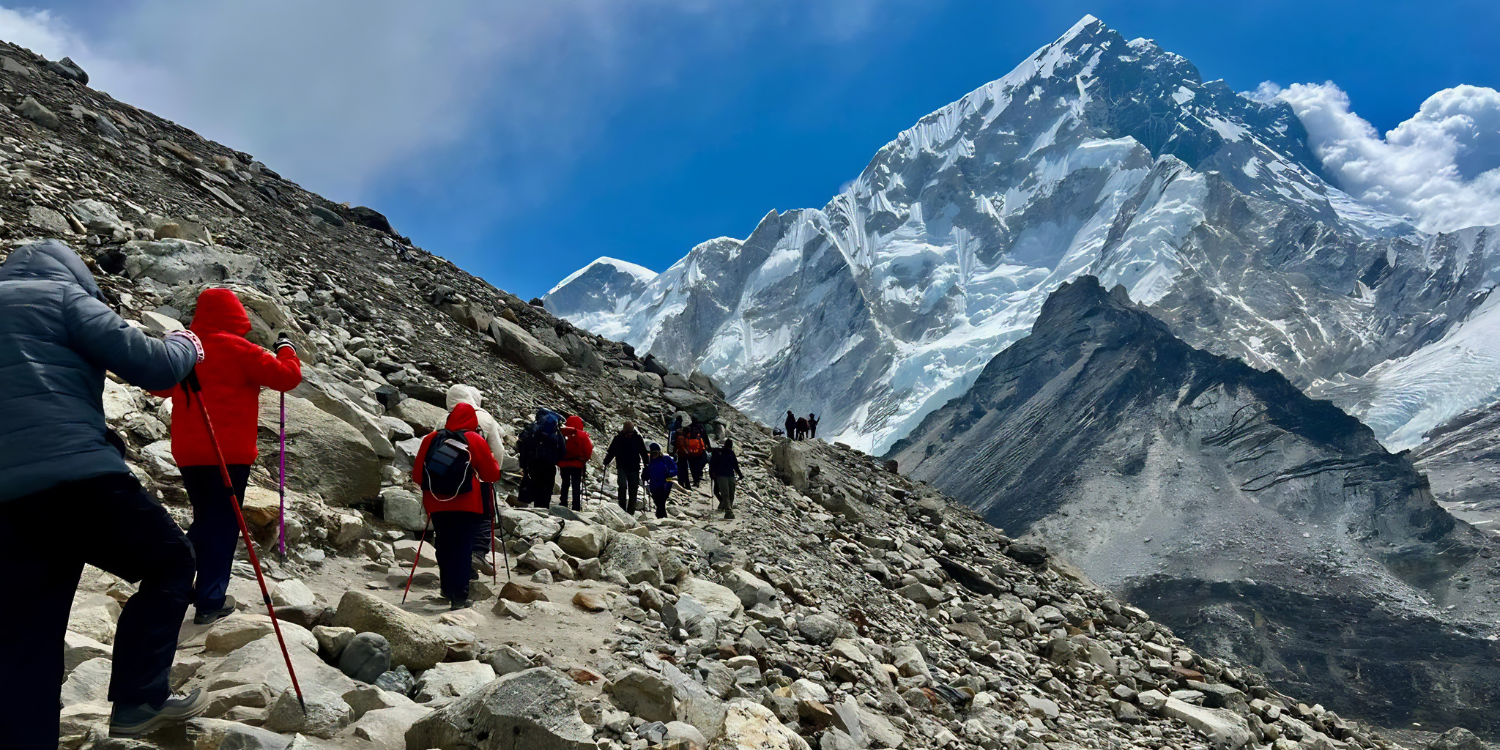
Enjoy the view of Taboche and Cholatse, Ama Dablam and Kantega as you hike to the trail junction. From the junction, the trail drops down to a glacial stream, where you will cross a bridge and rise up to the other side to Dughla. From here, you will head directly up the rough terminal moraine of the Khumbu Glacier, before the trail curves left, to the number of memorials to the lost climbers and Sherpas, around the top of ridge.
Soon, the beautiful Pumori shows its existence. A little ahead from this point, you will come to a trail junction, from where a challenging northward ascent over loose moraine will finally take you to Lobuche. Once at Lobuche, check into the lodge. The rest of your day is at leisure to allow you some time to relax after the day’s tiring walk. However, if you are not tired the remaining time can be best utilized hiking up the ridge east of Lobuche to enjoy the first view of the Khumbu Glacier along with Lhotse and Nuptse, or hiking up to the Italian Pyramid north of Lobuche. You will get back to Lobuche for dinner and accommodation.
Insider Guide: The Thukla Pass is physically and emotionally demanding due to the thin air and the solemn nature of the memorial. Focus on maintaining a slow, rhythmic breathing pattern. As we enter Lobuche, the temperature drops below freezing even during the day, so put on your windproof layers before the sun dips behind the ridges.
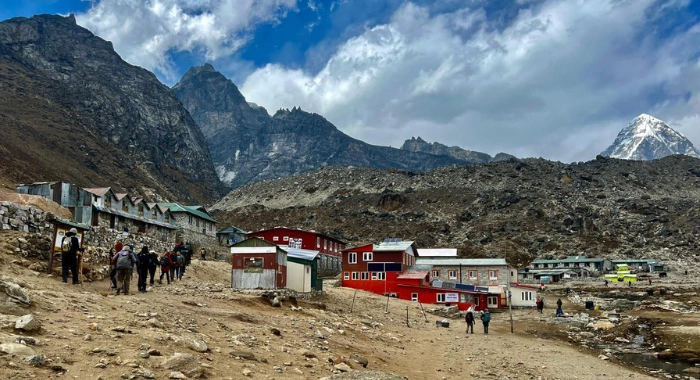
After days of tiring walk, today’s walk will finally take you to the destination of this trek, the Mt. Everest base camp. Enjoy your breakfast and get ready for the final ascent. Leaving Lobuche, you will continue north on a narrow trail between the glacial moraine and the mountain wall. You will walk past the trail junction to Italian Pyramid, climb a few short vertical climbs, walk across the terminal moraine of the Changri Shar Glacier and continue to Gorak Shep.
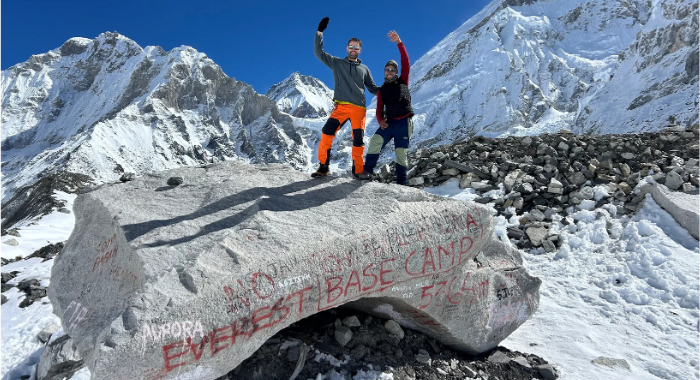
You will check into the lodge at Gorak Shep, leave your luggage and continue your hike to the base camp. From Gorak Shep, you will first head back to the Khumbu Glacier through loose sand, gradually hike up atop the ridge and following the mountain’s spine, head directly north towards the mouth of the Khumbu glacier. Brightly colored flapping prayer flags at the bottom of the Khumbu Ice fall mark the arrival of the base camp of Mt. Everest.
During the climbing season, this place is filled with colorful tents and climbers waiting for the right time to start their journey to the summit of Mt. Everest. Spend some time taking pictures and relishing the moment of glory. Although you are standing on the base camp of Mt. Everest, the peak is not visible from this place; therefore, you will have to wait until the next day for the closer view of the Mt. Everest. After spending some time at the base camp, you will retrace your steps to Gorekshep for dinner and overnight stay.
Insider Guide: Base Camp is a massive achievement, but the day is long. Save your energy by walking efficiently on the rough moraine. You cannot actually see the true summit of Everest from Base Camp itself (it is blocked by Nuptse), but the sight of the jagged Khumbu Icefall and the bustling energy of the site makes it incredibly special.
To witness sunrise over Mt. Everest and other Himalayan giants is an once-in-a-lifetime opportunity. But to witness this, you will have to start 2 hours before the sunrise to hike up to the summit of Kala Patthar (the best Everest viewpoint in the Khumbu region). Therefore, early in the morning, before breakfast, your guide will guide you to the summit of Kala Patthar.
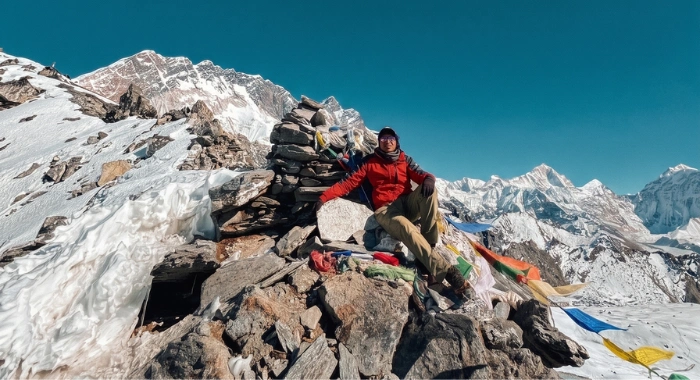
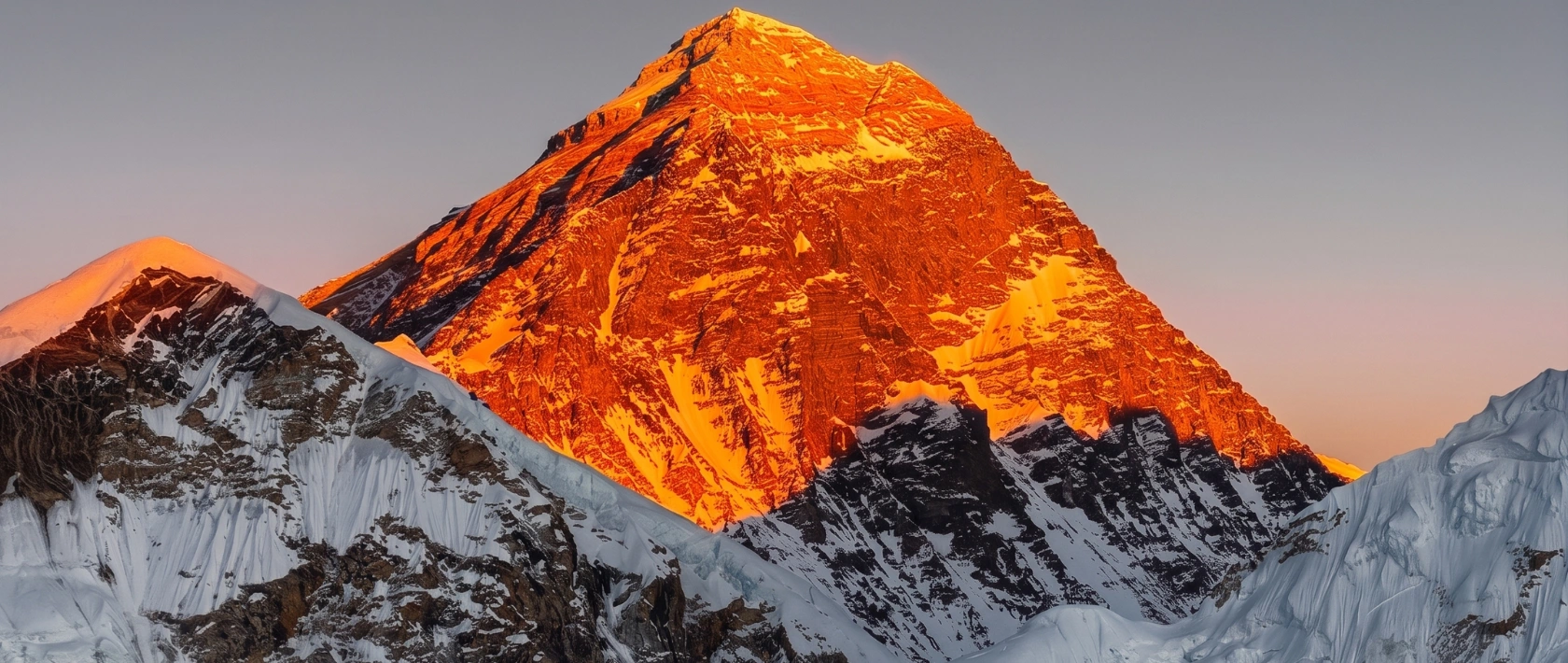
The flapping prayer flag marks the summit of Kala Patthar, from where the 360 degree panorama of Pumori and Lobuche West to Nuptse, Lhotse and Everest start to glow, projecting their unbeatable beauty as the sun slowly rises over these Himalayan giants. Once the sun raises high in the sky, the view of the Khumbu Glacier, the Everest Base Camp and Gorak Shep also look very interesting.
You will spend some time, enjoying the view, taking pictures and creating unforgettable memories and then hike down to Gorak Shep for breakfast. After breakfast, leaving Gorak Shep, you will retrace your steps down the moraine to Dughla past Lobuche. You will drop down to the bridge, cross the glacial stream and following the Pheriche trail hike down to Pheriche. You will check into the lodge in Pheriche. The rest of your evening is at leisure.
Insider Guide: The morning climb to Kala Patthar is the coldest part of the entire trek. Wear all your layers, including your heavy down jacket, insulated gloves, and a thermal beanie. Keep your camera and phone batteries inside your inner jacket pockets, as the extreme cold can drain your electronics instantly before you reach the top.
We leave the wide valleys of Pheriche behind and begin our return journey. The trail drops steadily through Pangboche and climbs briefly back up to the saddle of Tengboche hill. After a quick stop to enjoy the mountain views one last time, we tackle the steep descent down to the riverbed at Phunki Thenga. The final section of the day follows the high, winding cliffside trail that leads back into the bustling amphitheater of Namche Bazaar, where the thicker, oxygen-rich air makes breathing feel remarkably easy.
Insider Guide: While it is mostly downhill today, the distance is quite long. Take your time on the steep descent from Tengboche to protect your knees, and look forward to a celebration at one of Namche's local bakeries or cafes in the afternoon.
This is our final day of walking on the classic trail. We start with a steep, careful descent down the massive hill from Namche Bazaar to the Hillary Suspension Bridge. From there, we retrace our steps along the Dudh Koshi River valley, passing back through Monjo, Phakding, and several small Sherpa farming settlements. The trek concludes with a final, steady uphill climb that brings us back to the vibrant town of Lukla, where we gather to celebrate the completion of our mountain journey with our dedicated porter team.
nsider Guide: Ensure your hiking boots are laced tightly around your ankles for the steep morning descent to prevent your toes from rubbing against the front of your shoes. This evening is the traditional time to show appreciation to your porters with tips, as they will stay in Lukla while we fly out tomorrow.
We head to the Tenzing-Hillary Airport early in the morning for our scenic flight back to Ramechhap. Upon landing, our private vehicle will be waiting to drive us back to Kathmandu along the scenic BP Highway. As the rural landscapes give way to urban streets, we transfer you back to your hotel for a long-awaited hot shower and a well-deserved rest. In the evening, the Desire Adventures team hosts a special farewell dinner at a traditional restaurant to celebrate your success.
Insider Guide: Mountain flights out of Lukla are highly dependent on clear weather conditions. We always recommend building a buffer day into your international travel plans in case morning fog or high winds cause temporary flight delays.
Your Himalayan adventure comes to an official close today. You can spend your final morning doing last-minute souvenir shopping in Thamel or relaxing at a local cafe. According to your international flight schedule, our representative will pick you up from your hotel in a private vehicle and transfer you to Tribhuvan International Airport exactly three hours before your departure, ensuring a smooth and stress-free check-in process for your journey home.
Physical Preparation
Difficulty & Fitness
ModerateFitness level of moderate to advanced level is necessary for this trek.
What to Bring
Packing List
Everything you need for a comfortable and safe trek. Items marked Required are essential.
Clothing
-
T-Shirts 2 or 3 lightweight shirts.Required
-
Long-Sleeved Shirt Ideal for sun protection and cooler days.Required
-
Lightweight Long Trousers Breathable pants (strictly no jeans).Required
-
Trekking Pants Durable pants designed for daily walking.Required
-
Underwear & Shorts Comfortable pairs for the lower valleys.Required
-
Fleece Wind-Stopper Jacket A mid-layer to trap heat.Required
-
Wind & Waterproof Shell Jacket & Trousers Breathable, weather-resistant outer layerRequired
-
Down Jacket Essential for freezing nights.Can Rent
-
Heavyweight Gloves or MittensRequired
Footwear
-
Trekking/Hiking Boots Sturdy boots with spare lacesRequired
-
Comfortable Walking Shoes For lighter trail sections or travel.Required
-
Running Shoes or Sandals For relaxing in the teahouses in the eveningRequired
-
Socks Thick wool-blend and thin cotton socks to be worn in combination to prevent blisters.Required
-
Gaiters To keep snow, mud, and water out of your boots.Optional
Gears
-
Duffle Bag Provided by Desire Adventures for the porters to carry.Required
-
Daypack A backpack with waist straps for your daily essentials.Required
-
Bag Liners / Waterproof Bags Several sizes to protect your gear from rain.Required
-
Stuff Sack For organizing dirty clothes and shoes.Required
-
Sleeping Bag A standard sleeping bag for normal seasons.Can Rent
-
Refillable Water Bottle & Thermos For hydration and hot beveragesRequired
-
Trekking Poles Optional but highly recommended for knee supportRequired
-
Electronics Binoculars, camera, alarm clock, and a torch/flashlight/headlamp (critical for sunrise hikes).Required
-
Leisure & Maintenance Reading/writing materials, travel games (chess, scrabble), a sewing kit (optional), and protein bars, chocolates, or trail snacks.Required
Toiletries
-
Sunscreen Lotion High SPF factor for mountain UV protection.Required
-
Towels 1 lightweight travel towel and 1 small wash towel.Required
-
Toiletries Lists Toothbrush, toothpaste, toilet paper, multipurpose soap, deodorant, nail clippers, moisturizer, small mirror, and feminine hygiene products.Required
-
Hygiene Hand sanitizers, hair ties, earplugs, eye mask, and insect repellentOptional
-
First-Aid Kit Essentials medicines for trekkersRequired
Essentials
-
Travel Documents Passport, visa, travel insurance, air tickets, tour voucher, and 3 passport-sized photos (2 for visa, 1 for trekking permit).Required
-
Money & Security Cash (Nepalese Rupees), VISA card, a secure money bag, and a small padlock for your luggage.Required
Additional Information
More Details
Food and Accommodation in the Trek
When trekking in the remote Khumbu region, knowing what to expect regarding your daily meals and logging is essential for a comfortable journey. While the trail reaches extreme altitudes, the hospitality of the Sherpa communities ensures you are well-fed and safely sheltered every night.
Throughout the trek, you will stay in local, family-run guesthouses known as teahouses. These mountain lodges offer a cozy, community-focused atmosphere, especially in the evenings.
- The Common Dining Hall: The heart of every teahouse is the central dining room. It is the only space in the lodge that is heated usually by a central wood or yak-dung burning stove making it the perfect place to eat, relax, and share stories with fellow trekkers.
- Twin-Sharing Bedrooms: The bedrooms are simple, clean, and unheated. They typically contain two single beds equipped with a mattress, pillows, and a basic blanket.
- Bathroom Facilities: At lower elevations, some teahouses offer attached bathrooms or indoor flush toilets. As we ascend higher (above 4,000 meters), facilities become more basic, often consisting of shared western-style toilets or traditional squat toilets.
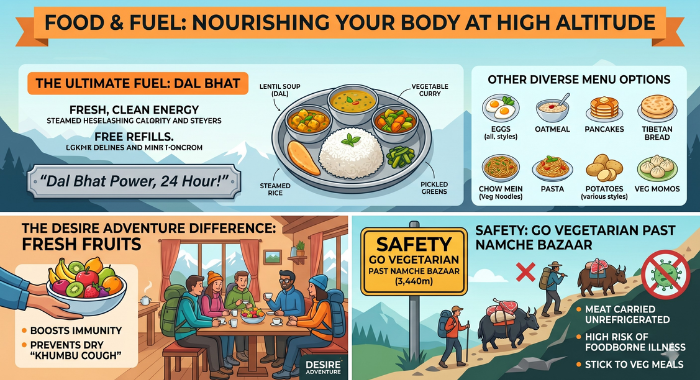
As for the foods in the trek. To sustain 5 to 8 hours of daily physical exertion, eating high-carbohydrate, freshly prepared meals is vital. Teahouses offer a surprisingly diverse menu combining traditional Nepalese dishes and adapted international options.
- Breakfast: Options include warm porridge (oats or Tsampa), eggs cooked to your preference, pancakes, Tibetan bread, and toasted bread served with jam or honey.
- Lunch and Dinner: The ultimate trekking fuel is Dal Bhat (a traditional platter of steamed rice, lentil soup, vegetable curry, and pickles). It is freshly made, highly nutritious, and comes with free refills! Other menu items include pasta, noodles, fried rice, potatoes, and vegetable soups.
- Meat and Dietary Restrictions: We highly recommend sticking to a vegetarian diet while on the trail. All meat must be carried up by porters from lower elevations without refrigeration, so avoiding meat ensures optimal food safety. We easily accommodate vegetarian, vegan, and gluten-free diets just let your guide know during the daily briefing.
Training for this Trek & Importance of Acclimatization
Reaching an altitude of 5,545 meters requires a combination of physical endurance and a smart strategy to help your body adapt to the thinning air. At Everest Base Camp, there is about 50% less oxygen available per breath than at sea level. Understanding how to train and how acclimatization works is the key to a safe and successful summit.
To prepare your cardiovascular system and muscles for 11 consecutive days of moving uphill and downhill, we recommend starting a dedicated training routine 8 to 12 weeks before your departure date.
- Cardio Conditioning: Build your lung capacity by engaging in aerobic exercises 3 to 4 times a week. Swimming, cycling, rowing, and running are excellent options. Aim for 45 to 60 minutes per session at a moderate pace.
- Simulated Hiking: The best training for hiking is hiking. Spend your weekends walking on local trails that feature elevation changes. If you do not have trails nearby, spend 1 hour on a treadmill set to an incline or use a stairmaster machine.
- Strength and Core: Focus on leg strength to handle the steep descents. Incorporate weighted squats, lunges, and step-ups into your routine twice a week. A strong core will also help you carry your daypack comfortably for hours.
As for the acclimatization, it is the natural process where your body adjusts to a lower supply of oxygen. When you ascend gradually, your body compensates by creating more red blood cells to transport oxygen efficiently to your muscles and brain.
Our 15-day itinerary includes two built-in acclimatization days (Day 5 in Namche Bazaar and Day 8 in Dingboche). These are not static rest days; instead, we practice active acclimatization by hiking to a higher altitude during the morning and descending to a lower altitude to sleep. This "climb high, sleep low" strategy safely triggers your body's adaptation response without overexerting your system.
On the trail
Photo Gallery
Trek Route
Route Map
Elevation Profile
Altitude Chart
Elevation profile across 15 days. Maximum altitude: 5,545m
Common Questions
Frequently Asked
Look, I get this question from almost every trekker before we start. The Nepalese aviation authority diverts Lukla flights to Ramechhap during the peak trekking months (spring and autumn) simply to avoid the massive air traffic bottlenecks at Kathmandu's single runway. It actually makes the flight a bit shorter and more stable, though it does mean we have to take a 4-to-5-hour drive into the countryside the day before.As your guide, I always tell people: the weather in the Himalayas has its own personality. Fog or high winds can shut down Lukla's runway instantly. If our flight is delayed, we stay cozy at our lodge in Ramechhap and wait for the first clear weather window. Because of this, I always advise booking your international flight home at least two or three days after our scheduled return to Kathmandu, just to give yourself a stress-free safety buffer.
Let me reassure you: you do not need to be an elite athlete or a technical mountain climber to stand at Everest Base Camp. If you can walk comfortably on hilly terrain back home for four or five hours with a light backpack, your body can handle this trail. The key isn't raw speed; it's consistency and determination.The real secret to success on this route is pacing. On the trail, you will hear me repeat the phrase "bistari, bistari" (slowly, slowly) a dozen times a day. We keep our morning walks rhythmic and unhurried. Over my years guiding, I have found that a positive, patient mindset and a steady step will get you much further up the mountain than months of aggressive gym training.
Every single evening after dinner in the teahouse hall, we will sit down together for a health check. I carry a digital pulse oximeter on every trek to measure your heart rate and check how much oxygen is circulating in your blood. This gives us clear data on how well your body is acclimatizing while you sleep.Mild headaches or feeling slightly short of breath can be normal adaptations when passing 4,000 meters. But if I see your oxygen levels dropping or you show worsening symptoms of Acute Mountain Sickness (AMS), we stop ascending immediately. Safety is my absolute priority. We will rest, use preventative options like Diamox, or descend to a lower village where the air is thicker. In rare, severe emergencies, I will coordinate directly with our Kathmandu office to arrange a medical helicopter evacuation. You are never left to guess about your health on my watch.
You should never drink raw tap water from the teahouses or streams along the route; your stomach is simply not used to the local bacteria. To keep you entirely safe, Desire Adventures provides unlimited, eco-purified drinking water every day of our trek.At high altitudes, the air is incredibly dry, and your lungs lose moisture rapidly just from breathing. I will expect you to drink between three and four liters of water every single day. I highly recommend bringing a mix of a standard water bladder for your daypack and a durable thermos. On freezing nights above 4,000 meters, filling your thermos with hot water gives you something warm to sip on and helps prevent your water supply from freezing solid by morning.
Think of teahouses as rustic, family-run mountain lodges. The center of social life is the main dining hall, which is warmed every evening by a central stove. It's the coziest place on the mountain to swap stories. The bedrooms themselves are basic, unheated twin rooms with two separate beds. They provide mattresses and pillows, but you will definitely need the warm sleeping bag we recommend to stay comfortable through the chilly nights.As for amenities, almost all lodges now have solar or battery charging stations in the dining hall, though the owners charge a small fee (usually $2 to $5) to plug in your devices. Hot showers are available at the lower elevations via gas geysers, but once we climb past Dingboche, it gets too cold for standard plumbing, and lodges will provide a basin or bucket of hot water instead.
Scheduled Group Trips
Available Departures
Join a scheduled group departure for extra discounts and a shared adventure with fellow trekkers.
| Departure Date | Return Date | Duration | Price | Availability | |
|---|---|---|---|---|---|
| 1 Sep 2026 | — | 15 Days | USD 1450 | 10 spots left | |
| 8 Sep 2026 | — | 15 Days | USD 1450 | 10 spots left | |
| 15 Sep 2026 | — | 15 Days | USD 1450 | 10 spots left | |
| 22 Sep 2026 | — | 15 Days | USD 1450 | 10 spots left |