
About This Trek
Pikey Peak Trek Short
The Pikey Peak Trek is quickly becoming one of the most talked-about hidden gems in Nepal, and for good reason. If you want to see the grandest mountains on earth but don’t want to spend your days dodging large crowds or walking in a single-file line behind dozens of other tour groups, this is the trail you have been looking for.
Why Choose Pikey Peak Over Everest Base Camp?
Most people automatically think of Everest Base Camp (EBC) when planning a trip to the Khumbu region. However, EBC requires a 12-to-14-day commitment, involves a flight into the notorious Lukla airport, and can get incredibly busy during peak season.
Pikey Peak offers a completely different experience. Located in the lower Solu region, this trail gives you a front-row seat to the highest peaks in the world from a peaceful, uncrowded vantage point. Instead of just looking up at one mountain face from a deep valley, the ridgelines on the Pikey Peak route offer massive, uninterrupted panoramic views. It is a shorter, lower-altitude, and more tranquil alternative that gives you all the reward of a classic Himalayan trek without the logistical headaches or the physical toll of standard high-altitude highways.
Who Is This Trek For? (Age, Fitness Level, and Experience)
One of the best things about this itinerary is its accessibility. We have designed this trek to be highly manageable, making it perfect for:
Beginners and Families: If you have never trekked in the Himalayas before, this is the perfect introduction. You do not need any technical climbing experience or previous high-altitude training.
Moderate Fitness Levels: The daily walking hours are reasonable (usually between 4 to 6 hours), and the trails are generally smooth, well-defined paths rather than steep, technical rock scrambles. If you can walk comfortably for a few hours with a light backpack, you can easily complete this trek.
Photographers and Nature Lovers: Because the trail winds through dense pine and rhododendron forests before opening up onto wide, empty ridges, the changing landscape provides endless opportunities for incredible landscape shots.
Trekkers Short on Time: If you only have a week to spare in Nepal but still want a genuine mountain adventure, this 8-day itinerary fits perfectly into a tight holiday schedule.
The Sir Edmund Hillary Connection
You don’t just have to take our word for it. Sir Edmund Hillary, the first man to summit Mount Everest alongside Tenzing Norgay Sherpa, spent decades in this specific region building schools and hospitals for the local communities. During his time here, he famously stated that the view from the top of Pikey Peak was his absolute favorite viewpoint in all of Nepal. When you stand at the summit, you will see exactly why he loved it so much. On a clear morning, the horizon opens up to reveal five of the world’s fourteen highest peaks: Mount Everest, Lhotse, Makalu, Kanchenjunga, and Cho Oyu, all lined up in a single, jaw-dropping panoramic view.
What's covered
Includes & Excludes
✓ Included
- Complete ground transportation to and from Tribhuvan International Airport in Kathmandu using a private vehicle.
- Two nights of twin-sharing lodging at a comfortable Tourist Standard Hotel, including daily breakfast.
- Freshly prepared breakfast, lunch, and dinner every day during the active trekking route.
- A serving of fresh, seasonal organic fruits provided each evening after dinner to support high-altitude recovery.
- Twin-sharing accommodations in clean, hand-picked local guesthouses throughout the entire walking journey.
- Safe, eco-purified drinking water available daily along the trail to ensure proper hydration.
- Full coverage of the necessary local area trekking permits and regional entry fees.
- A government-licensed, English-speaking local guide, including his full salary, meals, lodging, and personal insurance.
- Professional porter services to carry your main luggage (one porter shared between two trekkers), including his full expenses and insurance.
- All mandatory government service charges, local taxes, and company fees handled with no hidden costs.
- A complimentary company duffle bag and an official printed route map for the journey.
- Access to a group medical kit containing a digital pulse oximeter for daily oxygen safety tracking.
- A special evening dinner hosted by the company in Kathmandu to celebrate the completion of your trek.
✕ Excluded
- Nepal Entry Visa: Fees required to obtain your tourist visa upon arrival at the Kathmandu airport terminal.
- City Meals: Lunches and dinners within Kathmandu, except for the included farewell celebration dinner.
- Personal Trail Beverages: Personal purchases such as bar bills, specialty barista coffees, canned sodas, bottled mineral water, and alcoholic drinks.
- Extra Lodge Amenities: Fees for optional services at the teahouses, including hot showers, Wi-Fi access, device battery charging, and laundry.
- Personal Travel Insurance: Mandatory insurance coverage that explicitly includes emergency high-altitude helicopter evacuation and trip cancellation protection.
- Extended Itinerary Costs: Any additional accommodation or meal expenses incurred in Kathmandu if you return early from the mountains.
- Staff Gratuities: Personal tips as a direct token of appreciation for your dedicated guiding and porter crew.
Day by Day
Full Itinerary
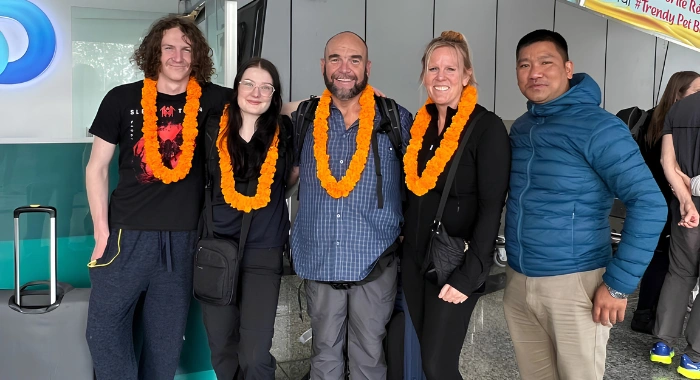
We welcome you to Nepal at the Tribhuvan International Airport. Our representative will meet you outside the arrival terminal and transfer you to your hotel in a private vehicle. After checking in, you can rest or take a walk through the bustling streets of Thamel to see daily life in the capital. Later, we gather for a trip briefing to discuss daily walking hours, weather conditions, and safety measures.
After breakfast, we drive out of the Kathmandu Valley. The road follows the Sun Koshi River and passes through green hills, terraced farmlands, and small trading towns. As we gain altitude, the air becomes fresher and cooler. We eventually climb up to the high ridge settlement of Dhap, where we check into a local guesthouse.
Our first walking day begins on a gentle, open trail. We walk alongside traditional stone walls and watch locals herding livestock and working in their fields. The path enters quiet forests of pine and wild rhododendron. We finish the day at the hillside village of Jhapre, which offers wide views of the deep valleys below.
We leave Jhapre and climb steadily through ancient forests of fir, birch, and rhododendron. The trail is quiet and peaceful, away from main trekking routes. As we clear the tree line, the landscape changes to wide alpine pastures where yaks graze. A final steady push brings us to Pikey Peak Base Camp, where the evening temperatures drop quickly.
Insider Tip: Temperatures drop rapidly at Base Camp as soon as the sun goes down. Unpack your heavy down jacket and warm beanie during the afternoon so you can put them on immediately before the evening chill sets in.
We wake up before dawn and climb the cold, open slopes to the summit of Pikey Peak. From the 4,065-meter crest, we watch the sun rise over a massive line of peaks including Everest, Lhotse, and Makalu. After taking photos, we walk back down to Base Camp for breakfast. We then continue downhill through deep forests and pastures to the quiet village of Chaula Kharka.
Insider Tip: Keep your headlamp batteries inside your jacket pocket until the exact moment you start climbing in the morning. The freezing pre-dawn air can drain exposed batteries quickly before you reach the summit ridge.
After breakfast, we follow a long downhill path through farming country. We cross small streams and walk past traditional stone houses where children and villagers greet us. The trail shows the authentic lifestyle of the lower Solu region. We finish our day at Shivalaya, a lively riverside village located on the classic historic route to Everest.
Insider Tip: This is a long downhill day that can be tough on your toes. Make sure your boots are laced tightly around your ankles to prevent your feet from sliding forward, and consider using trekking poles to reduce the impact on your knees.
We board our private vehicle after breakfast and begin the drive back to the capital. The route snakes along rushing rivers and over high ridges, offering a final look at rural Nepal. Once in Kathmandu, we transfer you to your hotel for a hot shower. In the evening, we gather for a farewell dinner to celebrate the completion of the trek.
Insider Tip: Pack your primary trekking gear securely into your main duffle bag the night before, keeping your wallet, passport, and electronics in your small daypack for easy access during road stops.
Your holiday concludes today. You can use your remaining free hours for last-minute shopping around Thamel. According to your international flight time, we provide a private vehicle transfer to Tribhuvan International Airport for your departure flight home.
Insider Tip: Always plan to leave for the airport exactly three hours before your flight time. Kathmandu traffic can be unpredictable, and this ensures a completely relaxed check-in experience.
Physical Preparation
Difficulty & Fitness
Easy-ModerateRequired Moderate to Basic level Fitness
What to Bring
Packing List
Everything you need for a comfortable and safe trek. Items marked Required are essential.
Clothing
-
Moisture-Wicking Base Layers (3 Pairs)Required
-
Mid-Layers (2 Fleeces)Required
-
Insulation Layer 1 Down JacketRequired
-
Outer Shell Layer 1 Jacket, PantsRequired
-
Trekking Pants 2 PairsRequired
-
Gloves lightweight touch-screen compatible liner glovesRequired
Footwear
-
Main Hiking Boots 2 PairsWaterproof, high-ankle support bootsRequired
-
Camp Shoes A pair of lightweight running shoesRequired
-
Trekking Socks (4 Pairs)Required
-
Liner Socks (2 pairs)Required
Headwear
-
Buff / Neck Gaiter (2 Pieces)Required
-
Sun Hat / Cap wide-brimmed hatRequired
-
Warm Beanie insulated wool or fleece hatRequired
-
Polarized SunglassesRequired
Gears
-
Four-Season Sleeping Bag Rated down to at least -15°CRequired
-
Trekking Poles One pair of sturdy, adjustable trekking polesRequired
-
Headlamp high-lumen headlamp RRequired
-
Water Vessels (2 Liters Total CapacityRequired
-
High-Capacity Power Banks (20,000mAh+)Required
-
Sunscreen & Lip BalmRequired
-
Personal Hygiene KitRequired
Additional Information
More Details
Fitness, Preparation, and Safety Guide
Preparing your body and understanding safety protocols are the keys to a comfortable journey. Because the Pikey Peak trail reaches an altitude of 4,065 meters, proper physical conditioning and awareness of high-altitude safety help ensure a successful trek.
Physical Conditioning: Weekly Training Recommendations
To enjoy your time on the trail without excessive fatigue, we recommend starting a basic training routine 4 to 6 weeks before your departure date.
- Cardiovascular Endurance: Engage in activities like brisk walking, jogging, cycling, or swimming for 30 to 45 minutes, 3 days a week. This builds the lung capacity needed for walking in thinner mountain air.
- Leg Strength: Practice walking up and down stairs or finding local hilly trails. Doing squats and lunges twice a week helps strengthen your quadriceps and calves for the downhill sections.
- Pack Training: Put on a lightweight backpack (around 3 to 5 kg) during your walks to accustom your shoulders and core to carrying a daypack.
Altitude Safety: Acclimatization Protocols and Oximeter Tracking
While Pikey Peak is lower than Everest Base Camp, altitude safety remains a priority for Desire Adventures. We design our routes with a gradual ascent to give your body time to adapt naturally.
- The "Bistari" Technique: Our guides will continuously remind you to walk slowly (bistari, bistari). Keeping a steady, unhurried pace prevents overexertion and aids acclimatization.
- Daily Oximeter Checks: Every evening, your guide uses a digital pulse oximeter to measure your heart rate and oxygen saturation levels. This allows us to track how well your body adapts to the changing altitude.
- Hydration Control: Drinking 3 to 4 liters of water daily is essential. We provide unlimited purified water throughout the trek to keep your hydration levels steady.
Weather & Best Seasons: When to Go for the Clearest Views
The timing of your trip greatly impacts your trail experience and mountain visibility.
- Spring (March to May): This is a fantastic time for nature lovers. The weather is warm, and the trails are lined with blooming red, pink, and white rhododendron forests.
- Autumn (September to November): This season offers the clearest skies of the year. The post-monsoon air is crisp and clean, providing sharp, unobstructed views of Everest and the surrounding peaks from the summit.
- Winter (December to February): The weather is much colder, especially at Base Camp, but the skies are generally clear. This is a quiet time on the trail for those who enjoy complete solitude.
Elevation Profile
Altitude Chart
Elevation profile across 8 days. Maximum altitude: 4,065m
Common Questions
Frequently Asked
Most travelers choose this route because it offers a peaceful alternative to the crowded trails of the Everest region. While Everest Base Camp requires a long commitment and a flight into Lukla, Pikey Peak is a shorter, lower-altitude trek accessible by road. The ridgelines here provide massive, uninterrupted panoramic views of five of the world's highest peaks-Everest, Lhotse, Makalu, Kanchenjunga, and Cho Oyu-without the heavy trail traffic.
We have designed this itinerary to be highly accessible, making it perfect for beginners, families, and moderate trekkers. You do not need any technical climbing experience. Daily walking hours are reasonable, averaging 4 to 6 hours on well-defined paths. If you can walk comfortably for a few hours with a light backpack, you can complete this trek. It is also an ideal choice for travelers who are short on time but still want a genuine Himalayan experience.
We handle the heavy lifting so you can walk freely. Our porters carry your main luggage using company duffle bags that we provide, with a strict safety limit of 15 kg (33 lbs) per trekker. You only need to carry a small 20-to-30-liter daypack for your daily essentials like a camera, water, rain jacket, passport, and medications. Any extra city clothes can be stored for free at your Kathmandu hotel.
The local teahouses in the Solu region are simpler and more authentic than those on commercial routes: lectricity: Charging stations are available in the main dining halls. Since electricity relies on solar power, owners charge a small fee of roughly 200 to 500 Rupees ($1.50 to $4.00) per device.Wi-Fi: Internet access is available in most villages but can be slow and unstable depending on the weather.Showers: Hot showers are available at lower elevations for an extra charge, while buckets of hot water are provided as we get closer to Base Camp.
Your safety is our priority. Our guides use a digital pulse oximeter every evening to monitor your heart rate and oxygen saturation levels. We practice the slow-pacing technique (bistari, bistari) to allow your body to adapt naturally. To ensure proper hydration, we provide unlimited purified drinking water daily and serve fresh organic fruits after every single dinner.
Autumn (September to November): Offers the clearest skies and sharpest mountain views of the year.Spring (March to May): Features warmer weather and trails lined with blooming wild rhododendron forests.Winter (December to February): Colder at night, but provides crisp, clear views and complete solitude.
Scheduled Group Trips
Available Departures
Join a scheduled group departure for extra discounts and a shared adventure with fellow trekkers.
| Departure Date | Return Date | Duration | Price | Availability | |
|---|---|---|---|---|---|
| 2 Sep 2026 | — | 8 Days | USD 670 | 15 spots left | |
| 9 Sep 2026 | — | 8 Days | USD 670 | 15 spots left | |
| 15 Sep 2026 | — | 8 Days | USD 670 | 15 spots left | |
| 22 Sep 2026 | — | 8 Days | USD 670 | 15 spots left | |
| 29 Sep 2026 | — | 8 Days | USD 670 | 15 spots left |