
About This Trek
Everest View Trek
The Everest View Trek is the perfect way to experience the magic of the Everest region without the long days, extreme altitude, and physical demands of the full Everest Base Camp trek. In just over a week, this short and rewarding journey carries you into the heart of the Khumbu – the homeland of the legendary Sherpa people – to stand face to face with Mount Everest (8,849m) and a skyline of some of the most beautiful peaks on Earth. It is, quite simply, the most accessible way to see the world’s highest mountain up close.
From the thrilling mountain flight into Lukla, the trail follows the rushing Dudh Koshi river through pine and rhododendron forest, across swaying suspension bridges, and up to the famous trading town of Namche Bazaar, the vibrant capital of the Khumbu. From here the highlight of the trek unfolds: a morning hike to the Everest View Hotel, one of the highest-placed hotels in the world, where you can sip a hot drink on the terrace with a jaw-dropping panorama of Everest, Lhotse, and the exquisite pyramid of Ama Dablam laid out before you.
Beyond the views, this is a journey deep into living Sherpa culture. You wander the traditional village of Khumjung with its Hillary school and hilltop monastery, and climb to the spiritual heart of the region at Tengboche, home to the largest and most famous monastery in the Khumbu, framed by a wall of snow giants. Because the trek tops out at a comfortable altitude of around 3,960 metres and never sleeps high, it is far gentler on the body than Base Camp routes.
This makes the Everest View Trek an ideal choice for families, first-time trekkers, older travellers, and anyone short on time who still dreams of standing in the shadow of Everest. With comfortable lodges, hot showers at several stops, and a relaxed, well-paced itinerary, it delivers the full romance of the Himalaya in a friendly and achievable package.
What's covered
Includes & Excludes
✓ Included
- Arrival and departure transfers by private vehicle
- 2 nights' hotel accommodation in Kathmandu with breakfast (tourist-standard, twin-sharing)
- Airport transfers for the domestic flights — private vehicle from Kathmandu (Jun–Sep & Dec–Mar), or shared minivan to Ramechhap during peak season (Apr–May & Oct–Nov)
- Round-trip Lukla flights: Kathmandu–Lukla–Kathmandu (off-peak) or Ramechhap–Lukla–Ramechhap (peak season)
- All meals during the trek (breakfast, lunch, and dinner)
- Seasonal fresh fruit after dinner every day of the trek
- All lodge accommodation during the trek (twin-sharing), including 5 nights in rooms with attached toilet and hot shower
- Unlimited purified drinking water during the trek
- All required trekking permits (Sagarmatha National Park & Khumbu Pasang Lhamu Rural Municipality)
- A government-licensed, experienced, English-speaking guide, with all his expenses
- One porter shared between every two trekkers, with all his expenses
- Insurance for your guide and porter
- All local and government taxes
- Company duffel bag and trekking map
- Basic first-aid kit with oximeter
- Free coordination in emergency cases
- Adventure certificate on completion and a farewell dinner
✕ Excluded
- Nepal entry visa fee
- Meals in the city (except breakfasts and the farewell dinner)
- Personal expenses such as all drinks (bottled water, tea, coffee, alcohol, soft drinks)
- Extra hot showers, Wi-Fi, battery charging, and laundry on the trek
- Excess baggage charges on the Lukla flight (only 15 kg per person is included)
- Travel insurance covering helicopter evacuation above 4,000m and trip cancellation
- Any additional trips or accommodation beyond the itinerary
- Accommodation and meals in Kathmandu in the event of an early return from the trek
- Tips for your guide, porter, and driver (a customary appreciation)
Day by Day
Full Itinerary
On arrival at Tribhuvan International Airport, our representative meets you and transfers you to your hotel in Kathmandu. The rest of the day is free to rest after your flight or explore the lively streets of Thamel. In the evening, we hold a short briefing, introduce your guide, and prepare for the early start to the mountains.
Insider Tip: Repack tonight into your trek duffel and a daypack, keeping your main luggage at the hotel - remember the strict 15 kg limit on the Lukla flight.
Depending on the season, your journey to Lukla begins either with a direct flight from Kathmandu or an early drive (4–5 hours) to Ramechhap, followed by a thrilling 15-18 minute mountain flight into Lukla's famous Tenzing-Hillary Airport. From Lukla, we begin a gentle, mostly downhill walk of around four hours, following the Dudh Koshi river through Sherpa villages to the riverside settlement of Phakding.
Insider Tip: Lukla flights go early to beat the weather, so the start is very early - get a good night's sleep and keep your camera ready for the spectacular landing.
A memorable and challenging day. We follow the river upstream, crossing several high suspension bridges - including the famous Hillary Bridge - before entering Sagarmatha National Park at Monjo. From here the trail climbs steeply through forest, and on a clear day you catch your very first glimpse of Mount Everest peeking out behind the Lhotse-Nuptse ridge. The reward at the top is Namche Bazaar, the colourful, amphitheatre-shaped capital of the Khumbu.
Insider Tip: The climb to Namche is the steepest of the trek. Take it slow and steady, drink plenty of water, and savour that first Everest view on the way up.
The highlight day, and a perfect natural acclimatization walk. We climb above Namche to the legendary Everest View Hotel, where the terrace serves up one of the most spectacular mountain panoramas on Earth - Everest, Lhotse, Ama Dablam, Thamserku, and Kongde all in a single sweep. After soaking it in, we walk on to the traditional Sherpa village of Khumjung, with its green-roofed Hillary school and a monastery said to hold a yeti scalp.
Insider Tip: Order a coffee or tea on the Everest View Hotel terrace - sitting with Everest in front of you and a warm cup in hand is a moment you'll never forget.
Today we trek to the spiritual heart of the Khumbu. The trail descends to the Dudh Koshi and then climbs through rhododendron forest to Tengboche, home to the largest and most famous monastery in the region. Set on a ridge with a staggering backdrop of Everest, Lhotse, and the iconic Ama Dablam, the monastery is a deeply atmospheric place, especially if you can catch the monks' afternoon prayers.
Insider Tip: The afternoon clouds often clear at dusk and dawn here. Stay for sunset and rise early for sunrise - the light on Ama Dablam from Tengboche is simply magical.
We begin our return journey, retracing the trail back down toward Namche and continuing the descent to Monjo, just below the national park gate. As we lose altitude, the air grows thicker and warmer, and the walking becomes easier with every step. It is a long but rewarding day, with familiar views appearing in a whole new light.
Insider Tip: Descending is easier on the lungs but harder on the knees. Keep using your trekking poles to protect them on the steeper sections.
Our final day on the trail follows the Dudh Koshi back through Sherpa villages and across the suspension bridges to Lukla, where the trek began. With the hard walking behind you, this is a relaxed day to enjoy the last of the mountain scenery and reflect on your journey. The evening is the perfect time to celebrate with your guide and porter.
Insider Tip: It's customary to tip your guide and porter at the end of the trek. Tonight in Lukla is the natural moment to thank the team who made your adventure possible.
An early morning flight carries you back from Lukla to Ramechhap (or directly to Kathmandu, depending on the season), followed by the scenic drive to the capital. Back in Kathmandu, the afternoon is free to rest, shop for souvenirs, or simply relax. In the evening, we are delighted to host a farewell dinner to celebrate your successful trek.
Insider Tip: Mountain flights can be delayed by weather, so avoid booking an international flight for the same day - always keep a buffer day in Kathmandu just in case.
Your Everest adventure comes to a close. Depending on your flight schedule, you have free time before our representative transfers you to the airport for your onward journey. We hope you leave with unforgettable memories of the Sherpa Himalaya and the world's highest peak.
Insider Tip: Leave time for last-minute souvenir shopping in Thamel - it's the best place in Nepal to pick up gifts, prayer flags, and Sherpa crafts.
Physical Preparation
Difficulty & Fitness
EasyWhat to Bring
Packing List
Everything you need for a comfortable and safe trek. Items marked Required are essential.
Clothing
-
Moisture-wicking trekking t-shirts 3-4Required
-
Thermal base-layer topRequired
-
Thermal base-layer leggingsRequired
-
Fleece or warm mid-layerRequired
-
Insulated down jacketCan Rent
-
Waterproof, windproof shell jacketRequired
-
Lightweight, quick-dry trekking trousersRequired
-
Waterproof shell trousersRequired
-
Trekking shortsRequired
-
Breathable underwearRequired
-
Warm gloves, plus lightweight liner glovesRequired
-
Warm beanieRequired
-
Sun hat or capRequired
-
Buff or neck gaiterRequired
Footwear
-
Sturdy, broken-in, waterproof trekking bootsRequired
-
Camp shoesRequired
-
Warm wool trekking socksRequired
-
Liner socks to help prevent blistersRequired
Gears
-
DaypackRequired
-
Duffel bag for your porterRequired
-
Warm 3-season sleeping bagRequired
-
Trekking polesRequired
-
Reusable water bottlesRequired
-
Water purification tabletsRequired
-
UV sunglassesRequired
-
Headlamp with spare batteriesRequired
-
Power bankRequired
-
Phone, charging cablesRequired
-
DocumentsRequired
-
ToiletriesRequired
Additional Information
More Details
Why Choose the Everest View Trek?
Not everyone has three weeks, the fitness for very high altitude, or the desire to push all the way to 5,545 metres at Kala Patthar. The Everest View Trek exists for exactly that reason - it distils the very best of the Everest region into a short, friendly journey that almost anyone in good health can enjoy.
The advantages are clear. It is far shorter than the classic Base Camp trek, fitting comfortably into a single week of trekking. It reaches a maximum of around 3,960 metres and never sleeps above roughly 3,860 metres, which dramatically reduces the risk of serious altitude sickness. And it still delivers the headline experiences that draw people to the Khumbu in the first place: the Lukla flight, Namche Bazaar, Sherpa villages, ancient monasteries, and of course, that unforgettable first sight of Everest itself.
This combination makes it the ideal Everest adventure for families with children, older travellers, first-time trekkers building confidence, and busy people who simply cannot spare the time for Base Camp. You get the scenery, the culture, and the bragging rights of an Everest trek, with a gentler, more relaxed rhythm throughout.
Key Places Along the Trail
Lukla is the gateway to the Everest region, home to the dramatic Tenzing-Hillary Airport perched on a mountainside - an unforgettable arrival and departure point.
Namche Bazaar is the bustling Sherpa capital of the Khumbu, a horseshoe of lodges, shops, and cafes set in a natural amphitheatre, and the social hub of every Everest trek.
The Everest View Hotel is one of the highest-placed hotels in the world, famous for the extraordinary Everest panorama from its terrace.
Khumjung is a peaceful traditional Sherpa village, home to a school founded by Sir Edmund Hillary and a monastery with a celebrated relic said to be a yeti scalp.
Tengboche is the spiritual centre of the Khumbu, dominated by its grand monastery and surrounded by some of the finest mountain views in all of Nepal.
The Everest View Hotel
If the Everest View Trek has one defining moment, it is the morning at the Everest View Hotel. Sitting at around 3,960 metres on a ridge above Namche, this is one of the highest-altitude hotels in the world, and its terrace offers what many consider the single best easily accessible view of Mount Everest anywhere. From here the great mountain rises behind the Nuptse-Lhotse wall, with the unmistakable summit of Ama Dablam soaring nearby. Reaching it is also the perfect acclimatization exercise - a "climb high, sleep low" hike that helps your body adjust while rewarding you with an unforgettable panorama. Lingering over a hot drink with Everest framed before you is the kind of experience that stays with you for a lifetime.
Sherpa Culture & Tengboche Monastery
The Khumbu is the homeland of the Sherpa people, world-renowned for their mountaineering prowess and their warm, deeply Buddhist way of life. Throughout the trek you will pass mani walls carved with prayers, spinning prayer wheels, and colourful flags sending blessings on the wind. The cultural high point is Tengboche Monastery, the largest gompa in the Khumbu, rebuilt after a fire in 1989 and set against a breathtaking mountain backdrop. If your trek coincides with the autumn Mani Rimdu festival, you may witness its spectacular masked dances. Visiting these sacred sites with respect - dressing modestly, moving quietly, and asking before taking photographs - is part of what makes the Everest View Trek so culturally rich.
Everest View Trek Permits
Trekking in the Everest region requires two permits, both of which we arrange and include in your package:
- Sagarmatha National Park Entry Permit: Around NPR 3,000 (approximately USD 25–30) for foreign nationals, this permit funds conservation in the UNESCO-listed national park and is checked at the Monjo gate.
- Khumbu Pasang Lhamu Rural Municipality Permit: Around NPR 2,000–3,000 (approximately USD 20–25), this local permit, introduced in 2018, supports community development and infrastructure in the Sherpa villages. It is issued in Lukla or Monjo.
Importantly, the old TIMS card is no longer required for standard Everest region treks starting from Lukla - it has been replaced by the Khumbu Pasang Lhamu permit. Since we handle all the paperwork for you, there is nothing for you to organise at the checkpoints.
Everest View Trek Difficulty & Fitness
The Everest View Trek is graded easy to moderate, making it one of the most achievable trekking adventures in the Everest region. There is no technical terrain, no high pass, and no extreme altitude — the trek tops out at around 3,960 metres and never sleeps above roughly 3,860 metres. The walking is mostly on well-established trails, with daily stages of around four to seven hours.
That said, "easy to moderate" does not mean effortless. The steep climb up to Namche Bazaar is a genuine workout, and the daily ups and downs of the Khumbu reward a reasonable level of fitness. You do not need any prior trekking experience, but a few weeks of regular walking or cardio beforehand will help you enjoy the trail rather than struggle on it. With its gentle pace, this trek suits families with older children, beginners, and those who want a real Himalayan experience without the demands of Base Camp.
Altitude & Acclimatization
Although this is a relatively low-altitude Everest trek, you still climb to around 3,960 metres, so a little altitude awareness is sensible. The itinerary is designed to be gentle, and the Day 4 hike to the Everest View Hotel doubles as a natural "climb high, sleep low" acclimatization day. Altitude sickness is caused by ascending too quickly, not by lack of fitness, so the simple rules apply: walk slowly, drink plenty of water, and tell your guide if you feel a headache, nausea, or unusual fatigue. Our guides are first-aid trained and carry a kit with an oximeter to monitor your blood-oxygen levels. Because the trek descends after Tengboche and never sleeps very high, serious altitude problems are uncommon on this route.
Best Time for the Everest View Trek
The two best seasons are spring and autumn, each offering its own rewards.
Spring (March to May) brings warmer weather, longer days, and the spectacular bloom of rhododendron forests on the lower trail, along with generally clear mountain views. Autumn (September to November) is the most popular season, with stable weather and the crispest, clearest Himalayan views of the year following the monsoon. Note that during these peak months, Lukla flights operate from Ramechhap rather than Kathmandu (see below).
Winter (December to February) is cold but quiet, with clear skies and few crowds, suiting well-prepared trekkers. Summer / Monsoon (June to August) brings rain, cloud, and the risk of flight delays, and is generally the least reliable time for mountain views.
Lukla Flights & the Ramechhap Connection
One quirk of trekking in the Everest region is well worth understanding in advance. Flights to Lukla normally depart from Kathmandu, but during the busy peak seasons - typically April-May and October–November - air-traffic congestion means they are shifted to Ramechhap (Manthali Airport), a 4–5 hour drive east of Kathmandu. In the quieter months (roughly December–March and June–September), flights generally run direct from Kathmandu. Your package is built to handle either scenario, with the appropriate transfers included.
A second key point is the baggage limit: the small aircraft that serve Lukla allow only 15 kg per person (typically 10 kg checked plus 5 kg hand luggage). Pack light, and leave any non-essential items in your main bag at your Kathmandu hotel, where they will be safely stored until you return.
Accommodation on the Trek
This package combines a comfortable hotel in Kathmandu with cosy teahouse lodges along the trail. The Everest region has some of the best trekking lodges in Nepal, and this itinerary includes several nights in rooms with attached bathrooms and hot showers for extra comfort. Rooms are twin-sharing, simple, and clean, and every lodge has a warm communal dining room - the social heart of the teahouse, where trekkers gather each evening around the stove to eat and swap stories.
Food & Drinking Water on the Trek
The teahouses of the Khumbu serve a surprisingly wide and tasty menu to keep you fuelled. Breakfasts include porridge, eggs, pancakes, and Tibetan bread, while lunch and dinner offer hearty staples such as fried rice, noodles, potatoes, soups, momos, and the ever-reliable Dal Bhat - rice, lentils, and vegetable curry, usually with free refills. Namche even has bakeries and cafes for a treat. To keep you hydrated and to reduce plastic waste, your package includes unlimited purified, safe drinking water throughout the trek.
On the trail
Photo Gallery
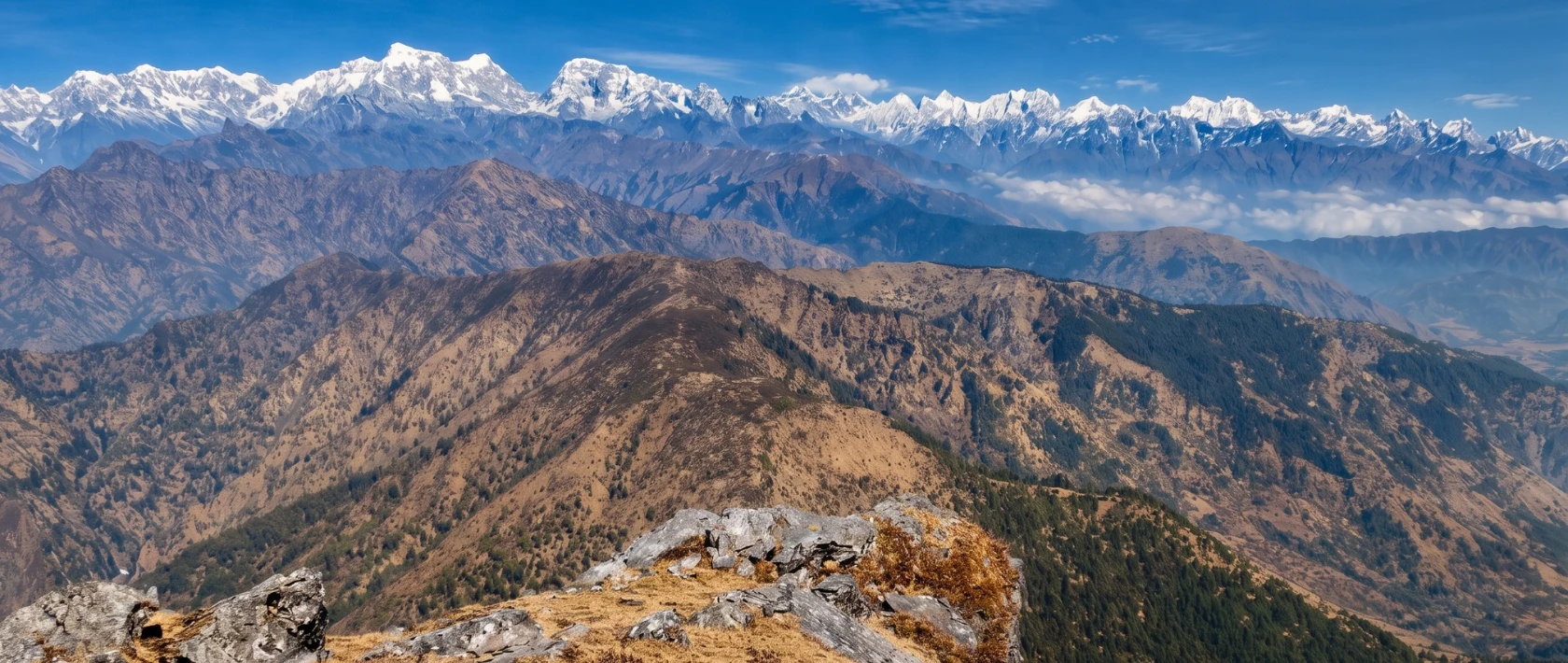
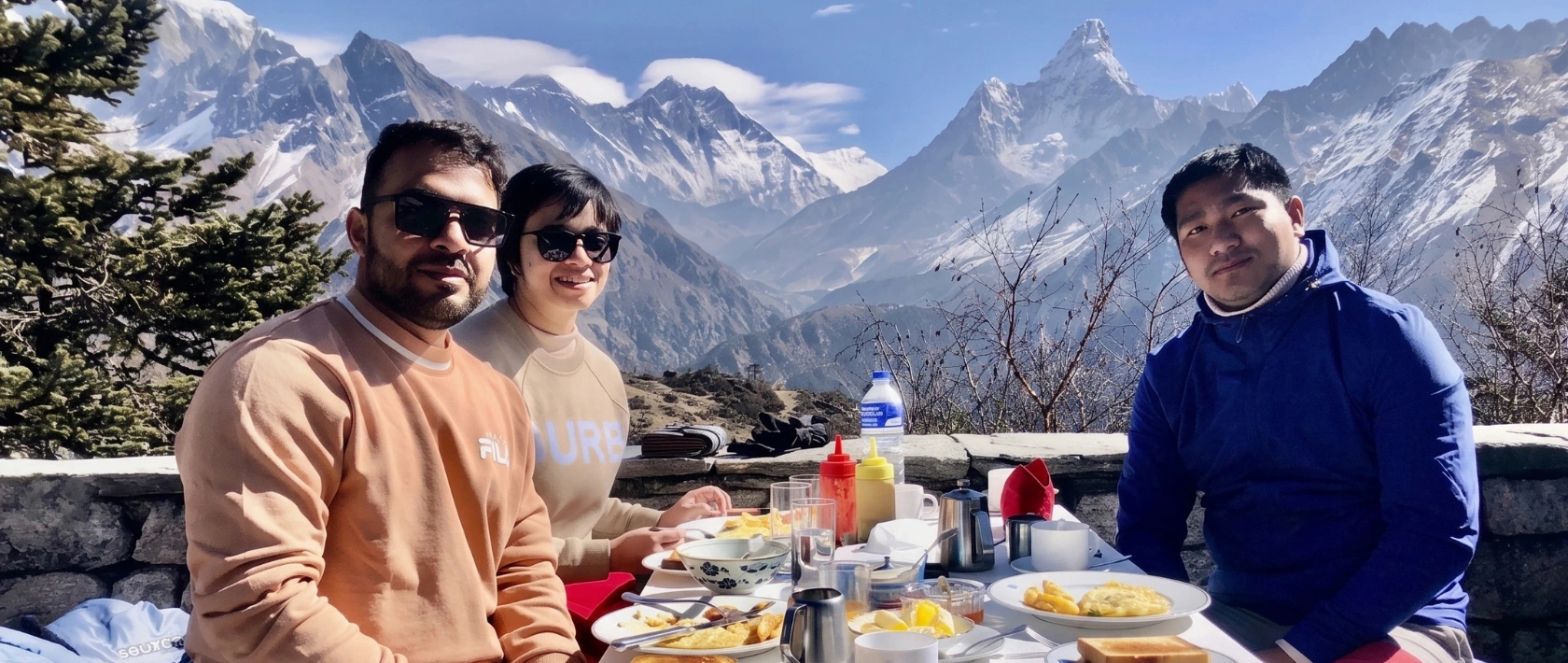
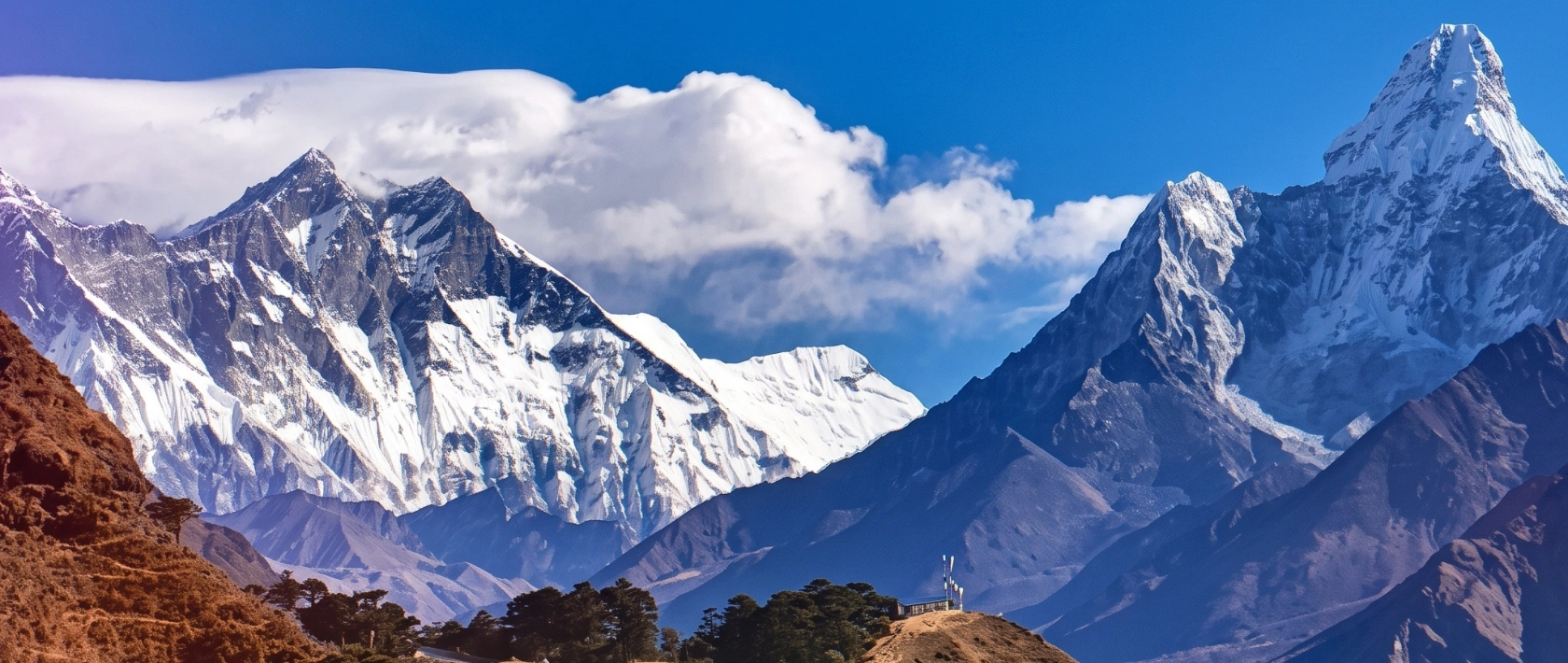
Elevation Profile
Altitude Chart
Elevation profile across 9 days. Maximum altitude: 3,962m
Common Questions
Frequently Asked
It is an easy-to-moderate trek with no high pass and a maximum altitude of around 3,960 metres. The steep climb to Namche is the hardest part. With basic fitness and no prior experience, most healthy people can complete it comfortably.
Yes. You get your first views of Everest on the climb to Namche, and the highlight is the panorama from the Everest View Hotel, where Everest, Lhotse, and Ama Dablam are all in view. Tengboche offers further spectacular sights.
Absolutely - it is one of the best Everest options for families with older children, first-time trekkers, and older travellers, thanks to its short duration, moderate altitude, and comfortable lodges.
You need the Sagarmatha National Park Entry Permit and the Khumbu Pasang Lhamu Rural Municipality Permit, both of which are included in your package. A TIMS card is no longer required for the Everest region.
During the peak seasons (April–May and October–November), Lukla flights operate from Ramechhap (Manthali Airport), a 4–5 hour drive from Kathmandu, to ease air-traffic congestion. In quieter months they usually fly direct from Kathmandu. Your package covers both.
The risk is low compared with Base Camp treks, since the maximum altitude is around 3,960 metres and you never sleep very high. The Everest View Hotel hike aids acclimatization, and your guide monitors your health with an oximeter.
The Lukla flight allows 15 kg per person (usually 10 kg checked and 5 kg hand luggage). Pack light and leave any extra items in your hotel in Kathmandu.
Spring (March–May) and autumn (September–November) are ideal, offering the clearest mountain views. Winter is cold but quiet, and the summer monsoon brings cloud and possible flight delays.