

About This Trek
Winter Trek to Everest Base Camp
The Everest Base Camp Trek is one of the most iconic trekking adventures in the world. Every year, thousands of travelers visit Nepal to experience the breathtaking beauty of the Everest region. While spring and autumn are traditionally considered the most popular trekking seasons, winter offers a unique and rewarding experience for those seeking quieter trails, crystal-clear mountain views, and a true Himalayan adventure. Many trekkers wonder whether it is possible to reach Everest Base Camp during winter. The answer is absolutely yes. With proper preparation, suitable winter clothing, quality trekking equipment, and the support of experienced guides, the Everest Base Camp Trek in winter can be a safe, enjoyable, and unforgettable journey.
Winter transforms the Everest region into a spectacular mountain paradise. Snow-covered landscapes, frozen rivers, peaceful villages, and stunning Himalayan panoramas create a magical atmosphere that few trekkers experience. If you are looking for a more authentic and less crowded Everest adventure, winter may be the perfect season for you.
Why Choose the Everest Base Camp Trek in Winter?
The Everest Base Camp Trek in winter offers a unique and unforgettable Himalayan experience with fewer crowds, clear mountain views, and a peaceful atmosphere. The trails are quieter compared to the busy spring and autumn seasons, allowing you to enjoy the beauty of the Everest region in a more serene environment. Winter brings crisp, clear skies, making it one of the best times to capture stunning views of Mount Everest and the surrounding peaks. The snow-covered landscapes, frozen rivers, and traditional Sherpa villages create a magical experience. Another advantage is that flights to Lukla are usually operated directly from Kathmandu during winter, avoiding the additional drive to Ramechhap required during peak seasons.
Although temperatures are colder and proper winter gear is essential, with good preparation and an experienced guide, the Everest Base Camp Trek in winter is a rewarding adventure for those looking for tranquility, breathtaking scenery, and a true Himalayan experience.
Is the Everest Base Camp Trek Suitable for Beginners?
Yes, the Everest Base Camp Trek can be suitable for beginners who are physically fit, well-prepared, and have a positive mindset. You do not need previous trekking or mountaineering experience, but you should be comfortable walking for several hours a day on varied terrain and at high altitude. The trek is considered a moderate to challenging adventure due to the high elevation, long walking days, and changing weather conditions. Proper acclimatization, regular preparation before the trek, a gradual itinerary, and the support of an experienced guide make it achievable for first-time trekkers.
With good fitness, proper equipment, and the right preparation, many beginners successfully complete the Everest Base Camp Trek and enjoy an unforgettable Himalayan experience.
Everest Base Camp Trek Difficulty in Winter ?
The Everest Base Camp Trek in winter is considered more challenging than in the spring and autumn seasons due to colder temperatures, possible snowfall, icy trails, and shorter daylight hours. The higher you go, the colder the conditions become, especially above 4,000 meters, where proper winter clothing and preparation are essential. The main challenges include walking on frozen or slippery trails, dealing with low temperatures, and managing the effects of high altitude. However, the trek does not require technical climbing skills, and with a proper acclimatization schedule, good fitness level, suitable winter gear, and support from an experienced guide, it is achievable for well-prepared trekkers. The reward is a peaceful trail, fewer crowds, crystal-clear mountain views, and a truly memorable Himalayan winter adventure.
What's covered
Includes & Excludes
✓ Included
- Arrival and departure transfer service (private car/jeep/minivan) as per the group size
- 2 nights accommodation with breakfast in Kathmandu (Tourist Standard Hotel) on a twin-sharing basis
- Kathmandu airport transfer for Lukla flights (Private vehicle)
- Kathmandu - Lukla - Kathmandu direct flight tickets
- Meals (Breakfast, Lunch, and Dinner) during the trek
- Seasonal fruits, every day after dinner, during the trek
- All accommodation (lodge/guesthouse) during the trek on a twin-sharing basis
- 5 nights attached bathroom with hot shower during the trek (1N- Phakding, 3N- Namche, and 1N- Lukla)
- Unlimited purified drinking water (except at Gorakshep) during the trek
- Sagarmatha national park entrance fee
- Local rural municipality entrance fee
- Government-licensed, English-speaking, experienced, and knowledgeable guide and his entire expenses
- A porter (One porter for each 2 members) and his entire expenses
- Insurance of guide and Porter
- All required local and government taxes
- Company duffle bag and trekking route Map
- Basic First-Aid Kit with Oximeter
- Adventure certificate upon completion of the trek
- Farewell dinner
✕ Excluded
- Nepal arrival visa
- Meals in the city except breakfast and other mentioned farewell dinner
- Personal expenses like all kinds of drinks including mineral water, tea/coffee, alcoholic and soft beverages
- Wi-Fi & battery charging, and extra hot shower, laundry service while on a trek
- Extra baggage excess while flying to Lukla (only 15 kg included)
- Your travel insurance covers Helicopter evacuation over 5000 meters and trip cancellation
- Accommodation and meals in Kathmandu in case of early return from the trek
- Tipping to staff (as an appreciation)to service providers and any other extending trips/accommodation
Day by Day
Full Itinerary
Namaste and welcome to Nepal! When you arrive at Tribhuvan International Airport in Kathmandu, our Desire Adventures representative will meet you and take you to your hotel. After check-in, you can relax and enjoy some free time. In the afternoon, you will meet your trekking guide and fellow travelers for a short trip briefing at our office, or our company representative will meet you at your hotel. We will explain the trip and answer any questions you may have. After the meeting, return to your hotel, rest well, and get ready for your adventure starting the next day.
Accommodation: Tourist-standard hotel (twin/double room), Kathmandu.
Early in the morning, your guide will meet you at your hotel and take you to the airport for your flight to Lukla. The scenic flight takes about 35 minutes and offers beautiful mountain views on clear days, along with an exciting landing at Tenzing Hillary Airport. After arriving in Lukla, you will meet your porter. Enjoy breakfast while your bags are prepared for the trek.
After breakfast in Phakding, you will begin your trek by crossing a suspension bridge over the Dudh Koshi River. The trail follows a gentle path through peaceful pine forests and small villages. Walking along the river, you will pass Toktok and continue through the forest with views of small waterfalls and farms before reaching Benkar. From here, cross another bridge and walk through beautiful forests of magnolia, fir, and rhododendron until you reach Chumoa and then climb a little further to Monjo. At Monjo, you will enter Sagarmatha National Park, where your guide will complete the permit check. After a short break, continue downhill to the river, passing a traditional Kani gateway and rocks carved with Tibetan prayers. Cross the bridge and walk to Jorsale, a nice place to rest and enjoy lunch.
Today is an important rest and acclimatization day in Namche to help your body adjust to the higher altitude and reduce the risk of AMS. Instead of staying in the lodge all day, we recommend a short hike after breakfast to stay active and enjoy the beautiful surroundings.
After breakfast in Namche Bazaar, begin your trek towards Tengboche. The trail follows a scenic path along the hillside with beautiful views of Everest, Lhotse, Ama Dablam, and other surrounding peaks. Passing mani stones and small villages, you will walk through peaceful forest trails until you reach Sanasa.
In the early morning, you can join the monks for peaceful prayers at Tengboche Monastery before breakfast. After breakfast, start your trek with a gentle downhill walk through forest trails to Deboche. Then continue on an easy, flat path through pine forest for about 30 minutes before crossing a suspension bridge. From here, follow a gradual uphill trail with beautiful mountain views as you walk towards the lovely Sherpa village of Pangboche.
Acclimatization day in Dingboche is very important before continuing toward Everest Base Camp. This is your second rest and acclimatization stop to help your body adjust to the higher altitude and reduce the risk of altitude sickness. After breakfast, you will go for a short hiking trip with your guide around Dingboche.
After enjoying breakfast in Dingboche, you will begin your trek toward Lobuche. The trail gradually climbs along a wide valley with beautiful mountain views. You may follow the path that passes above Pheriche or the trail that slowly ascends along the ridge before both routes meet near a small glacial stream. After crossing the stream, you will continue uphill to Thukla, enjoying scenic views of Taboche, Cholatse, Ama Dablam, and Kantega along the way.
Today is one of the most exciting days of your trek as you walk to Everest Base Camp, the base of the world’s highest mountain. After an early and filling breakfast in Lobuche, you will begin your journey following the rocky trail along the Khumbu Glacier. The path passes below steep mountain walls and continues gradually toward Gorak Shep. Before reaching Gorak Shep, you will walk over rough terrain with a few short but steep climbs and sections of glacier moraine.
Early in the morning, you will hike to Kala Patthar to enjoy one of the best sunrise views in the Everest region. Since it takes about 2 hours to reach the top, you will start your hike before sunrise. As you slowly climb in the quiet morning, you will watch the mountains change color as the sun rises. From the summit, you will enjoy amazing panoramic views of Everest, Lhotse, Nuptse, Pumori, and many other Himalayan peaks. You can also see the Khumbu Glacier, Khumbu Icefall, and Everest Base Camp from above.
After breakfast in Pheriche, you will begin your trek back toward Namche Bazaar. The trail starts with a gentle walk up to Pheriche Pass and then descends to the junction at Chuto. From there, you will follow an easy and mostly flat trail to Somare. Along the way, you will pass a rock painting of Guru Rinpoche and slowly leave the dry alpine landscape behind as you continue toward Pangboche.
After breakfast in Namche Bazaar, you will begin your final trekking day toward Lukla. The trail starts with an easy walk to Mislung with beautiful views along the way. From there, you will enter a pine forest and follow a steep downhill path to the Hillary Bridge. After crossing the bridge, you will continue on a mostly flat trail to Jorsalle and then gradually climb up to Monjo.
After breakfast in Lukla, you will take a flight of about 35 minutes back to Kathmandu, enjoying the stunning views of the mountains from the plane. Upon arrival, you will be transferred by private vehicle to your hotel in Thamel. The rest of the day is free for you to relax or explore the lively markets and streets of Kathmandu.
Yourwinter trek to Everest base camp with Desire Adventures comes to an end today. Depending on your flight schedule, you will be transferred in a private vehicle to Tribhuvan International Airport for your onward journey.
Physical Preparation
Difficulty & Fitness
Moderate-StrenuousWhat to Bring
Packing List
Everything you need for a comfortable and safe trek. Items marked Required are essential.
Clothing
-
Moisture-Wicking Base Layers (3 Pairs)Required
-
Mid-Layers (2 Fleeces)Required
-
Insulation Layer 1 Down JacketCan Rent
-
Outer Shell Layer 1 Jacket, PantsRequired
-
Trekking Pants 2 PairsRequired
-
Gloves lightweight touch-screen compatible liner glovesRequired
Footwear
-
Main Hiking Boots Waterproof, high-ankle support bootsRequired
-
Camp Shoes A pair of lightweight running shoesRequired
-
Trekking Socks (4 Pairs)Required
-
Liner Socks (2 pairs)Required
Headwear
-
Buff / Neck Gaite (2 Pieces)Required
-
Sun Hat / Cap wide-brimmed hatRequired
-
Warm Beanie insulated wool or fleece hatRequired
-
Polarized SunglassesRequired
Gear
-
Four-Season Sleeping Bag Rated down to at least -15°CRequired
-
Trekking Poles One pair of sturdy, adjustable trekking polesRequired
-
Headlamp high-lumen headlampRequired
-
Water Vessels (2 Liters Total CapacityRequired
-
High-Capacity Power Banks (20,000mAh+)Required
-
Sunscreen & Lip BalmRequired
-
Personal Hygiene KitRequired
Additional Information
More Details
How Cold Is the Everest Base Camp Trek During Winter?
During winter (December to February), the Everest Base Camp Trek can be very cold, especially at higher elevations. Temperatures vary depending on altitude and weather conditions. In the lower areas, daytime temperatures are usually comfortable, while mornings and evenings can be chilly. As you reach higher elevations, temperatures drop significantly. At Everest Base Camp (5,364m), daytime temperatures can be around -10°C to -15°C, and nighttime temperatures may drop to -20°C or lower during the coldest periods. At places like Gorak Shep (5,164m), early mornings and nights are especially cold.
Despite the cold, winter trekking is possible with proper preparation. Warm layers, a good sleeping bag, insulated jacket, gloves, hat, and proper trekking boots are essential. The clear skies, peaceful trails, and spectacular snow-covered Himalayan views make the winter Everest Base Camp Trek a rewarding experience for well-prepared trekkers.
Why Trek with Desire Adventures?
At Desire Adventures, we are passionate about helping travelers discover the beauty of Nepal and create memories that last a lifetime. As a local trekking company, we know the mountains, trails, and culture of Nepal very well, and we love sharing them with our guests. Our experienced guides and porters are friendly, caring, and always ready to support you throughout your journey.
We believe that every trek should be safe, comfortable, and enjoyable. From your first email to the final day of your adventure, our team is here to assist you every step of the way. We offer well-planned itineraries, fair prices, personalized service, and genuine Nepali hospitality. When you trek with Desire Adventures, you are not just another customer, you become part of our family. We take pride in making your Himalayan adventure smooth, memorable, and truly special. Let us help you turn your dream of exploring Nepal into an unforgettable experience.
Can flights to Lukla operate during winter?
Yes, flights to Lukla do operate during the winter season. In fact, winter often brings clear skies and stable weather, which can provide good flying conditions. During this time, most Lukla flights are operated directly from Kathmandu, allowing trekkers to avoid the long drive to Ramechhap that is common during the busy spring and autumn seasons. However, weather in the Himalayas can be unpredictable at any time of year. Flights may still be delayed or cancelled due to fog, strong winds, snowfall, or poor visibility. Therefore, it is always recommended to keep a spare day in your itinerary for possible flight disruptions.
Is winter cheaper than spring and autumn?
Yes, winter is generally more affordable than the busy spring and autumn seasons. With fewer trekkers on the trails, flights, accommodation, and trekking services can often be available at better rates. Winter also offers quieter trails, less crowded tea houses, and excellent mountain views, making it a great value-for-money trekking season.
Do I need crampons?
Lightweight crampons or micro spikes are highly recommended, especially if fresh snow or icy trail conditions are present.
What is the best winter month for Everest Base Camp Trek?
December and February are often considered the best winter month for the Everest Base Camp Trek. The weather is usually more stable, the skies are clear, and the trails are quieter than during the peak trekking seasons. You can enjoy stunning mountain views and a peaceful trekking experience before the coldest part of winter arrives.
January and February are also beautiful months for trekking, especially if you enjoy snowy landscapes and fewer crowds, but temperatures are generally much colder.
Overall, December and February offers the perfect balance of clear weather, breathtaking scenery, and comfortable winter trekking conditions.
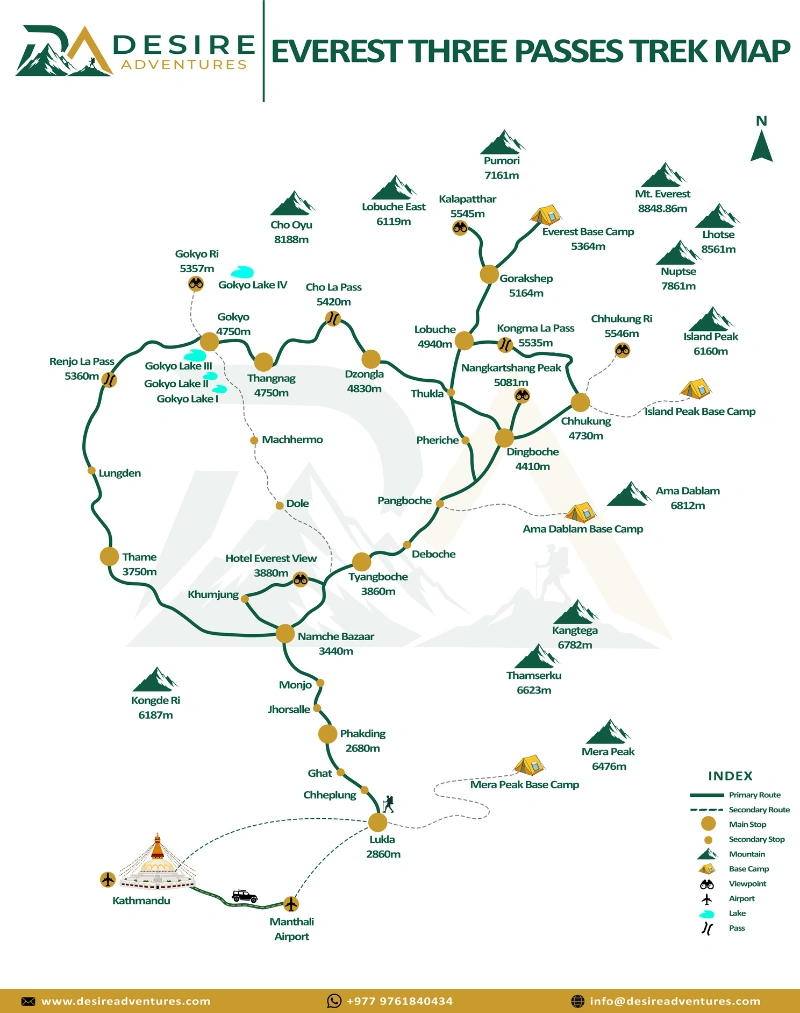
Trek Route
Route Map
Scheduled Group Trips
Available Departures
Join a scheduled group departure for extra discounts and a shared adventure with fellow trekkers.
| Departure Date | Return Date | Duration | Price | Availability | |
|---|---|---|---|---|---|
| 30 Nov 2026 | — | 14 Days | USD 1220 | Only 10 left | |
| 4 Dec 2026 | — | 14 Days | USD 1230 | 8 spots left | |
| 14 Dec 2026 | — | 14 Days | USD 1230 | 5 spots left | |
| 24 Dec 2026 | — | 14 Days | USD 1250 | 4 spots left | |
| 26 Dec 2026 | — | 14 Days | USD 1230 | 6 spots left | |
| 4 Jan 2027 | — | 14 Days | USD 1250 | 4 spots left | |
| 15 Jan 2027 | — | 14 Days | USD 1250 | 2 spots left | |
| 25 Jan 2027 | — | 14 Days | USD 1250 | 4 spots left |