
About This Trek
Gokyo Lake Trek
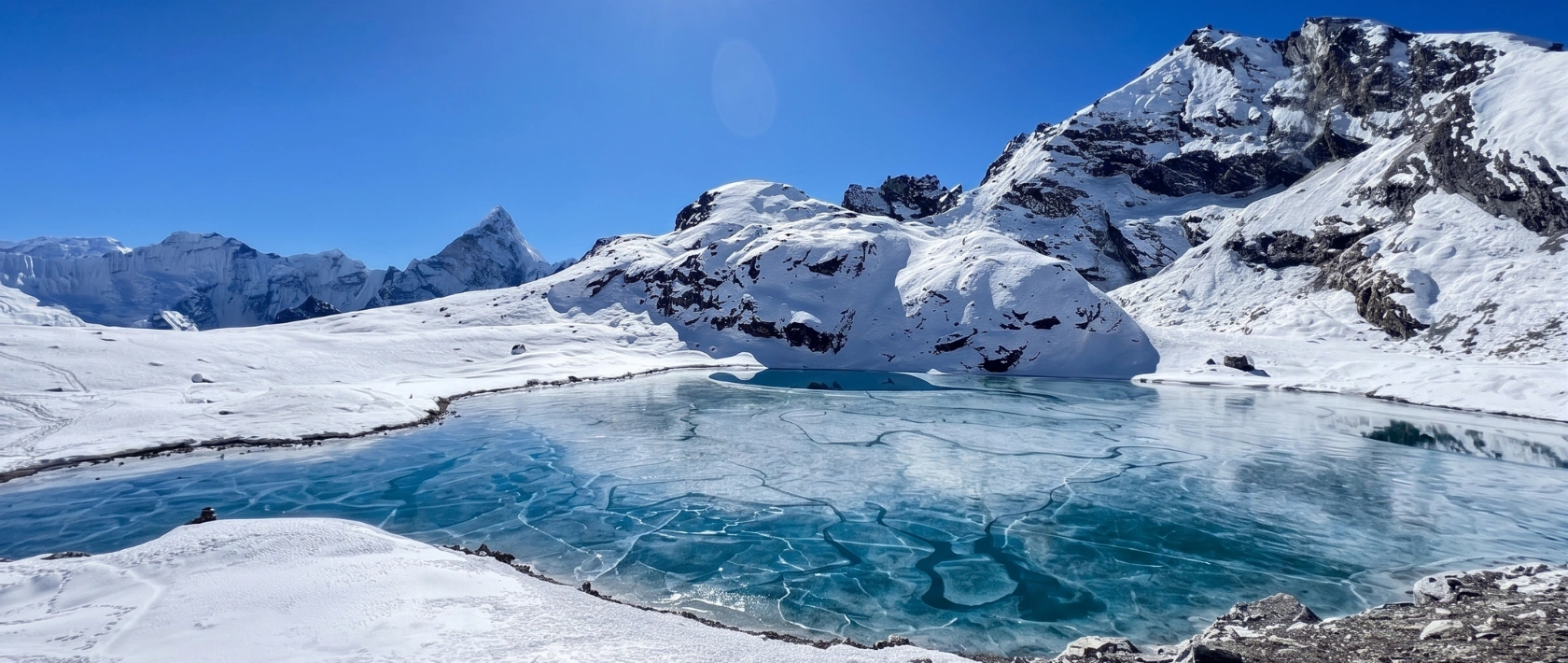
In terms of the Everest area itself most of our clients take the route to the right towards Base Camp and we will be heading to the left. The twelve day trek to Gokyo Lakes is my personal preference; it takes us away from the crowded, dusty roads of the main trail and puts us into a deep silence and five alpine lakes which resemble crushed turquoise poured over grey rock.
We start off with that classic 1:00am car ride to Ramechhap to board the Lukla flight and then we have the familiar scent of pine wood and yak dung as we make our way up Namche Bazaar. However by Day 5, we depart the classic route.
As we hike past the dwarf junipers of Dole and into Machherma the air becomes thinner and crisper. I’m not going to candy coat it – climbing up the terminal moraine of the Ngozumpa Glacier on Day 7 will challenge your lungs. You will certainly feel each inch of elevation at 4790m, and the tea houses at this level are very basic. Your room’s water may freeze during the night and you will likely find yourself wanting to stay close to the centeral yak-dung stove in the dinning room.
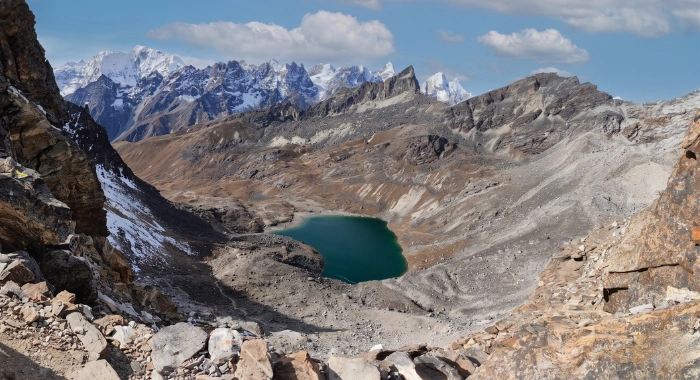
However, when you wake-up early on Day 8 to climb Gokyo Ri (5357m) everything changes. To your left you can see the large Ngozumpa glacier winding its way down through the valley, and to your right you get an incredible view of Cho Oyu and Everest that surpasses all views one could ever expect at Base Camp. This is a very remote section of the Himalayas, cold, quiet and has a lasting impression on you long after we fly back to Kathmandu.
Our Operational Blueprint for Gokyp lake Treks
Before we dive into the day-by-day trail mechanics, we believe you should have absolute clarity on the structural parameters of this expedition. We do not design our itineraries based on guesswork; rather, we build them around proven high-altitude safety metrics. Below is the operational data sheet that we have optimized for the 2026/2027 trekking seasons.
- Total Duration: We structure this program over exactly 12 Days, starting and ending in Kathmandu. We have calculated this timeline to provide the optimal physiological window for acclimatization, avoiding the rushed transitions that compromise safety.
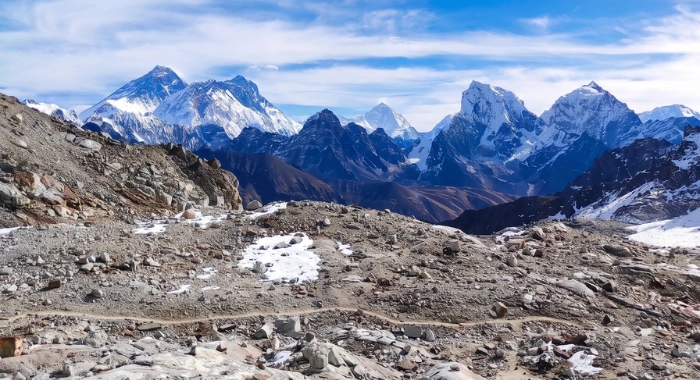
- Maximum Elevation: Your ultimate objective is the summit of Gokyo Ri at 5,357m. Additionally, we will stand on the shores of the third sacred lake, Dudh Pokhari, at an elevation of 4,790m (15,715 ft).
- Trekking Grade: We classify this route as Challenging. While the daily distances are manageable 8 to 14km, the thin air past the 4,000m, threshold demands excellent cardiovascular preparation. We recommend a focused physical training regimen starting at least 8 to 12 weeks prior to departure.
- Standard Accommodation: We have personally vetted every single property on this route. In Kathmandu, we place you in a premium tourist-standard hotel in Thamel. On the trail, we provide handpicked local teahouses offering clean, comfortable twin-share rooms with warm common dining areas.
- Hygienic Meals: Our package includes full board (3 meals per day) on the trail. We prioritize fresh, carbohydrate-dense meals to fuel your daily climbs, along with a warm beverage at each stop.
- Optimal Travel Windows: We strictly operate this package during the dual peak seasons: Spring (March to May) and Autumn (September to November). We do this because these months offer the most stable atmospheric conditions and maximum visual clarity.
Now, lets start with the first reality check of Gokyo Lake Trek.
The Ramechhap Flight or Lukla Flight: Logistics Transparency
Lets talk about the Ramechha and Lukla flight. So, if you are planning for Gokyo Lake Treks during the peak seasons, specifically Spring (March to May) and Autumn (Sep-Nov), you must know the reality of Lukla Flights. The flight wont be happening from Kathmandu. The Civil Aviation Authority of Nepal (CAAN) regularly diverts all commercial flights to Lukla away from Kathmandu.
Instead, flights operate out of Manthali Airport in Ramechhap during peak season which is Spring and Autumn season.
This information is usually hidden in some of the travel agencies but it is the truth. So, lets talk about why the flights are redirected from Ramechhap.
Why the diversion Happen?
Kathmandu’s Tribhuvan International Airport (TIA) handles massive international traffic alongside domestic flights. During peak trekking months, the single runway suffers from severe congestion, causing holding patterns that delay small twin-otter aircraft for hours. To resolve this, the government utilizes Ramechhap as the primary eastern gateway. Ultimately, this operational shift keeps your mountain transit safer and far more predictable.
So, what happens next?
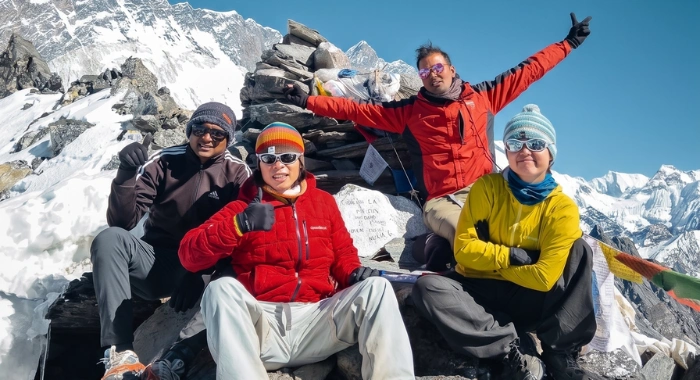
To catch the early morning flights before the high-altitude winds pick up over the Lukla runway, we coordinate a precise, comfortable departure from your Kathmandu hotel.
- The Departure: We depart Kathmandu at exactly 1:00 am on Day 2.
- The Vehicle: We do not pack you into local, cramped transport. We provide private, comfortable tourist-plated vehicles specifically optimized for the130km (80miles) mountain road.
- The Advantage: The drive takes approximately 4-5 hours. You can sleep comfortably during the journey. We arrive at Ramechhap in time to secure boarding passes for the very first wave of flights (15-18 minutes flight time) to Lukla.
What's covered
Includes & Excludes
✓ Included
- Airport Transfers: Full arrival and departure transfer service using a private car, jeep, or minivan.
- Kathmandu Accommodation: 2 nights stay with breakfast at a tourist-standard hotel on a twin-sharing basis.
- Peak Season (April–May & October–November): Shared jeep or minivan transfer to Ramechhap, with flights operating Ramechhap–Lukla–Ramechhap.
- Off-Season (June–September & December–March): Direct flights operating Kathmandu–Lukla–Kathmandu.
- Trail Accommodation: Clean lodge stays during the entire trek on a twin-sharing basis.
- 5 nights in rooms with attached bathrooms and hot showers included (1 night in Phakding, 3 nights in Namche, and 1 night in Lukla).
- Daily breakfast, lunch, and dinner while out on the trekking route.
- Seasonal fruits served every day after dinner, plus unlimited purified drinking water throughout the trek.
- Sagarmatha National Park entrance fee and the local Khumbu Pasang Lhamu rural municipality entrance fee.
- A government-licensed, English-speaking, experienced guide to lead the way, including full coverage of his expenses and insurance.
- Dedicated local porters to carry your gear (1 porter shared between 2 trekkers), including full coverage of their expenses and insurance.
- A durable company duffel bag to use, a detailed trekking map, and all required local and government taxes covered.
- A basic first-aid kit equipped with an oximeter carried by our team, alongside free coordination and support in emergency cases.
- A traditional farewell dinner back in Kathmandu to celebrate our successful journey.
✕ Excluded
- Nepal Entry Visa: Your arrival visa fee, which you can easily obtain at the Kathmandu airport.
- City Meals: Lunch and dinner in Kathmandu, giving you the freedom to explore the city's food scene (except for the included breakfast and farewell dinner).
- Personal Trail Drinks: All kinds of personal drinks on the trail, including mineral water, extra tea/coffee, alcoholic drinks, and soft beverages.
- Teahouse Amenities: Wi-Fi access, battery charging stations, extra hot showers (beyond the 5 included nights), and laundry services at the lodges.
- Flight Weight Limits: Any extra baggage excess fees if you exceed the strict 15kg weight limit allowed on the Lukla flight.
- Travel Insurance: Your mandatory travel insurance policy, which must explicitly cover helicopter evacuation over 5000m and trip cancellation.
- Early Return Costs: Any extra accommodation and meal expenses in Kathmandu if you happen to return early from the mountains.
- Extended Itineraries: Any other extended trips, extra activities, or additional accommodation outside our standard 12-day schedule.
- Tips for the Crew: Tipping to our guides and porters at the end of the trail as a personal token of appreciation for their hard work.
Day by Day
Full Itinerary
Our journey starts the moment you step outside the terminal at Tribhuvan International Airport. We will be waiting there to greet you with a traditional marigold garland before jumping into our private vehicle to head straight to the hotel.
The afternoon is ours to rest up, or we can wander out into the colorful, chaotic streets of Thamel to pick up any last-minute trekking gear like woolen beanies or broken-in trekking poles. In the evening, we will gather for a thorough briefing where we will check everyone's gear and run through our mountain safety protocols over a hot welcome dinner.
Insider Tip: Don’t buy cheap knock-off water purification tablets in Thamel. We always recommend picking up Aquatabs or an ultraviolet purifier like a SteriPEN. Also, buy a couple of packages of local titaura (sour dried fruit candy)-it’s fantastic for keeping your mouth moist when the dry mountain air hits your throat later.
Our alarms will go off at 1:00 AM. It is a bumpy, four-hour drive to the Ramechhap airstrip, but the payoff is catching one of the first morning flights into Lukla 2,830m. The 18-minute flight is thrilling, giving us a front-row seat to the massive green ridges of the lower Himalayas. Once our porters balance out the duffel bags, we lace up our boots and hit the trail.
Today is a gentle introduction-a three-hour descent along the roaring, milky-blue waters of the Dudh Koshi River. We will wrap up the day at a cozy teahouse in Phakding, where the smell of woodsmoke and hot ginger tea welcomes us.
Insider Tip: When boarding the twin-otter plane at Ramechhap, try to sit on the left side. That’s where you get your very first, jaw-dropping panoramic view of the snow-capped Himalayan wall before dropping onto the Lukla runway.
We wake up early to the sound of dynamic river currents. Today the real hiking begins as we cross several high suspension bridges draped in colorful prayer flags, including the iconic, wind-swept Hillary Suspension Bridge.
After entering the Sagarmatha National Park check-post, the trail shows its teeth. Our final three hours are a relentless, steep zigzag up through dense pine forests. Our thighs will burn and we will find ourselves gasping as the air begins to thin out.
We'll keep our eyes open through the trees; if the weather plays nice, we will catch our very first glimpse of Mt. Everest before pulling into the vibrant amphitheater of Namche Bazaar.
We do not rush the mountain. Skipping acclimatization is the fastest way to get a helicopter ride back down, so we spend today letting our lungs adapt. We will take a steep morning hike up to the Everest View Hotel 3,880m to get our blood pumping. Up there, we can sip hot tea while staring at the jaw-dropping ridge lines of Ama Dablam and Thamserku.
Afterward, we will head down to explore the local bakery and the Sherpa Culture Museum. We need to sleep early tonight; tomorrow we leave the main tourist tracks behind.
Insider Tip: Namche is your last chance to use a proper, free ATM or buy reasonably priced charging cards. If you love coffee, skip the big chains and follow us to the tiny local bakeries down the side alleys-their warm, fresh cinnamon rolls are fuel for the soul.
Today is where our true Gokyo Lake Trek adventure begins. We start on the main trail before taking a sharp left, waving goodbye to the massive crowds heading toward Everest Base Camp.
The trail climbs steadily up through quiet, moss-covered rhododendron and silver birch forests. The noise of the world completely fades away here. We will pass a few isolated yak pastures and high ridges before reaching the small settlement of Dole.
The air up here feels noticeably sharper, and the evening temperature drops like a stone the second the sun dips behind the peaks.
Insider Tip: The moment we clear Namche hill, the trail splits at Sanasa. Watch how 95% of the trekkers continue straight toward Tengboche. When we veer left onto the Gokyo track, look up into the cliffs-this quiet stretch of forest is the absolute best spot to glimpse the colorful Danphe (Impeyan Pheasant), Nepal's national bird.
We hit the trail for a shorter, four-hour climb to give our bodies extra time to adjust to the escalating altitude. Our route takes us along a scenic ridge high above the valley floor, winding through wide, wind-scoured alpine pastures where Himalayan thar and musk deer occasionally graze.
The massive face of Cho Oyu dominates the horizon ahead of us. We will reach Machherma by lunchtime. In the afternoon, we will walk over to the local Porter Rescue Center to attend their daily high-altitude safety lecture. It is an eye-opening chat about how to spot early signs of altitude sickness.
This is the day we have been waiting for. The trail climbs a rocky ridge and drops into the massive, boulder-strewn moraine of the Ngozumpa Glacier. It is a raw, jagged landscape shaped by shifting ice. As we push forward, the valley reveals its rewards.
First, we pass the small first lake, then the second lake, before the stunning, bright turquoise expanse of the third lake (Dudh Pokhari) opens up in front of us. Standing on the shore, we will see the stone teahouses of Gokyo village mirrored perfectly in the glacial water. The teahouses here are basic, and our water pitchers will freeze tonight, but the view right outside our window is unmatched.
Insider Tip: At this altitude, battery life dies instantly. Before you go to sleep in Gokyo, slide your camera batteries, phone, and power bank inside your sleeping bag near your feet. Your body heat will keep them from draining overnight.
We wake up at 4:00 AM in the pitch black. The cold up here bites hard, and our breath will freeze on our collars as we switch on our headlamps. Pushing up the steep, frozen scree of Gokyo Ri takes a solid three hours of slow, rhythmic stepping. Every muscle will tell us to stop. But when we step onto the prayer-flag-draped summit just as the sun breaks, the struggle vanishes.
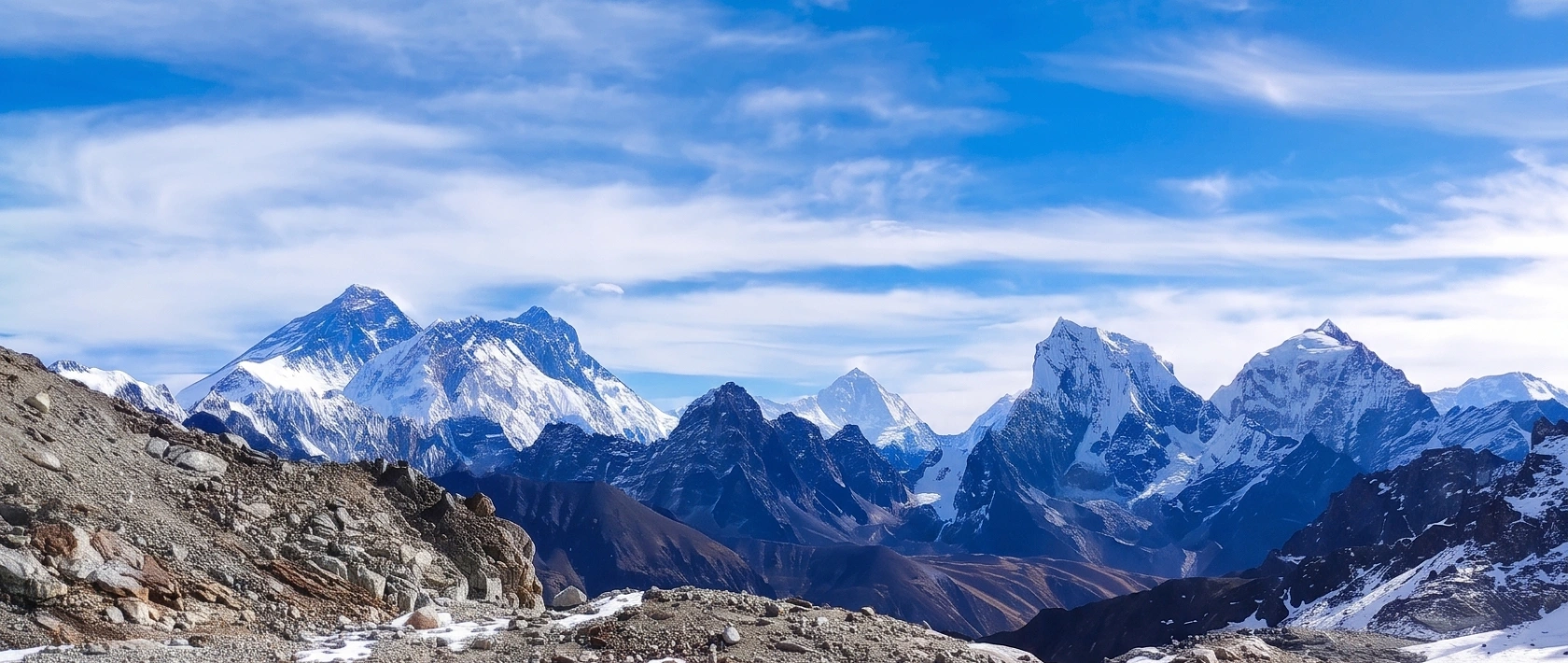
Below us, the entire Ngozumpa Glacier crawls through the valley, flanked by the brilliant blue lakes. Above us, the giants stand tall: Cho Oyu, Lhotse, Makalu, and the immense, dark wind-swept northern face of Mt. Everest. After soaking it all in, we will head down to the teahouse for a warm breakfast, pack our bags, and retrace our steps down the valley to the thicker air of Dole.
Insider Tip: Do not rush the descent down the frozen scree of Gokyo Ri. It can be incredibly slick at dawn. This is exactly why we insist on using trekking poles with rubber tips removed—you need that bare metal spike to bite into the icy dirt.
Descending feels like a victory lap. Our lungs will welcome the dense, oxygen-rich air as we drop back down through the juniper scrub and rhododendron forests. We will follow the downhill trail back into Namche Bazaar. After days of basic high-altitude living, walking back into Namche feels like returning to civilization. We can celebrate a successful summit with a hot shower, an espresso, and a fresh slice of apple pie at the local bakery.
Our final day on the trail is a long, seven-hour push. We follow the familiar path down the steep Namche hill, crossing the high suspension bridges one last time as we track the Dudh Koshi River back to Lukla. It is a physical day, but the atmosphere is festive.
In the evening, we will gather at our teahouse for a final celebration dinner with our incredible team of porters. It is a great local tradition to share a meal, reflect on the wild trail behind us, and hand out tips to the crew who made the journey possible.
Insider Tip: The tipping ceremony tonight is a big deal in Sherpa culture. We will pool our group tips together before dinner. It’s always an unforgettable night-expect a little local Chhaang (rice beer) to be poured, and don’t be shy if the porters pull you into a traditional dance!
We head to the Lukla airstrip early to catch our return flight to Ramechhap. Looking out the window, we will see the giant ridges of the Gokyo Lake Trek slowly fade into the background. From Ramechhap, our private vehicle will drive us back through the hills to Kathmandu. Back at the hotel, we can finally scrub off the trail dust with a long, hot bath. The rest of the afternoon is ours to relax, hunt for souvenirs, or enjoy a cold beer in Thamel.
Our 12-day adventure draws to a close today. After a relaxed breakfast at our hotel, we will coordinate your private airport transfer to line up perfectly with your international flight home. As we say our goodbyes at the departure terminal, we know you will be leaving with tired muscles, a camera full of turquoise lakes, and the quiet magic of the high mountains firmly rooted in your soul.
Physical Preparation
Difficulty & Fitness
ModerateWhat to Bring
Packing List
Everything you need for a comfortable and safe trek. Items marked Required are essential.
Clothing
-
Base Layer 2–3 sets of high-quality Merino wool thermal tops and bottomsRequired
-
Mid Layer 1 mid-weight technical fleece jacket or synthetic active pullover.Required
-
Outer Layer 1 high-loft, heavy down jacket with a hoodCan Rent
-
Outer Layer (Weather Shell) 1 waterproof and windproof breathable jacketRequired
-
Trekking Pants 2 pairs of lightweight, quick-dry, convertible trekking pants.Required
-
Trekking Shirts 3-4 moisture-wicking synthetic t-shirtsRequired
Footwear
-
Hiking Boots 1 pair of sturdy, high-ankle, waterproof trekking bootsRequired
-
Camp Shoes 1 pair of lightweight running shoesRequired
-
Socks 4 pairs of heavy Merino wool trekking socksRequired
Handwear
-
Liner Gloves 1 pair of lightweight, touchscreen-compatible gloves.Required
-
Summit Gloves 1 pair of heavy-duty, windproof, insulated mountaineering gloves or mittens.Required
Gears
-
Sleeping Bag 1 four-season down sleeping bagCan Rent
-
Trekking Poles 1 pair of adjustable trekking polesRequired
-
Headlamp 1 powerful LED headlamp with fresh batteriesRequired
-
Water Containers 2 wide-mouth Nalgene water bottlesRequired
-
Power Bank 20,000mah power bankRequired
-
Water Purification 2 packets of Aquatabs or a portable ultraviolet SteriPEN.Required
-
Toiletries Travel-sized biodegradable soap, toothbrushes, wet wipesRequired
-
Personal First Aid Daily medications, blister band-aids, ibuprofen, and a personal supply of DiamoxRequired
Additional Information
More Details
Gokyo Lake Trek Safety, Acclimatization, and Altitude Protocol
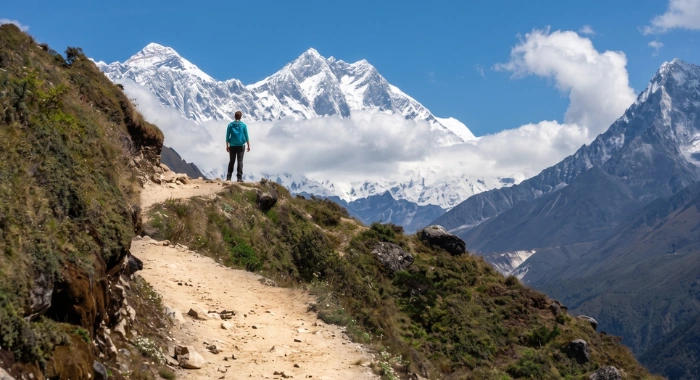
When we cross the 4,000m line on the Gokyo Lake Trek, the mountain stops being just a scenic backdrop and becomes an environment we must actively respect. As seasoned guides, we don't look at safety protocols as optional bullet points on a brochure. Up here, where the atmospheric pressure drops and every breath delivers roughly half the oxygen you enjoy at sea level, a solid acclimatization strategy is the literal boundary between a successful summit and a dangerous medical evacuation.
We handle high altitude by following two non-negotiable rules: we pace our ascent conservatively, and we communicate with absolute, brutal honesty about how our bodies are feeling.
Our Proven Acclimatization Strategy
We do not rush the valley, and we never try to outsmart the mountain. We have engineered our 12-day itinerary to follow the classic mountaineering golden rule: climb high, sleep low.
The Critical Namche Cushion: On Day 4, we pause for a mandatory acclimatization day in Namche Bazaar (3,440m). We don't spend this day lying in bed, because active acclimatization is far more effective. Instead, we take a steep morning hike up to the Everest View Hotel (3,880m) to force our lungs to adapt to the thinner air, before dropping back down to Namche to sleep. This jump-starts your body's production of red blood cells.
Conservative Daily Elevation Gains: Once we split from the main Everest trail and turn toward the quiet paths of Dole and Machherma, we deliberately limit our daily sleeping altitude gains to between 300m and 400m. Even though your muscles might feel strong enough to push further, we hold the line to give your internal systems time to adjust.
Dietary and Hydration Monitoring: We ensure that you are taking in at least 2 to 3 liters of purified water every single day. The cold, dry air dries out your lungs and dehydrates your system rapidly, which mimics and worsens the symptoms of Acute Mountain Sickness (AMS). We also serve hot garlic soup daily after dinner-a time-tested Sherpa remedy that naturally helps thin the blood and improves circulation at high altitudes.
Daily Health Monitoring and Early Warning Signs
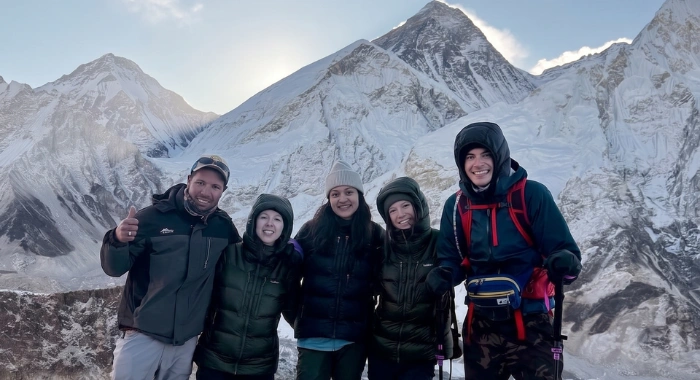
AMS does not care how fit you are or how many marathons you have run. It can hit anyone. That is why we monitor your health proactively, checking for symptoms before they turn into severe complications like HAPE (High Altitude Pulmonary Edema) or HACE (High Altitude Cerebral Edema).
Every single evening after dinner, we sit down with you in the teahouse dining room for a mandatory health check. We clamp a digital pulse oximeter onto your finger to measure your heart rate and your blood oxygen saturation percentage. We track these numbers daily on a chart to establish your personal high-altitude baseline.
If we notice your oxygen levels dipping below $80\%$ alongside a persistent, throbbing headache or mild nausea, we don't panic ut we do take action. We will discuss options like adjusting your dosage of Diamox (Acetazolamide) or holding you back for an extra rest day.
Emergency Evacuation Protocols
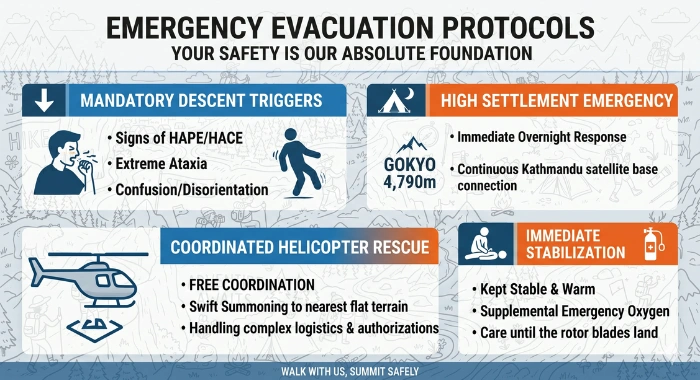
Let’s be entirely transparent: if you show signs of severe altitude sickness such as a wet, rattling cough, extreme loss of coordination (ataxia), or confusion our diagnostic protocol dictates an immediate, mandatory descent. We will never risk your safety or your life for a summit.
If a condition deteriorates rapidly overnight in high settlements like Gokyo 4,790m we initiate our emergency protocol immediately. We maintain a 24/7 satellite and radio communication line with our operations base in Kathmandu. Because we offer free coordination in emergency cases, we can swiftly summon an emergency rescue helicopter to the nearest flat terrain. We will handle the complex logistics, coordinates, and flight authorizations while ensuring you are kept stable, warm, and provided with supplemental emergency oxygen until the rotor blades land.
We keep you safe by preparing for the worst while guiding you step-by-step toward the best. When you walk with us, your safety is the absolute foundation of the journey.
Gokyo Lake Trek Food & Accommodation Guide
When we step onto the trail of the Gokyo Lake Trek, we leave western-style luxury behind and enter the world of Sherpa hospitality. Up here, your home every night is a traditional mountain teahouse-a stone-walled lodge that acts as a vital sanctuary from the elements. We want to be completely honest about what teahouse living looks like, because understanding the rhythm of life inside these lodges is the secret to keeping your energy high and your body healthy.
What Sleeping Up High is Really Like
Teahouse bedrooms are intentionally simple. They are small, unheated twin-sharing rooms built from local stone and wood paneling, containing two single beds with foam mattresses, pillows, and a basic quilt.
The most important thing to know is that the heat in a teahouse is concentrated in exactly one place: the central dining hall. Every evening, we will gather around the large iron stove, which is fueled by dried yak dung-the only sustainable fuel available past the tree line. This is where we swap stories, review our safety protocols, and dry out our damp hiking gear.
The second you leave the dining room to go to your bedroom, the air hits you. Up high in Dole, Machherma, and Gokyo, the temperature inside your room will drop below freezing overnight, and frost will form on the inside of the window panes. This is why we include 5 nights of upgraded rooms with attached bathrooms and hot showers in the lower valleys (Phakding, Namche, and Lukla) where your body needs maximum comfort early on. But once we push past 4,000m, everyone uses shared hallway toilets, and a hot shower becomes an expensive luxury that can actually cause you to chill and catch a cold.
Foods in Gokyo lake Trek:
Trekking at high altitude requires a massive amount of calories. Your body burns fuel at double its normal rate just to stay warm and pump oxygen. Fortunately, the menus in the Khumbu are surprisingly diverse, and we include full breakfast, lunch, and dinner directly from the lodge kitchens.
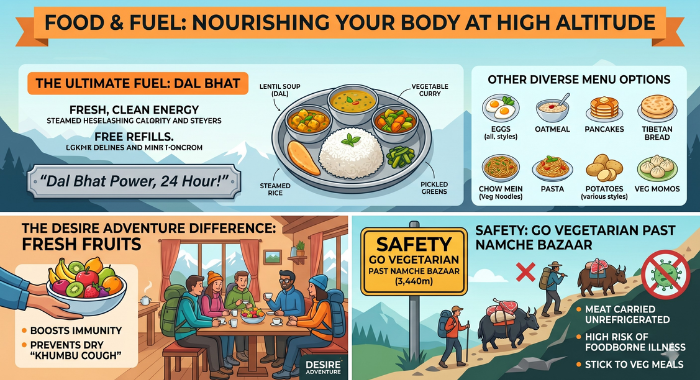
The Ultimate Mountain Fuel (Dal Bhat): There is a famous saying among us guides: "Dal Bhat Power 24 Hour, No Toilet No Shower." This traditional platter of steaming rice, lentil soup, spiced vegetable curry, and pickled greens is your absolute best friend. It is entirely fresh, rich in clean carbohydrates, and the best part? The kitchen will always give you free refills of rice and soup until you are completely full.
Breakfast Favorites: Before we hit the trail each morning, we will fuel up on hot porridge (oatmeal), eggs cooked to your preference, Tibetan fried bread, or carbohydrate-dense pancakes served with hot ginger honey lemon tea.
International Comfort Food: If you need a break from local food, the teahouses serve mountain adaptations of western dishes, including vegetable fried noodles (Chowmein), momos (steamed dumplings), potato hashes, pasta, and even rustic garlic pizzas.
The Guide's Golden Rule on Meat: We strictly advise you to eat a vegetarian diet once we climb past Namche Bazaar. The Everest region is a sacred Buddhist zone where animal slaughter is forbidden. Every single piece of meat you see on a menu past 3,440m has been openly carried up the trail on a porter’s back or a yak’s spine from Lukla without refrigeration. Sticking to fresh vegetable curries, eggs, and lentil soups is the single best way to avoid a stomach bug that could ruin your entire trek.
Every evening after dinner, we will finish our meal by serving a fresh platter of seasonal fruits to keep your vitamins up, followed by a final check of your daily hydration. We live simply up here, but the genuine warmth of the Sherpa families running these lodges makes a freezing night feel like home.
Booking, Visa, & Lukla Flight Logistics
We believe that a successful trek into the high Khumbu begins long before you set foot on the trail. Navigating government portals, border checkpoints, and flight regulations can feel overwhelming, but we handle the heavy lifting for you.
Here is our transparent guide to how we handle your booking, entry into Nepal, and the unpredictable nature of mountain aviation.
Booking Your Package & Financial Terms
To secure your spot on the Gokyo Lake Trek, we require a formal booking process to lock in your domestic flight tickets and high-demand teahouse rooms.
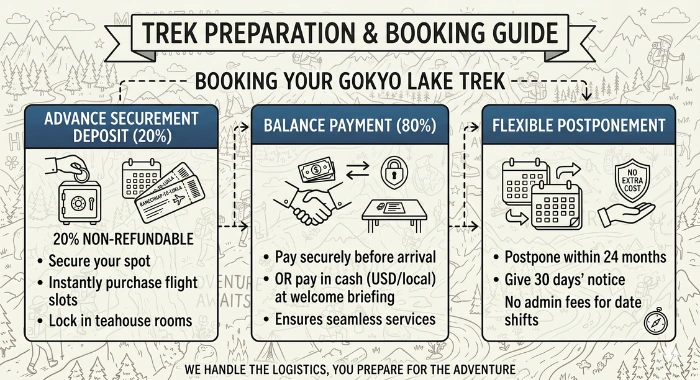
- Advance Securement Deposit: We require a 20% non-refundable deposit at the time of booking. This allow us to instantly purchase your Ramechhap-to-Lukla flight slots, which fill up months in advance during peak trekking seasons.
- Balance Payment: The remaining 80% balance can be securely transferred before your arrival or paid in cash (USD or local currency) during our Day 1 evening welcome briefing in Kathmandu.
- Flexible Postponement: If your travel plans shift unexpectedly, we allow you to postpone your trek to any future date within 24 months at no extra administrative cost, provided you give us at least 30 days' notice.
Securing Your Nepal Tourist Visa on Arrival
Entering Nepal is a straightforward process. We recommend obtaining a 30-Day Tourist Visa on Arrival right at Tribhuvan International Airport (TIA) in Kathmandu.
| Visa Duration | Cost (USD) | Best Practices for 2026 |
| 15 Days | $30 | Too short for this 12-day itinerary if flights face delays. |
| 30 Days | $50 | Recommended. Gives you a vital buffer zone for mountain travel. |
| 90 Days | $125 | Best if you plan to explore Pokhara or Chitwan afterward. |
The Visa Process: To save time at the border, pre-fill the online Electronic Travel Authorization (ETA) form on the official Department of Immigration portal up to 14 days before your flight. When you land, bring your printed confirmation page, a passport with at least 6 months of validity, and exactly 50 USD in clean, crisp cash bills. While credit card machines are available, they frequently crash, and cash remains the fastest way through immigration.
On the trail
Photo Gallery
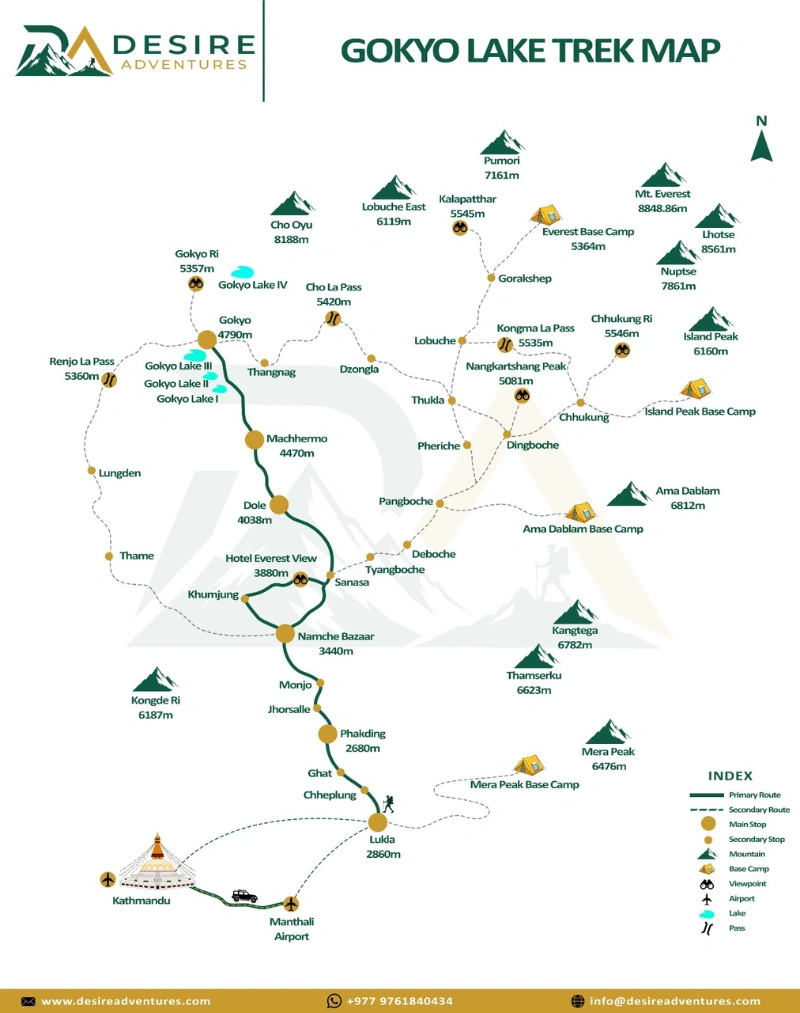
Trek Route
Route Map
Elevation Profile
Altitude Chart
Elevation profile across 12 days. Maximum altitude: 4,790m
Common Questions
Frequently Asked
We grade this trek as moderate to challenging. In terms of sheer difficulty, the days are roughly the same length as the classic Base Camp route (5-7 hours of walking per day). However, the summit push up Gokyo Ri (5,357m) is significantly steeper and more exhausting than the hike up Kala Patthar on the EBC route. The trail also requires navigating across the shifting rocky boulders of the Ngozumpa Glacier, which requires better balance and ankle stability.
Yes, and as of recent mountain safety regulations in Nepal, independent solo trekking without a licensed guide is banned in most national park sectors. Even if it weren't, we highly advise against it. The Gokyo valley is much quieter than the main trail. If a sudden whiteout blizzard hits while you are crossing the glacier moraine, tracking the trail becomes nearly impossible without someone who knows the landscape by heart.
Yes, provided you possess solid cardiovascular fitness and a strong mindset. You do not need technical mountaineering skills, ropes, or ice axes. If you can comfortably jog or hike uphill for an hour without stopping back home, your muscles can handle the gradients. Our itinerary includes a dedicated acclimatization layout to ensure your lungs adapt smoothly.
Weather cancellations are a regular part of mountain aviation. If low visibility grounds the planes, your ticket automatically transfers to the next morning's priority queue. If a weather block lasts for multiple days and your international departure date is at risk, we will coordinate a shared helicopter charter rescue out of the Ramechhap tarmac to get you back to Kathmandu on time.
Never drink raw tap water from the teahouse sinks or mountain streams-it is a fast track to severe giardia. We provide unlimited purified water on this trek, utilizing chemical purification tablets or ultraviolet sterilizers. We also strongly discourage buying single-use plastic water bottles on the trail to minimize plastic waste accumulation in the Sagarmatha ecosystem.
Yes, but it will cost you. Most teahouses operate on solar power or small generators. They charge a fee ranging from $2 to $5 USD to fully juice up a phone or power bank. For internet access, you can purchase cellular data cards like Everest Link or Air Jalma at the lodges. The connection is decent in Namche but becomes incredibly slow, patchy, and weather-dependent once we reach Gokyo village.
Once we move past the lower valley hubs and enter high settlements like Dole, Machherma, and Gokyo, accommodations become highly rustic. You will transition from Western-style flush toilets to traditional, shared drop-style squat toilets located in the lodge hallways. We advise you to bring your own toilet paper from Kathmandu, as teahouses up high do not provide it as a standard amenity, and to pack a small bottle of hand sanitizer.
Mountain visibility changes rapidly, and flight delays at Lukla are a completely normal part of high-altitude logistics. This is exactly why our package strategy strongly recommends booking your international flight home with a 1 to 2-day buffer window after our scheduled itinerary ends. If fixed-wing planes are grounded for consecutive days, we will immediately initiate our backup protocol to coordinate shared helicopter seats for the group directly from the tarmac.
Scheduled Group Trips
Available Departures
Join a scheduled group departure for extra discounts and a shared adventure with fellow trekkers.
| Departure Date | Return Date | Duration | Price | Availability | |
|---|---|---|---|---|---|
| 29 Aug 2026 | — | 12 Days | USD 1250 | 3 spots left | |
| 18 Sep 2026 | — | 12 Days | USD 1250 | 8 spots left | |
| 28 Sep 2026 | — | 12 Days | USD 1250 | 5 spots left | |
| 5 Oct 2026 | — | 12 Days | USD 1250 | 3 spots left | |
| 16 Oct 2026 | — | 12 Days | USD 1250 | 4 spots left | |
| 26 Oct 2026 | — | 12 Days | USD 1250 | 5 spots left | |
| 6 Nov 2026 | — | 12 Days | USD 1250 | 7 spots left | |
| 16 Nov 2026 | — | 12 Days | USD 1250 | 6 spots left |