

If you are planning a trek to Everest Base Camp, Gokyo Lakes, or Island Peak, you probably spent weeks researching thermal jackets, boots, and altitude sickness. But here is the funny thing: for 90% of trekkers, the most confusing part of the whole trip happens before they even step foot on the trail. It happens when you try to figure out how the heck you actually get to Lukla.
You book a ticket expecting a quick 30 minute flight out of Kathmandu’s international airport. Then, a few weeks before your trip or worse, when you land in Nepal – your agency drops a bombshell: “Your flight leaves from Manthali Airport in Ramechhap at 5AM, and we need to drive 4-5 hours in the middle of the night to get there.”
Naturally, people panic. Is this a scam? Why can’t I just fly from Kathmandu? Is the road safe at 1AM? What about bad weather and flight cancellations?
At Desire Adventure, we handle these flight transitions every single day during the peak spring and autumn trekking seasons. We hear the anxiety in our clients’ voices, and we get it. Nobody likes waking up at midnight to sit in a vehicle on a bumpy mountain highway.
In this unfiltered guide, we are going to break down the exact reality of the Kathmandu to Lukla flight versus the Ramechhap to Lukla flight for the2026 & 2027 seasons. No sugar-coating, no confusing corporate jargon – just the practical facts, real timeline breakdowns, cost breakdowns, and insider survival rules you need to know to get your Everest journey started without losing your sanity.
Why the Diversion Happens: Kathmandu vs. Ramechhap?
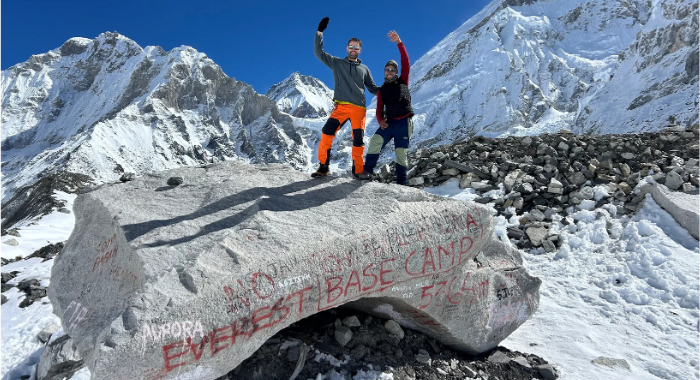
Let’s clear up the biggest mystery first. Why are you being dragged out of your comfortable hotel bed in Thamel at 1AM to drive to a district you have never heard of?
It is not because trekking agencies want to torture you. It all comes down to a strict mandate from the Civil Aviation Authority of Nepal (CAAN).
To understand why this rule exists, you just need to look at Kathmandu’s Tribhuvan International Airport (TIA). TIA operates on exactly 1 single runway. Every single international flight – from massive wide-body jets arriving from Dubai to regional flights from Delhi – shares the exact same strip of tarmac as the tiny 16 seater Twin Otter planes trying to fly to Lukla.
During the peak Everest trekking seasons, the sky traffic was turning into a complete nightmare. You had international flights stuck in holding patterns for 2 hours because a cluster of domestic flights needed to take off for the mountains. Worse, flights to Lukla require a very specific, clear weather window in the early morning. If TIA was congested, Lukla flights got delayed. By the time the runway cleared in Kathmandu, the notoriously bad afternoon winds would pick up in Lukla, and the flight would be entirely canceled.
To fix this chaos, the Nepal government made a hard operational shift. They decided to divide the flight departures based on the trekking seasons.
Here is the exact season breakdown you need to memorize:
- The Peak Season Rule (Spring: March to May & Autumn: October to November): If you are trekking during these prime months, your flight will almost certainly depart from Manthali Airport in Ramechhap. CAAN blocks the Kathmandu airport for most Lukla flights to ease congestion. Manthali acts as the dedicated eastern gateway for all Everest region trekkers.
- The Off-Peak Season Rule (Monsoon: June to September & Winter: December to February): If you are braving the cold winter or the rainy monsoon, air traffic is much lighter. During these months, you can usually take a Kathmandu to Lukla direct flight straight out of the TIA domestic terminal.
The shift to Ramechhap wasn’t designed to inconvenience you; it was actually designed to get you to the mountain faster. By moving the planes to Manthali Airport, airlines can run back-to-back flight waves without waiting for international jets to land. This drastically cuts down the number of overall flight cancellations.
So, when we at Desire Adventure tell you we are driving to Ramechhap, it is because we are following national aviation laws that are put in place to ensure you actually get to start your trek on time.
Option A: Kathmandu (TIA) to Lukla Direct Flight
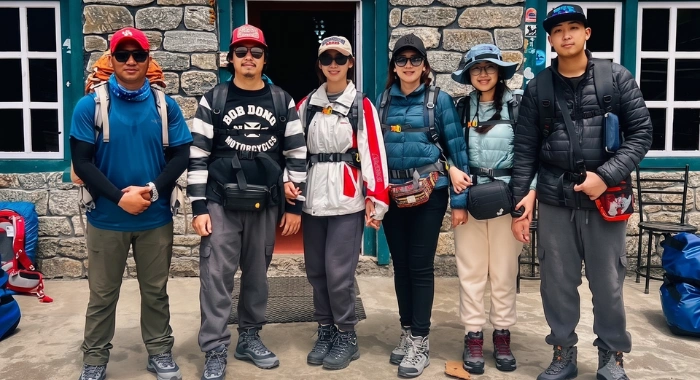
Let’s talk about the dream scenario first. A direct flight straight out of Kathmandu. If you are trekking in the off-peak months – like the colder winter stretch from December to February, or the rainy monsoon season from June to August – you generally get to skip the Ramechhap road trip entirely.
What to Expect: Instead of a midnight wake-up call, you get up in your Thamel hotel at a fairly normal time, say 5AM or 6AM. You grab a quick coffee, load into a private car, and take a short15 – 20 minutes ride to the domestic terminal at Tribhuvan International Airport (TIA). After a slightly chaotic check-in process at the Tara Air or Summit Air counters, you board a tiny 16 seater Twin Otter or Dornier aircraft. The direct Kathmandu to Lukla flight takes just 30-35 minute. You take off over the city smog, hit the mountains, and boom-you are landing at 2,840m.
The Perks: The benefits here are completely obvious. Convenience is king. You don’t lose a night of sleep bouncing around in the back of a jeep for 4-5 hours in the dark. You get to sleep in a real bed, use a clean bathroom, and start your trek to Phakding feeling physically rested and fresh. For many trekkers, bypassing the long-distance highway transit is a massive relief.
The Drawbacks (The TIA Trap): But here is the brutal reality of flying out of Kathmandu, and why it is actually a massive gamble. TIA operates on exactly 1 single runway. Domestic and international flights share the exact same strip of concrete. And guess who always gets priority? The massive international jets.
If a wide-body jet is landing, your tiny mountain plane is forced to wait on the tarmac or gets stuck in a long holding pattern. Why does this matter? Because Lukla flights operate on a microscopic weather window. You absolutely must land before the fierce afternoon mountain winds and valley fog roll in.
If TIA air traffic delays your takeoff by just 2 hours, by the time you reach the Everest airspace, the weather in Lukla might have turned to garbage. The result? The pilot turns the plane around, or the airline outright cancels the flight for the day. That is the ultimate trade-off of the Kathmandu direct flight. You save yourself a bumpy road trip, but you face a significantly higher risk of sitting in the domestic terminal all day while your trek gets delayed by 24 hours.
Option B: Ramechhap (Manthali) to Lukla Route
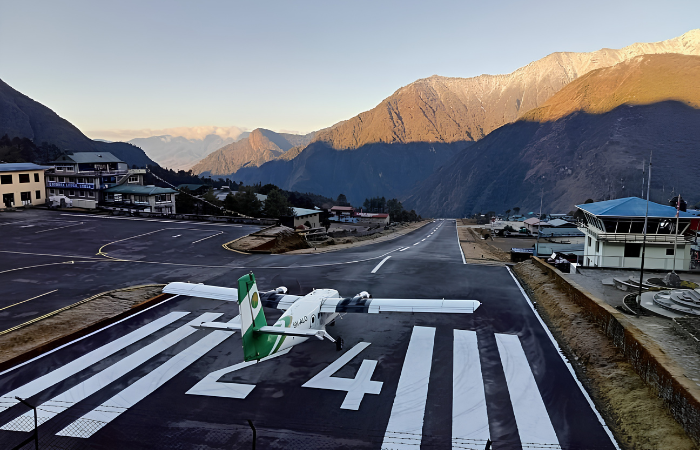
Alright, let’s talk about the peak season reality. If you are trekking in April or October, you are almost guaranteed to be taking the Ramechhap route. When people first hear about this, they usually groan. We get it. Nobody wants a midnight road trip before starting a massive trek.
But here is the secret most trekkers don’t realize until they are actually on the ground: The Ramechhap diversion is actually the smartest, most reliable way to get to Lukla.
The Timeline Breakdown: Here is exactly how your morning will look. At Desire Adventure, we handle the logistics so you don’t have to stress.
- The Midnight Departure: We will pick you up from your Thamel hotel between1AM and 2AM. Yes, it is early, but it is necessary to beat the Kathmandu traffic and secure the first flight wave.
- The Overland Journey: You will drive approximately 130km (80miles) east along the BP Highway to Manthali Airport in the Ramechhap district. The drive takes about 4 to 5 hours. The road is paved and incredibly winding.
- The Short Flight: You arrive at Manthali Airport around 6AM. Because Manthali is much closer to the Everest region (and has zero international air traffic), the flight from Ramechhap to Lukla takes a lightning-fast 15-20 minutes.
Why Ramechhap is Actually Safer and More Reliable:
Remember how we said Kathmandu direct flights are a gamble? Ramechhap is the solution. Manthali Airport sits at an elevation of just 474m. It doesn’t suffer from the morning fog and smog that constantly grounds flights in Kathmandu.
Because the flight is only 20minutes, airlines can run multiple back-to-back “waves” before the fierce afternoon mountain winds shut down the Lukla runway. If you fly from Ramechhap, your chances of actually reaching Lukla on your scheduled day jump exponentially.
The Comfort Strategy: The biggest complaint about the Ramechhap route is the exhausting drive. Many budget agencies cram trekkers into shared, cramped public buses that bounce along the winding highway. You arrive at the airport feeling completely battered.
At Desire Adventure, we do not compromise on your physical baseline. We coordinate private, comfortable tourist-plated vehicles with ample legroom. We encourage our clients to bring a neck pillow and sleep through the drive. By the time the sun comes up, you are at the airport, grabbing a quick tea, and walking onto the tarmac to start your trek.
The Helicopter Alternative (Bypassing the Ramechhap Drive)
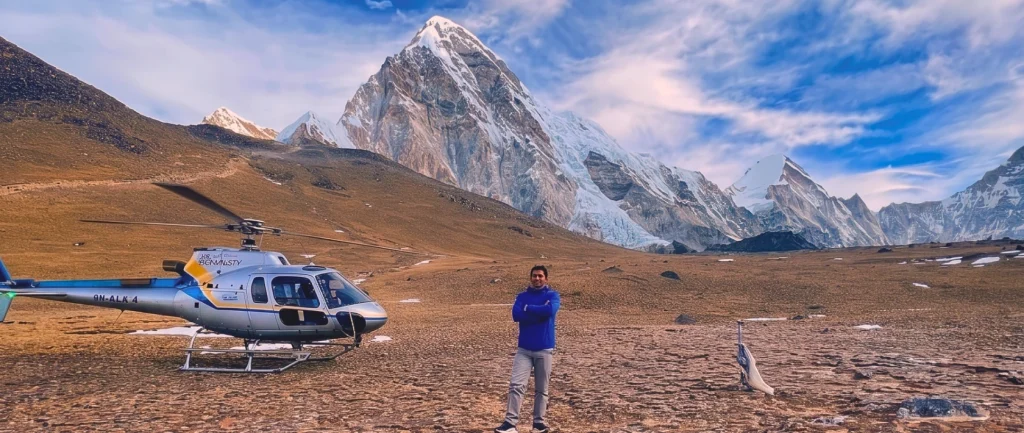
Let’s be completely honest. Not everyone wants to deal with a 1AM wake-up call and a bumpy midnight drive just to catch a tiny airplane. If you have some extra room in your trekking budget, there is a massive “cheat code” to get to the Everest region: taking a helicopter directly from Kathmandu.
How the Helicopter Flight Works:
Instead of dealing with the chaotic domestic terminals or the long highway to Ramechhap, you head to the helipad at Tribhuvan International Airport (TIA) in Kathmandu at a normal morning hour. From there, it is a straight, incredibly scenic 45 minutes to 50 minute flight directly into the mountains. Depending on the daily weather and air traffic congestion at Lukla, the pilot might even drop you slightly further up the trail at Phakding or Surke to keep things moving.
The Cost vs. Time Trade-off:
This is the part everyone asks Google about. How much does a Kathmandu to Lukla helicopter flight actually cost in 2026?
- Shared Helicopter: If you are flying solo or with a partner, Desire Adventure can usually group you with other trekkers to split the total cost. You can expect to pay around USD 400 to USD 600 per person for a shared seat.
- Private Charter: If you have a group of 4 to 5 people, chartering a private heli actually makes a lot of financial sense. The total cost for a private flight ranges from $2,200 to $2,500 USD per flight, depending on current fuel prices and seasonal demand.
When Should You Upgrade?
We highly recommend the helicopter upgrade for a few specific types of trekkers. If you are on a very tight vacation schedule and simply cannot afford a 1 or 2 day delay due to airplane cancellations, the heli is your best insurance policy. Helicopters can safely fly in much tighter weather windows than airplanes. It is also a total no-brainer for luxury trekkers or older clients who know that a grueling road trip will drain their physical energy before the trek even begins.
At Desire Adventure, we handle all the heli logistics for you. Even if you decide at the very last minute in Kathmandu that you just can’t face the drive, let us know. We can usually secure a heli seat for you with just 24 hours notice.
