

The Everest Base Camp (EBC) Trek is one of the most popular trekking destinations in the world. Every year, so many of people visit Nepal to experience the beauty of the Himalayas, explore Sherpa village, visit ancient monasteries, and stand at the base of the Mount Everest. The journey is filled with breathtaking landscapes, friendly local culture, and unforgettable memories, making it a dream destination for adventure lovers.
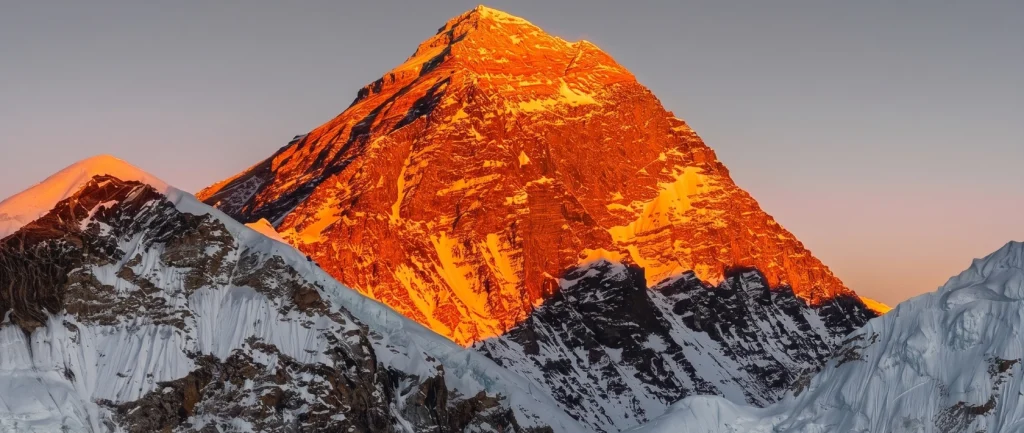
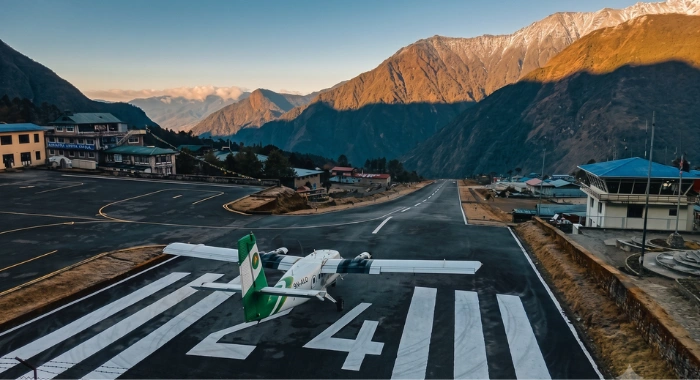
Although the trek does not require climbing experience or technical mountaineering skills, it is still a challenging high-altitude adventure. The trekking starts in Lukla at 2,860 meters (9,383 feet) and gradually climbs to Everest Base Camp at 5,364 meters (17,598 feet). As you gain altitude, the air becomes thinner, and your body receives less oxygen with every breath. This change in altitude is often a greater challenge than the daily walking distance.
Good physical fitness certainly helps, but it is not enough on its own. Your body also needs time to adjust to the thinner air, and that is where acclimatization becomes essential. A well-planned itinerary with proper acclimatization days allows your body to adapt naturally, helping reduce the risk of altitude sickness and increasing your chances of reaching Everest Base Camp safely. Understanding how acclimatization works is one of the best ways to prepare for a successful and enjoyable trekking experience.
What Are Acclimatization Days?
Acclimatization days are planned rest days included in the Everest Base Camp Trek itinerary to help your body adjust to the increasing altitude. These are not complete rest days where you stay inside the teahouse all day. Instead, you take a short hike to a higher elevation before returning to the same tea house to sleep. This simple method helps your body become familiar with thinner air while allowing it to recover at a lower sleeping altitude.
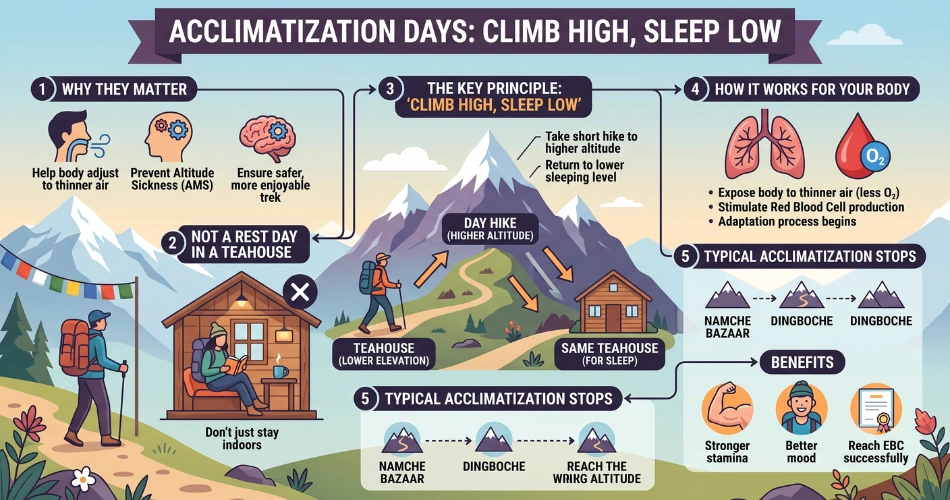
As you climb higher into the Himalayas, the air pressure decreases and there is less oxygen available. Your body needs time to adapt by increasing its breathing rate and producing more red blood cells, which carry oxygen throughout the body. This natural process cannot happen overnight, which is why acclimatization days are an important part of every well-planned Everest Base Camp trek.
Many people believe that young or physically fit trekkers do not need acclimatization, but this is a common misunderstanding. Altitude sickness can affect anyone, regardless of age, fitness level, or previous trekking experience. Even experienced hikers need enough time to adjust.
Acclimatization days also allow you to slow down and enjoy the journey. You can explore beautiful Sherpa villages, visit monasteries, take photographs, and admire spectacular mountain views. Rather than delaying your adventure, these days improve your safety, help your body recover, and increase your chances of successfully reaching Everest Base Camp.
Why Are Acclimatization Days Essential?
Acclimatization days are one of the most important parts of a safe and successful Everest Base Camp Trek. As you climb above 3,000 meters, the amount of oxygen available in the air gradually decreases. This means your body has to work much harder to perform even simple activities like walking uphill or climbing stairs. Without enough time to adapt, you may develop Acute Mountain Sickness (AMS), commonly known as altitude sickness.
The early symptoms of altitude sickness often include headaches, dizziness, nausea, tiredness, poor sleep, and a loss of appetite. If these symptoms are ignored and you continue climbing, they can become more serious and may require an immediate descent. This is why experienced trekking guides always recommend following a gradual itinerary with enough acclimatization days.
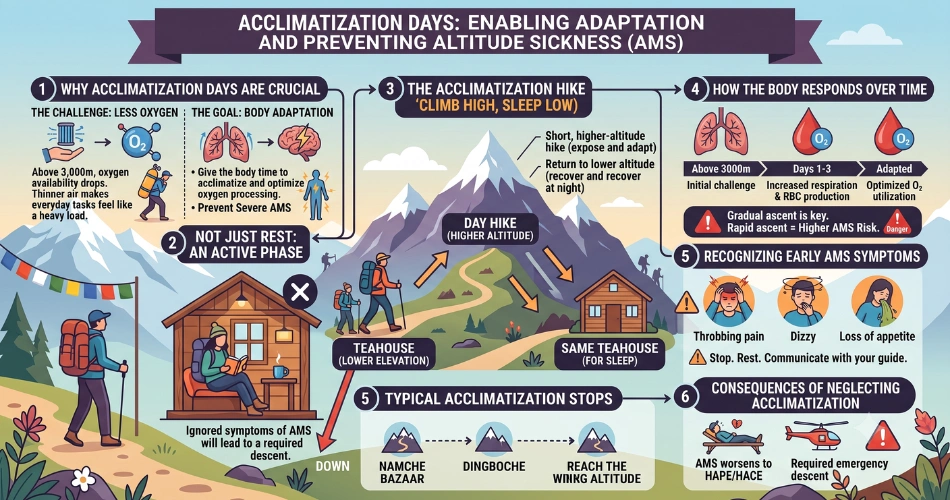
Besides improving safety, acclimatization also makes your trek much more enjoyable. When your body adjusts properly to the altitude, you are likely to have more energy, sleep better, recover faster, and enjoy the incredible scenery along the trail. Instead of struggling with headaches or exhaustion, you can fully appreciate the beauty of the Everest region.
Many trekkers dream of reaching Everest Base Camp as quickly as possible, but patience is the key to success. Taking an extra day to acclimatize is a small investment that greatly increases your chances of completing the trek safely. A slower pace often leads to a healthier, more comfortable, and more memorable adventure.
Key Acclimatization Stops on the Everest Base Camp Trek
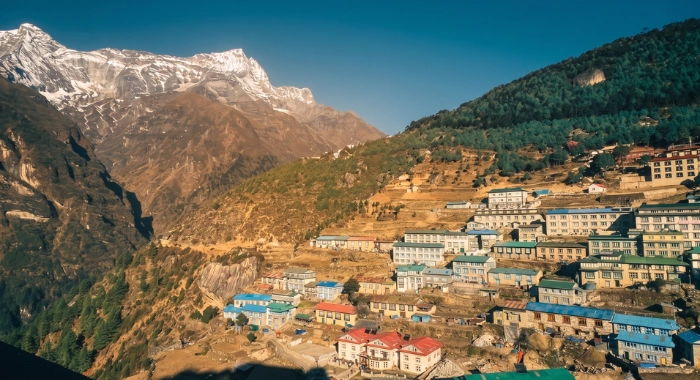
Most standard Everest Base Camp itineraries include two important acclimatization days, usually in Namche Bazaar and Dingboche. These villages are carefully chosen because they provide the ideal altitude for your body to adjust before continuing to higher elevations.
Namche Bazaar (3,440 m / 11,286 ft) is the first major acclimatization stop. After trekking for two days from Lukla, you spend an extra day here to help your body adapt. During this time, your guide will usually take you on a short hike to places such as the Hotel Everest View (HEV), Khumjung Village, or Kunde village. These hikes offer stunning views of Mount Everest, Ama Dablam, Lhotse, Taboche and other beautiful Himalayan peaks before you return to Namche Bazaar lodge to sleep.
The second acclimatization stop is Dingboche (4,410 m / 14,469 ft). By this stage, the air is much thinner, making proper acclimatization even more important. Most trekkers hike to Nangkartshang Peak or nearby viewpoints before returning to Dingboche for the night. This prepares the body for the higher sections of the trek, including Lobuche, Gorakshep, Everest Base Camp, and Kalapatthar.
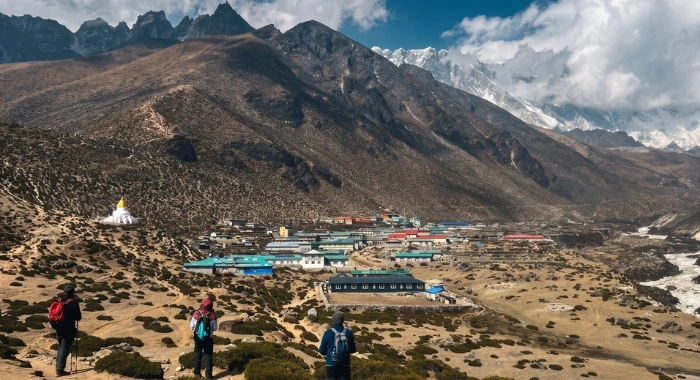
These two acclimatization stops are an essential part of a safe itinerary. They give your body time to adjust naturally while allowing you to enjoy some of the most beautiful mountain views and Sherpa culture in the Everest trek.
Hike High, Sleep Low – The Golden Rule of High-Altitude Trekking
One of the most important principles of high-altitude trekking is “Hike High, Sleep Low.” This simple but effective technique helps your body adjust safely to the thinner air as you climb higher into the Himalayas. Instead of spending the entire day resting, you hike to a higher elevation for a few hours and then return to a lower altitude to sleep. This gives your body time to experience the reduced oxygen levels while allowing it to recover overnight at a safer elevation.
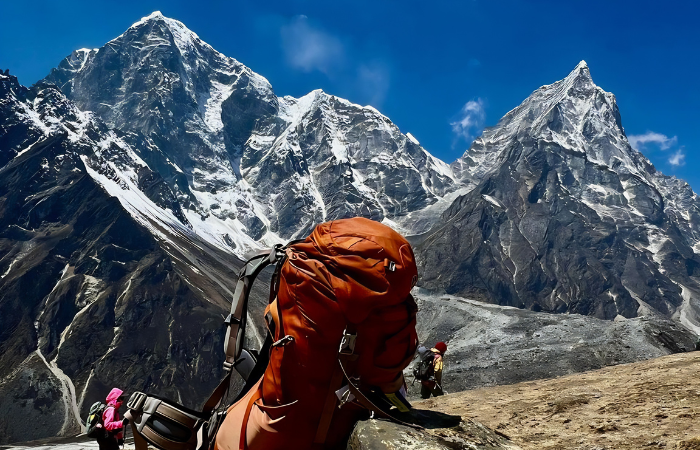
During the Everest Base Camp Trek, this method is followed on acclimatization days in Namche Bazaar and Dingboche. Your guide may lead you to places like Hotel Everest View, Khumjung Village, Khunde Village or Nangkartshang Peak before returning to your lodge. These short hikes are not meant to be exhausting but are carefully planned to improve your body’s natural adaptation process.
Following the “Hike High, Sleep Low” rule helps lower the risk of altitude sickness, improves your overall comfort, and prepares you for the higher sections of the trek. It is one of the safest and most effective ways to enjoy a successful Everest Base Camp adventure.
Tips for Making the Most of Acclimatization Days
Acclimatization days are more than just a break from trekking, they are an important part of reaching Everest Base Camp safely. To get the most benefit from these days, stay active instead of resting in your room all day. Join your guide on a short hike to a higher elevation and then return to your lodge to sleep. This helps your body adjust naturally to the altitude.
Drink plenty of water throughout the day, aiming for at least 2 to 3 liters to stay well hydrated. Eat nutritious meals, especially foods rich in carbohydrates such as Dalbhat (rice,curry and lentil soup) potatoes, pasta, and noodles, which provide the energy your body needs at high altitude. Avoid alcohol and smoking because they can slow the acclimatization process and increase the risk of dehydration.
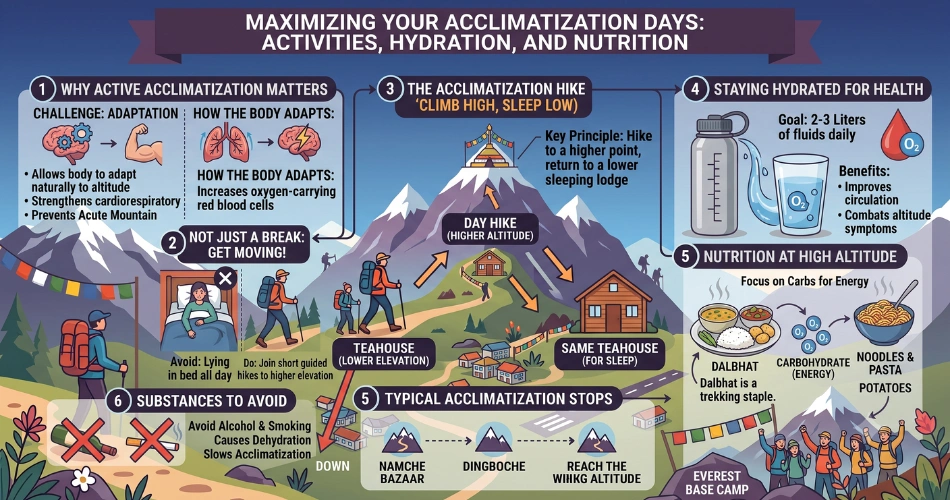
Get enough sleep, walk at a comfortable pace, and never ignore your guide’s advice. Use your free time to explore Sherpa villages, visit local monasteries, or simply enjoy the beautiful mountain scenery. A positive attitude, proper rest, and good preparation will help make your Everest Base Camp Trek safer, more enjoyable, and more successful.
Signs of Altitude Sickness to Watch For
Altitude sickness, also known as Acute Mountain Sickness (AMS), is one of the most common challenges during the Everest Base Camp Trek. It can affect anyone, regardless of age, fitness level, or trekking experience. Knowing the early symptoms allows you to take action before the condition becomes serious.
The first signs usually include a persistent headache, dizziness, nausea, loss of appetite, unusual tiredness, difficulty sleeping, or shortness of breath while resting. These symptoms often appear after gaining altitude too quickly without giving your body enough time to adjust. If you notice any of these warning signs, tell your trekking guide immediately. Never ignore them or continue climbing without professional advice.
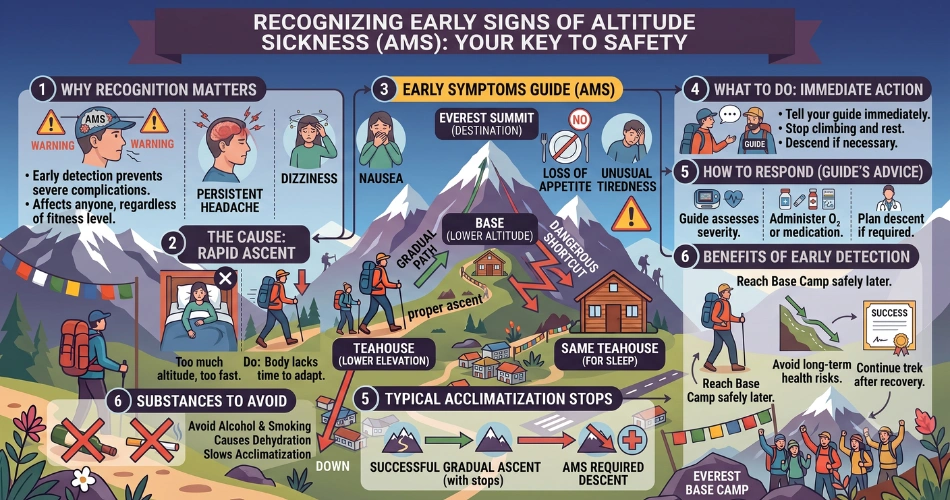
In more severe cases, altitude sickness can develop into serious conditions that require immediate descent and medical treatment. The safest approach is to follow your itinerary, take acclimatization days seriously, and communicate honestly with your guide about how you feel. Recognizing symptoms early and responding quickly is one of the best ways to stay safe and complete your Everest Base Camp Trek successfully.
Stay Hydrated and Eat Well
Proper hydration and good nutrition are essential for a successful Everest Base Camp Trek. At high altitude, your body works harder because there is less oxygen in the air. You also lose more fluids through breathing and physical activity, making dehydration more common than many trekkers realize.
Try to drink at least 2 to 3 liters of water every day, even if you do not feel thirsty. Warm drinks such as tea, soup, and hot lemon water are excellent choices because they help keep you hydrated while also keeping your body warm. Carrying a reusable water bottle and using purified drinking water is both convenient and environmentally friendly.
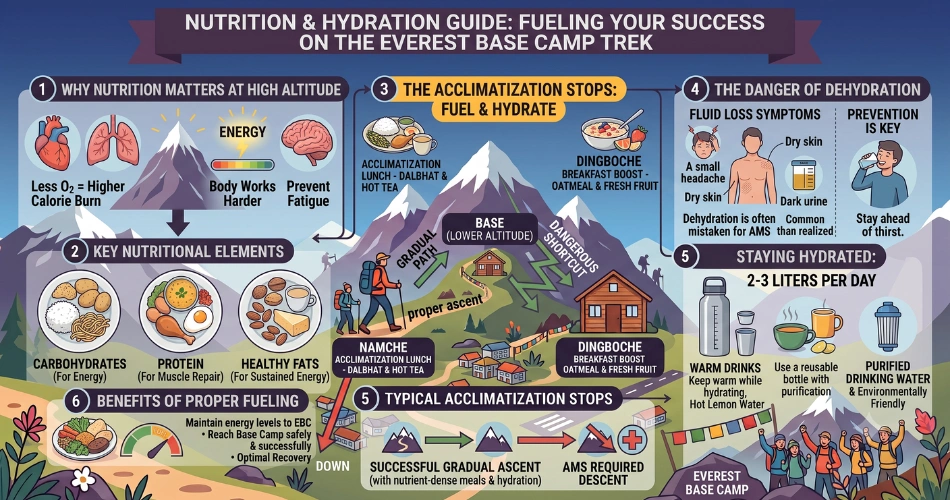
Eating enough is equally important. Choose meals that are rich in carbohydrates, such as Dalbhat, rice, potatoes, pasta, noodles, and porridge. These foods provide steady energy and are easy to digest at high altitude. Even if your appetite decreases, try not to skip meals. Staying well hydrated and eating balanced meals will help your body acclimatize more effectively, improve your energy levels, and make your trekking experience safer and more enjoyable.
Don’t Rush the Trek
One of the biggest mistakes trekkers make on the Everest Base Camp Trek is trying to reach the destination too quickly. While it is exciting to get closer to Mount Everest each day, walking too fast or skipping acclimatization days can increase the risk of altitude sickness. The Everest Base Camp Trek is not a race. It is a journey that should be enjoyed at a slow and steady pace.
As you climb higher, your body needs time to adjust to the lower oxygen levels. Walking slowly helps you breathe more comfortably, saves energy, and allows your body to adapt naturally. Experienced trekking guides often remind trekkers to take small, steady steps instead of rushing ahead.
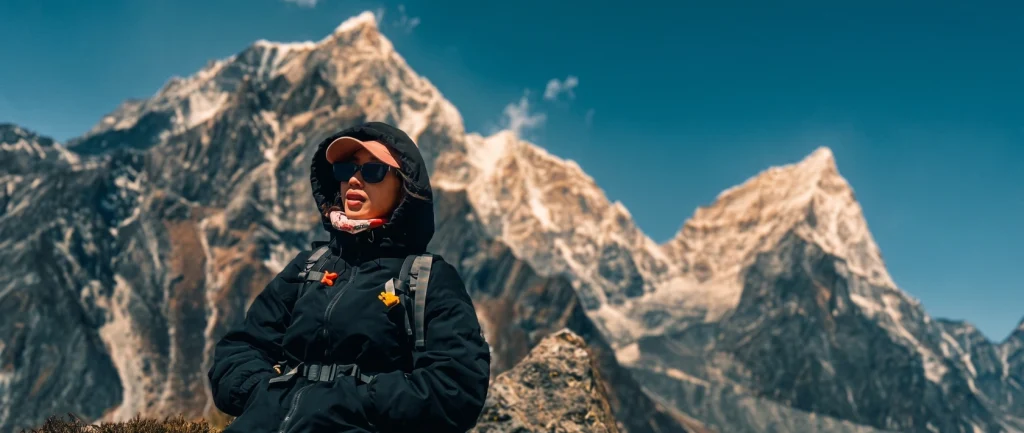
A slower pace also gives you more time to enjoy the beautiful scenery, take photographs, visit monasteries, and interact with the friendly Sherpa people. By focusing on the journey instead of the destination, you’ll have a safer, more enjoyable, and more memorable Everest Base Camp experience.
Listen to Your Body
Every person’s body reacts differently to high altitude. Some trekkers feel strong above 4,000 meters, while others may notice symptoms much earlier. This is why listening to your body is one of the most important safety tips during the Everest Base Camp Trek.
Pay attention to how you feel each day. If you experience a headache, dizziness, nausea, unusual tiredness, or shortness of breath, let your guide know immediately. These could be early signs of altitude sickness and should never be ignored.
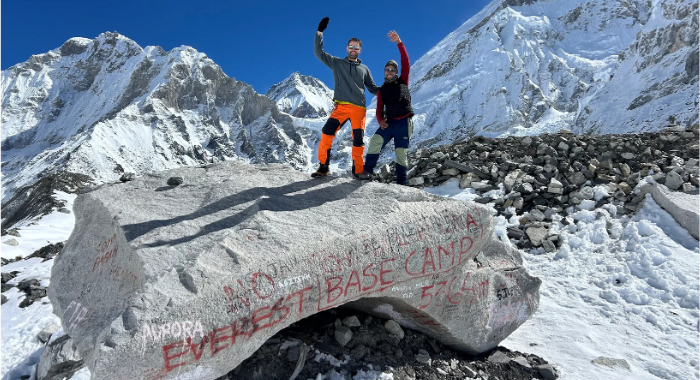
Avoid comparing yourself with other trekkers. Everyone acclimatizes at a different pace, and walking faster than others does not mean you are stronger. Your goal is to reach Everest Base Camp safely, not quickly.
Professional trekking guides have years of experience and know how to recognize altitude-related problems. Trust their advice and be honest about your condition. Listening to your body and taking action early can prevent small problems from becoming serious and will greatly improve your chances of completing the trek safely.
How Many Acclimatization Days Do You Need?
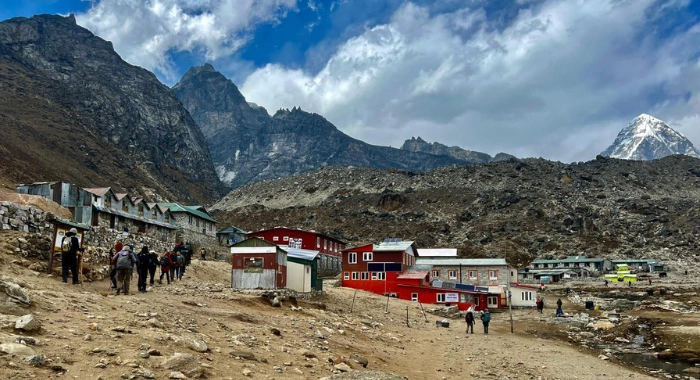
Normally, Everest Base Camp (EBC) Trek itineraries include two acclimatization days, and this is enough for most healthy trekkers. These important rest days are usually spent in Namche Bazaar (3,440 m) and Dingboche (4,410 m). Both locations are ideal because they allow your body to adjust gradually before you continue to higher elevations.
During these days, you will take a short hike to a higher point and return to the same village to sleep. This helps your body adapt to the thinner air without putting too much stress on it. If you are trekking at a slower pace, are older, or have experienced altitude sickness before, an extra acclimatization day may be helpful.
When choosing an Everest Base Camp package, make sure the itinerary includes enough time for proper acclimatization. Saving one or two days may seem attractive, but it can greatly increase the risk of altitude sickness. A well-planned itinerary gives you the best chance of reaching Everest Base Camp safely and comfortably.
Who Is Most at Risk of Altitude Sickness?
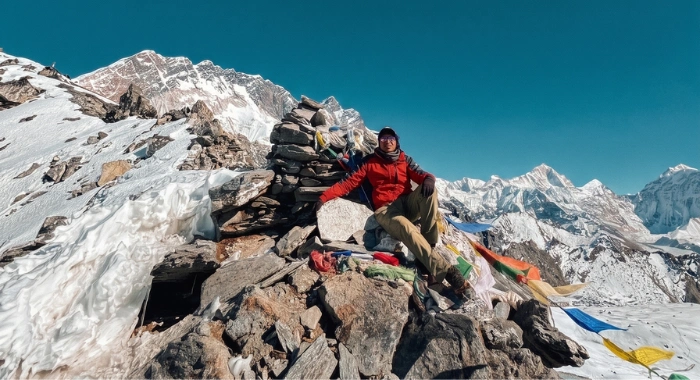
Altitude sickness can affect anyone, regardless of age, fitness level, or trekking experience. Many people believe that young, fit, or experienced hikers are protected from altitude sickness, but this is not true. Even professional athletes can develop symptoms if they climb too quickly without giving their bodies enough time to acclimatize.
The biggest risk factors are ascending too fast, skipping acclimatization days, dehydration, poor nutrition, lack of sleep, and ignoring early symptoms. These mistakes can make it difficult for your body to adjust to the lower oxygen levels at high altitude.
The good things is that most cases of altitude sickness can be prevented. Following a gradual itinerary, drinking plenty of water, eating healthy meals, walking at a steady pace, and listening to your guide are the best ways to stay safe.
Remember, success on the Everest Base Camp Trek depends more on patience than physical strength. Respecting the altitude and allowing your body enough time to adapt will greatly improve your chances of completing the trek successfully.
Can You Skip Acclimatization Days?
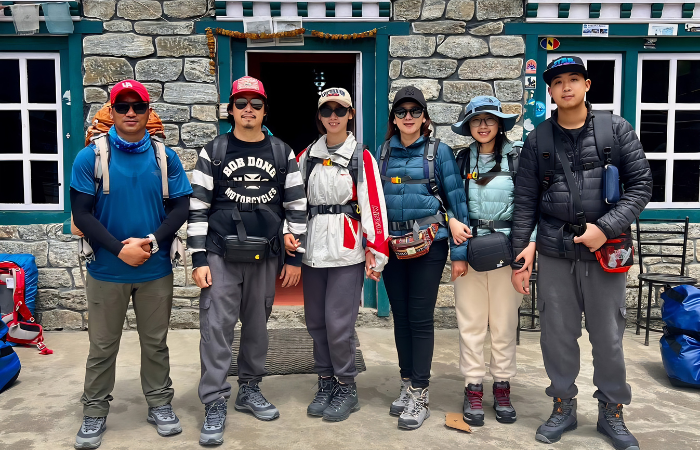
Many trekkers wonder if they can shorten the Everest Base Camp Trek by skipping acclimatization days. The simple answer is no. These rest days are included in the itinerary for your safety and should never be skipped unless advised by an experienced guide.
Although you may feel strong during the first few days, altitude sickness can develop suddenly as you climb higher. Skipping acclimatization days does not save much time, but it significantly increases the risk of becoming sick and having to end your trek early.
A well-planned itinerary allows your body to adjust gradually, making the journey safer and more enjoyable. Spending one extra day in Namche Bazaar or Dingboche is far better than being forced to descend because of altitude sickness.
If you have limited vacation time, it is better to choose a shorter trekking route than to rush the Everest Base Camp Trek. Proper acclimatization is one of the main reasons why thousands of trekkers successfully reach Everest Base Camp every year.
Conclusion
The Everest Base Camp Trek is one of the world’s greatest trekking adventures, but reaching 5,364 meters (17,598 feet) is about much more than physical fitness. As you climb higher into the Himalayas, the oxygen level becomes much lower, making acclimatization one of the most important parts of the journey.
A well-planned itinerary with proper acclimatization days gives your body enough time to adjust naturally to the thinner air. Walking slowly, staying hydrated, eating nutritious meals, getting enough rest, and following your guide’s advice all play an important role in preventing altitude sickness.
Remember that the Everest Base Camp Trek is not a race. The goal is to enjoy every step of the journey while staying healthy and safe. Take time to admire the spectacular mountain views, experience Sherpa culture, and appreciate the beauty of the Himalayas.
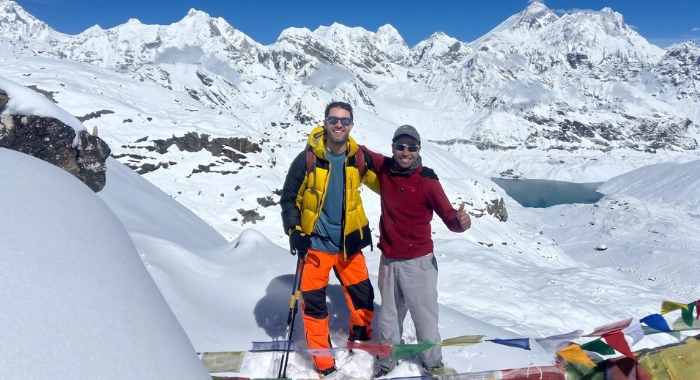
With patience, proper preparation, and respect for the altitude, trekkers of all ages and fitness levels can successfully complete this incredible adventure. A slow and steady approach is the key to making your Everest Base Camp Trek a safe, enjoyable, and truly unforgettable experience.
