

The Everest Base Camp Trek with Helicopter Return is an incredible way to experience the best of the Everest region – combining the adventure of trekking through the Himalayas with the comfort and excitement of a scenic helicopter flight.
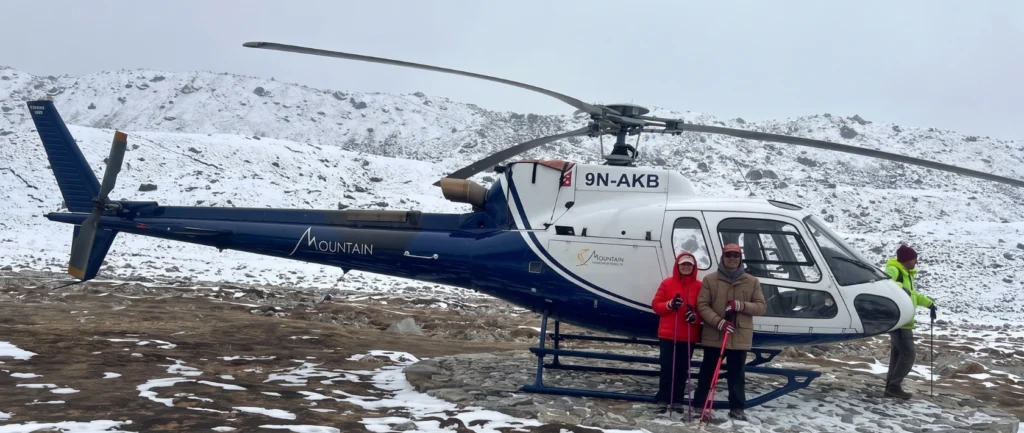
Reaching Everest Base Camp on foot is an achievement that stays with you for a lifetime. After days of trekking through rugged mountain trails, high-altitude landscapes, traditional Sherpa villages and cold Himalayan nights, finally standing at the foot of Mount Everest is an unforgettable experience. Surrounded by towering peaks, glaciers, prayer flags and the peaceful silence of the mountains, you truly feel the grandeur of the Himalayas. But the adventure doesn’t have to end at Base Camp.
Instead of retracting the entire trail of foot, you can return by helicopter. As the helicopter lifts off, the landscapes you experienced during the trek unfold beneath you from an entirely different perspective. The familiar trails, suspension bridges, Sherpa Villages, glaciers and snow-covered peaks of the Khumbu Valley appear spectacular from above.
This scenic flight not only saves several days of walking but also provides a unique opportunity to appreciate the incredible landscape of the Everest region from the air. It is the perfect combination of adventure, achievement and comfort.
Why Choose a Helicopter Return?
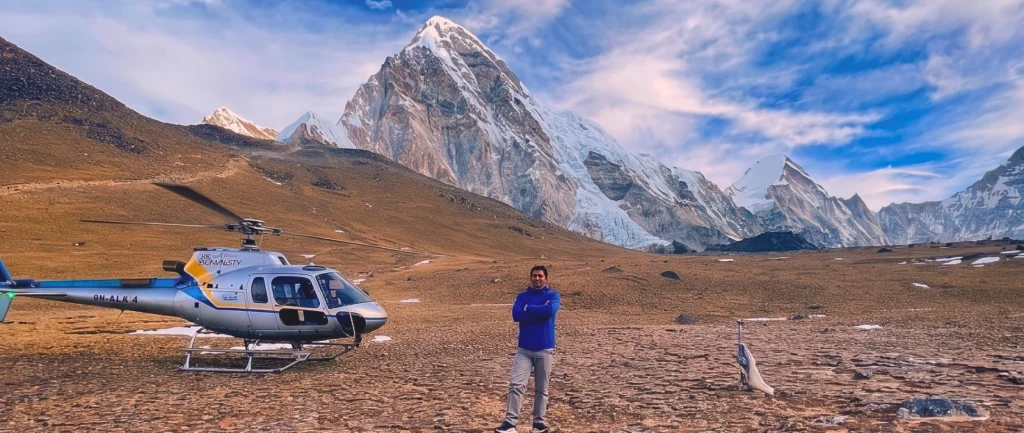
The traditional Everest Base Camp Trek usually requires several days of hiking back to Lukla after reaching Base Camp. A helicopter return provides a convenient alternative for travelers who want to reduce their trekking time without missing the major highlights of the Everest journey.
During the trek, you can explore famous Himalayan destinations such as Lukla, Namche Bazaar, Tengboche, Dingboche and Everest Base Camp, while allowing enough time for acclimatization. After reaching Base Camp, the helicopter takes you back toward Lukla or Kathmandu, depending on the itinerary and flight conditions.
From the air, you can enjoy spectacular views of the Khumbu Glacier, surrounding Himalayan peaks, deep valleys and the villages scattered along the trekking route. Seeing the same landscape from above creates a completely different perspective and makes the return journey just as memorable as the trek itself.
Everest Base Camp Trek with Helicopter Return for 2026
For travelers planning their Himalayan adventure in 2026, the Everest Base Camp Trek with Helicopter Return offers a practical way to experience one of Nepal’s most famous trekking routes while reducing the time and physical effort required for the return journey. Depending on the itinerary, the trek can be completed in around 12-16 days, with routes available for travelers seeking either a classic Everest Base Camp experience or a more challenging adventure such as the Everest Base Camp Trek via Cho La Pass with Helicopter return.

The Cho La route adds another dimension to the journey, taking trekkers through the spectacular high-altitude landscapes of the Everest region before reaching Everest Base Camp. After completing the trekking portion, the helicopter flight provides a comfortable and scenic way to conclude the adventure.
A Perfect Blend of Adventure and Comfort
The Everest Base Camp Trek with Helicopter return is deal for travelers who want to experience the excitement of the Himalayan trek without spending additional days retracing the same trail. You will still experience the essential elements of the Everest Adventure-walking through beautiful mountain landscapes, meeting the Sherpa people, exploring traditional villages, acclimatizing at high altitude, and finally reaching Everest Base Camp. The helicopter return simply adds comfort, saves time and offers an unforgettable aerial view of the route you just have conquered.
Whether you are planning your first Himalayan adventure or looking for a more convenient alternative to the traditional Everest Base Camp itinerary, a helicopter return can make the journey more efficient while preserving the sense of achievement and adventure. In this guide, we will cover everything you need to know about the Everest Base Camp Trek with Helicopter Return, including the itinerary, best seasons to travel, preparation and acclimatization, essential trekking gear, accommodation, costs, safety considerations and what you can expect along the trail.
Trek to Everest Base Camp. Experience the Himalayas on foot. Return with an unforgettable flight above the world’s highest mountains.
How Difficult Is the Everest Base Camp Trek with Helicopter Return?
The Everest Base Camp Trek with Helicopter Return is generally considered a moderately challenging high-altitude trek. You do not need technical climbing or mountaineering experience, but you should have a reasonable level of fitness and be prepared for long days of walking in changing mountain conditions.
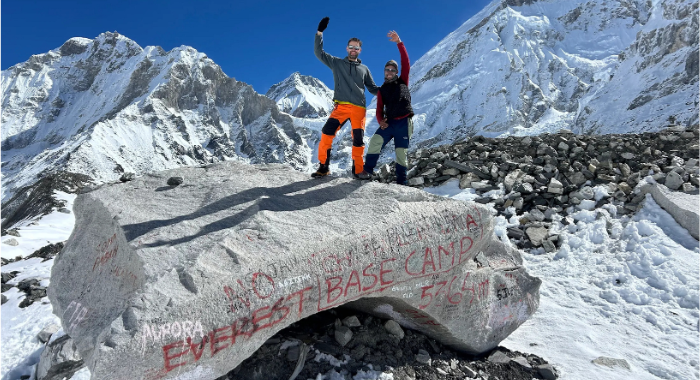
On most trekking days, you can expect to walk for around 5-7 hours, depending on the route, altitude, weather and pace of the group. The trail follows established mountain paths and includes stone staircases, suspension bridges, rocky sections and steady uphill and downhill stretches. While the terrain is not technically difficult, the high altitude is the biggest challenge.
As you gain elevation, the air becomes thinner and walking can fell considerably more demanding. The effects of altitude become particularly noticeable above 4,000 meters, with Gorak Shep at around 5,164 meters and Everest Base Camp at approximately 5,364 meters. Proper acclimatization and a gradual ascent are therefore essential parts of the journey.
How Much Does the Everest Base Camp Trek with Helicopter Return Cost?
The Everest Base Camp Trek with Helicopter Return typically costs around USD 2,350-3,379 per person, depending on the group size, accommodation, services and helicopter arrangement. Standard packages generally range from USD 2,679-2,959, while premium options with upgraded accommodation and additional comfort may cost around USD 3,300-3,650. The price usually includes trekking permits, an experienced guide, and meals during the trek, accommodation and the helicopter flight from the Everest region to Lukla or Kathmandu, depending on the itinerary.
Factors That Affect the Cost
- Group size: Larger groups generally have a lower per-person cost.
- Accommodation: Better lodges and upgraded Kathmandu hotels increase the price.
- Services: Private guides, porters and additional services can add the most.
- Helicopter: Shared flights are generally more affordable than private charters.
Overall, the helicopter-return option combines the adventure of trekking to Everest Base Camp with a faster and more comfortable return, making it a convenient choice for travelers with limited time.
Best Time for the Everest Base Camp Trek with Helicopter Return
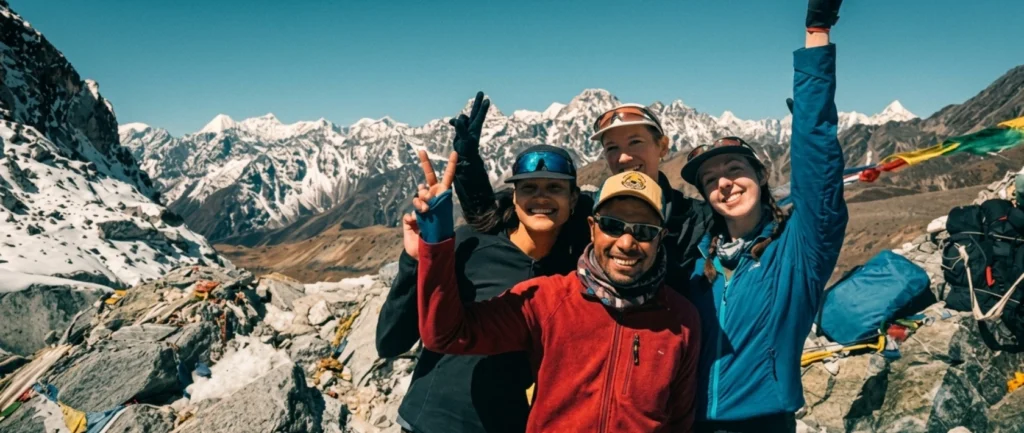
The best time for the Everest Base Camp Trek with Helicopter Return is during the spring (March to May) and autumn (September to November) seasons. These months generally offer stable weather, clear mountain views and favorable trekking conditions, making them ideal for both the trek and the scenic helicopter flight.
Spring (March – May)
Spring is one of the most popular seasons for the Everest Base Camp Trek. The weather gradually becomes warmer, the skies are often clear and the trails come alive with blooming rhododendrons and other mountain vegetation. April and May are particularly popular for excellent Himalayan views and comfortable trekking conditions.
Autumn (September – November)
Autumn is widely considered another excellent season for trekking in the Everest region. After the summer monsoon, the skies tend to clear, providing spectacular views of Everest and the surrounding peaks. October and November usually offer crisp weather, good visibility and relatively stable conditions for trekking and helicopter flights.
Monsoon: June to August
The summer monsoon brings frequent rain, clouds and reduced mountain visibility. Lower sections of the trail can become wet and slippery, while weather conditions may also cause flight delays or cancellations. For travelers prioritizing reliable trekking and helicopter conditions, this is generally a less favorable period.
Winter (December to February)
The skies are usually clear, offering excellent mountain views. However, temperatures can become extremely cold, particularly at higher elevations above Dingboche and Lobuche. Heavy frost, freezing temperatures, and harsh conditions can make trekking more challenging during this season.
Which Season Should You Choose?
For the best combination of clear mountain views, comfortable trekking conditions, and favorable helicopter-flight opportunities, consider traveling in spring or autumn. If your priority is excellent visibility and generally stable weather, October and November are particularly attractive choices.
Keep in mind that mountain weather can change quickly at any time of year. Helicopter flights are always subject to weather, visibility, and aviation safety conditions, so schedules may change when necessary.
Route and Itinerary
The Everest Base Camp Trek with Helicopter Return combines the classic trekking route through the Khumbu region with a convenient helicopter flight back from the Everest area. You follow the traditional trial on the way to Everest Base Camp, allowing you to experience the villages, monasteries, mountain landscapes and gradual altitude gain. After reaching the Everest Base Camp area and hiking to kala Patthar, you return to Kathmandu by helicopter instead of retracing the entire trekking route on foot.
The journey generally begins with a short flight from Kathmandu or Manthali (Ramechhap) to Lukla, the main gateway to the Everest region. From Lukla, the trail follows the Dudh Koshi River through Phakding before climbing toward Namche Bazaar, the commercial and cultural center of the Khumbu region. Namche is also an important acclimatization point.
After spending a day acclimatizing in Namche, the trail continues through Tengboche, Dingboche and Lobuche, with the landscape becoming increasingly rugged and alpine as the altitude rises. From Lobuche, trekkers continue to Gorak Shep and then make the challenging walk to the Everest Base Camp, located beside the Khumbu Glacier.
The following morning, an early hike to Kala Patthar provides one of the best panoramic viewpoints of Mount Everest and the surrounding Himalayan peaks, particularly around sunrise. After returning to Gorak Shep, trekkers board a helicopter for the return journey to Kathmandu, subject to weather conditions, flight operations, and helicopter availability.
This itinerary eliminates the long downhill trek from the Everest region, making the journey more time-efficient and reducing the physical demands of the return portion. However, the ascent to Everest Base Camp remains physically demanding, and proper acclimatization is essential.
Detailed Itinerary
Day 1: Arrival in Kathmandu -1,350m
Arrive in Kathmandu and transfer to your hotel. Take the day to rest after your journey and prepare for the trek. You can use this time to check your trekking equipment, organize your permits and documents, and meet your guide for a pre-trekking.
Day 2: Fly to Lukla and Trek to Phakding
Take a scenic flight from Kathmandu or Manthali (Ramechhap) to Lukla, depending on current flight operations. After landing, meet the trekking crew and begin walking toward Phakding. The trail follows the Dudh Koshi River through small mountain settlements, forests and suspension bridges. The relatively short first trekking day allows you to ease into the journey before the more demanding climbs ahead.
Trekking: Approximately 3-4 hours
Destination: Phakding
Day 3: Phakding to Namche Bazaar-3,440 meters
Today is one of the more demanding days at the beginning of the trek. The trail follows the Dudh Koshi River and crosses several suspension bridges before entering the Sagarmatha National Park. After gradually gaining altitude, the trail becomes steeper as it approaches Namche Bazaar. The final climb leads to the colorful horseshoe-shaped settlement of Namche, surrounded by impressive Himalayan peaks.
Distance: Approximately 9-11 kilometers
Walking Time: 5-6 hours
Destination: Namche Bazaar
Day 4: Namche Bazaar – Acclimatization day
Spend a day in Namche to allow your body to adjust to the increasing altitude. Rather than remaining completely inactive, a short acclimatization hike is recommended. You can explore the surrounding viewpoints and nearby settlements before returning to Namche. The afternoon can be spent relaxing in one of the town’s cafés, bakeries and lodges.
Walking: Approximately 3-4 hours, depending on the acclimatization
Overnight: Namche Bazaar
Day 5: Namche Bazaar to Tengboche- 3,860 meters
Leave Namche and follow a scenic trail with spectacular views of Everest, AmaDablam, Lhotse and other Himalayan peaks. The route initially follows a relatively gentle path before descending toward the Dudh Koshi River. From there, the trail climbs through Rhododendron and pine forests Tengboche. Tengboche is famous for its historic Buddhist monastery and its impressive mountain surroundings.
Distance: Approximately 1o km
Walking Time: 5-6 hours
Destination: Tengboche
Day 6: Tengboche to Dingboche – 4,410 meters
The trail continues through increasingly open and alpine landscapes. As you gain altitude, the forests become thinner and the surrounding terrain becomes more rugged. After passing through several small settlements, you reach Dingboche, a scenic village situated in the Imja Valley. The dramatic peaks of AmaDablam, Lhotse and other mountains dominate the landscape.
Distance: Approximately 10 km
Walking Time: 5-6 hours
Destination: Dingboche
Day 7: Dingboche – Acclimatization Day
Another acclimatization day is essential before ascending toward Lobuche and Everest Base Camp. Depending on your fitness level, weather and guide’s recommendation, you can take a gradual hike toward Nangkartsang Hill/Peak or another nearby viewpoint. The purpose is to gain additional altitude during the day and the return to Dingboche to sleep at a lower elevation. Take the remainder of the day to rest, hydrate and prepare for the higher-altitude stages of the trek.
Walking: Approximately 3-5 hours, depending on the hike
Overnight: Dingboche
Day 8: Dingboche to Lobuche – 4,910 meters
Today, the landscape becomes noticeably more rugged as you move deeper into the high Himalayas. The trail gradually climbs through the Khumbu Valley toward Duglha and then continues toward the Khumbu Glacier. Along the way, you pass memorials dedicated to climbers and mountaineers who lost their lives in the Everest region. The final section leads to Lobuche, where the thin air and high altitude make the days walk more demanding.
Distance: Approximately 10-11 km
Walking Time: 5-6 hours
Destination: Lobuche
Day 9: Lobuche to Gorak Shep and Everest Base Camp – 5,364 meters
This is one of the most anticipated days of the trek. Start early from Lobuche and follow the trail toward Gorak Shep. After a short break, continue toward Everest Base Camp, following the rugged trail alongside the Khumbu Glacier. The terrain is rocky and uneven, and the high altitude makes even a moderate walking pace feel strenuous. After reaching Everest Base Camp, spend some time taking in the surrounding glacier and the Himalayan scenery before returning to Gorak Shep for the night.
Distance: Approximately 14-15 km total
Walking Time: Approximately 7-8 hours
Destination: Gorak Shep
Important: Everest Base Camp is the destination of the trek, but Mount Everest itself is not necessarily visible from the base camp. For the classic panoramic view of Everest, the Kala Patthar viewpoint the following morning is generally the highlight.
Day 10: Kala Patthar Sunrise Hike and Helicopter Return
Begin the day early with a hike toward Kala Patthar, one of the most famous viewpoints in the Everest region. The climb is challenging because of the high altitude, but reaching the viewpoint around sunrise can provide spectacular views of Mount Everest, Nuptse, Pumori, and the surrounding Himalayan peaks.
After enjoying the views, descend to Gorak Shep for breakfast and prepare for the helicopter journey.
A helicopter then takes you from Gora Shep or the designated nearby landing area toward Kathmandu, depending on weather, aviation conditions, landing permissions, and operational arrangements.
The helicopter return replaces the multi-day descent on foot, significantly shortening the overall journey and reducing the physical demands of the return section.
Early-morning hike: Approximately 2–3 hours, depending on the route and pace
Helicopter: Gorak Shep/nearby landing area to Kathmandu, subject to conditions
overnight: Kathmandu
Day 11: Departure
After breakfast, transfer to the airport for your onward flight. Your Everest Base Camp adventure concludes after experiencing the classic Khumbu trekking route and returning to Kathmandu by helicopter.
Route at a Glance
Kathmandu → Lukla → Phakding → Namche Bazaar → Tengboche → Dingboche → Lobuche → Gorakshep → Everest Base Camp → Kala Patthar → Helicopter to Kathmandu
Important Notes
- Acclimatization: The itinerary includes acclimatization days in Namche Bazaar and Dingboche to help your body adjust to increasing altitude.
- High-altitude trekking: The section from Dingboche onward is physically demanding because of the elevation and reduced oxygen levels.
- Weather: Helicopter flights are highly dependent on weather and visibility. If conditions prevent the helicopter from operating, the return arrangements may need to change.
- Flight arrangements: Lukla flights may operate from Kathmandu or Manthali (Ramechhap), depending on seasonal flight schedules and airport operations.
- Helicopter return: The exact pickup location and flight routing can vary according to weather, landing conditions, aviation regulations, and operational requirements.
- Itinerary flexibility: Walking times and distances are approximate. Actual trekking times can vary according to weather, trail conditions, acclimatization, fitness level, and group pace.
- Altitude awareness: Reaching Everest Base Camp involves substantial altitude gain. Trekkers should follow their guide’s advice, maintain adequate hydration, walk at a controlled pace, and take altitude-related symptoms seriously.
How Long Does the Everest Base Camp Trek with Helicopter Return Take?
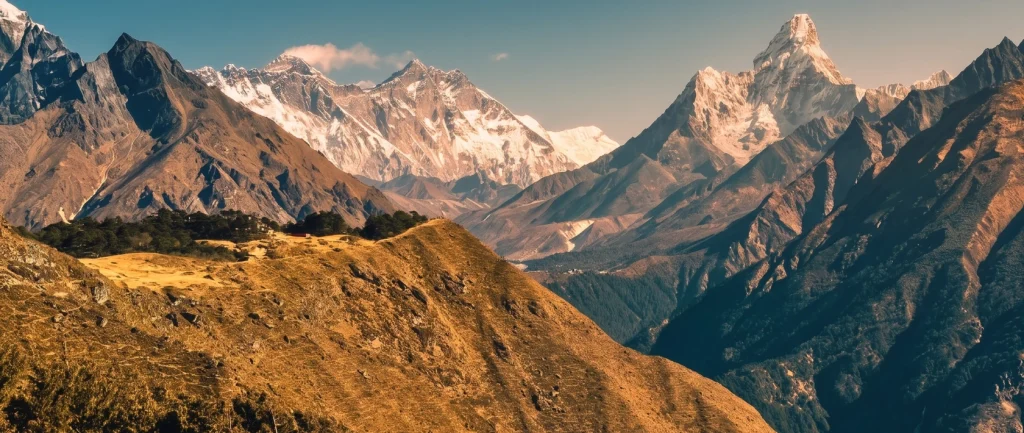
The Everest Base Camp Trek with Helicopter Return usually takes 9-12 days, depending on the itinerary, acclimatization schedule, trekking pace and weather conditions. The journey begins with a scenic flight from Kathmandu to Lukla, followed by an unforgettable trek through the beautiful Khumbu Valley, with acclimatization stops in Namche and Dingboche. After reaching Everest Base Camp (5,364 m) and enjoying the spectacular sunrise from Kala Patthar (5,545m), the return journey is made by helicopter. This saves 3-4 days of downhill trekking, reduces physical strain and offers breathtaking aerial views of the Everest region.
Combing adventure, stunning Himalayan Scenery and comfort, this 9-12 days journey is an ideal way to experience Everest Base Camp while making the return quicker and more convenient.
Permits and Required Equipment
For the Everest Base Camp Trek with Helicopter Return, trekkers need the necessary TIMS card, Sagarmatha National Park Entry Permit and Khumbu Pasang Lhamu Rural Municipality permit/fee. Everest Base Camp is among the routes where a licensed guide and agency-issued TIMS are required.
Essential Equipment
- Comfortable, well-broken-in trekking boots
- Warm down Jacket and waterproof/windproof layers
- Thermal layers, gloves, warm hat and trekking socks
- Comfortable daypack with rain cover
- Sunglasses and strong sunscreen
- Warm sleeping bag suitable for high altitude
- Water bottle/hydration system and purification tablets
- Trekking poles and headlamp
- Personal first-aid kit and essential medicines
- Power banks, chargers and basic toiletries
Since, temperatures drop significantly at higher elevations, warm, lightweight and waterproof clothing is especially important. With the helicopter return, you can keep your luggage lighter and avoid carrying several days of supplies for the descent.
Altitude, Acclimatization and Safety
Altitude is one of the biggest challenges on the Everest Base Camp trek. The trek is not especially technical, but the increasing elevation can make walk more difficult because the air contains less oxygen. The journey starts in Lukla at around 2,860 meters and gradually rises to 5,364 meters at Everest Base Camp. Because your body needs time to adjust to the lower oxygen levels, a gradual ascent is essential. A well-planned trekking itinerary includes acclimatization days, usually in places such as Namche Bazaar and Dingboche. These days are not simply for resting. Trekkers often take short hikes to higher elevations and then return to sleep at a lower altitude. This helps the body adapt to the changing conditions without putting it under too much steps.
Maintaining a comfortable walking pace is also important. Staying hydrated, eating enough nutritious food, and getting adequate rest can help your body cope with the altitude. One of the biggest mistakes first-trekkers make is ascending too quickly, which can increase the risk of altitude sickness.
Safety also requires good preparation and awareness throughout the journey. Experienced guides can monitor trekkers for sign of altitude sickness and change the itinerary when necessary. Weather in Everest region can change rapidly, so starting early and remaining flexible are important. Before the trek, it is helpful to review your itinerary, understand the risks of high altitude, and prepare an appropriate packing list. With proper acclimatization, a steady pace, good preparation and guidance from experienced professionals, trekkers can enjoy the Everest Base Camp journey more safely and confidently.
How to Prepare for the Everest Base Camp Trek with Helicopter Return
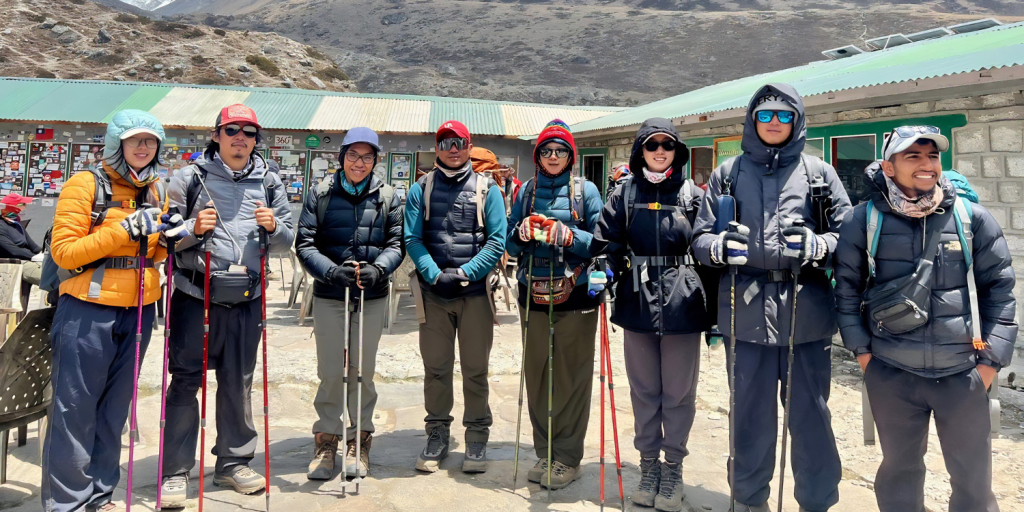
The Everest Base Camp trek with a helicopter return is challenging but manageable with proper preparation. Although the helicopter makes the return journey easier, you still need to trek to high altitude, so fitness, acclimatization, and the right equipment are important.
- Build your fitness: Regular walking, hiking, stair climbing, cycling, or jogging can improve stamina. Practice walking for several hours with a light backpack and strengthen your legs and core.
- Prepare for altitude: The trek reaches 5,364 meters at Everest Base Camp. Follow a gradual itinerary with acclimatization days in places like Namche Bazaar and Dingboche. Walk slowly, stay hydrated, eat well, and be aware of altitude sickness symptoms.
- Pack wisely: Bring comfortable trekking boots, warm layered clothing, a sleeping bag, trekking poles, sun protection, and any necessary medication. A good packing list and detailed itinerary will help you stay comfortable and prepared throughout the trek.
FAQs
- What is the Everest Base Camp Trek with Helicopter Return?
It is a trekking journey to Everest Base Camp followed by helicopter flight back to Kathmandu or Lukla, depending on the itinerary. This saves several days of downhill trekking.
- How long does the trek usually take?
Most Everest Base Camp treks with helicopter return take around 9-12 days, depending on the itinerary, acclimatization schedule and weather conditions.
- How difficult is the Everest Base Camp Trek with Helicopter Return?
It is considered moderate to challenging because of the high altitude and long walking days. Good fitness and proper acclimatization are important.
- What is the highest altitude reached?
Everest Base Camp is at approximately 5,364 meters (17,598 feet) above sea level. Some itineraries also include hikes to higher viewpoints such as kala Patthar.
- Do I need previous trekking experience?
No. Previous high-altitude trekking experience is helpful but not essential. Regular exercise, good preparation and a gradual itinerary can make the trek manageable for beginners.
- Is acclimatization necessary if I return by helicopter?
Yes. The helicopter only shortens the return journey; you still spend several days trekking at high altitude. Acclimatization days are essential for reducing the risk of altitude sickness.
- When is the best time for the trek?
The best seasons are generally spring (March-May) and autumn (September-November), when the weather and mountain visibility are usually favorable.
- What should I pack for the trek?
Essential items include comfortable trekking boots, warm layers, a sleeping bag, trekking poles, sunglasses, sunscreen, a water bottle, personal medication and a small daypack.
- Is the helicopter return safe?
Helicopter flights depend on weather and visibility. Experienced operators and pilots follow aviation safety procedures, but flights may be delayed or rescheduled when conditions are unsuitable.
- What happens if the helicopter cannot fly?
If weather prevents the helicopter from operating, the flight may be delayed or an alternative arrangement may be made.
It is important to keep some flexibility in your travel schedule.
- Can beginners do the Everest Base Camp Trek with Helicopter Return?
Yes. Beginners can complete the trek with proper physical preparation, a sensible itinerary, acclimatization and guidance from experienced trekking professionals.
- Why choose a helicopter Return?
The main advantage is saving time and energy. Instead of walking several days back to Lukla, you can fly out after completing the trek and enjoy on aerial view of the Himalayan landscape.
Why Choose Desire Adventures for the Everest Base Camp Trek with Helicopter Return?
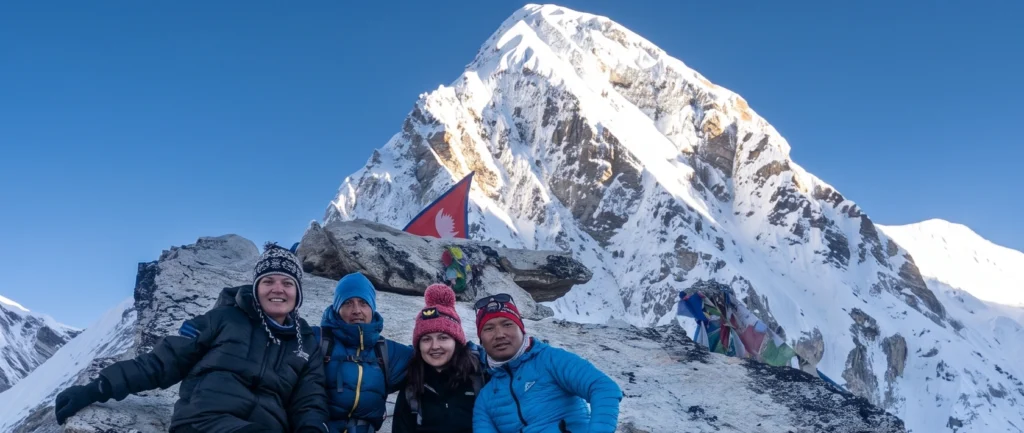
Choosing the right trekking company can make your Everest Base Camp experience safer, smoother and more enjoyable. Desire Adventures offers a well-organized Everest Base Camp Trek with Helicopter Return, combining adventure, comfort and professional support.
- Experienced local guide: Our knowledgeable and experienced guides understand the Everest region, altitude challenges, local culture and mountain conditions.
- Carefully planned itineraries: We design itineraries with proper acclimatization days to help you adjust safely to the high altitudes.
- Safety-focused approach: Your health and safety are our priorities. Our guides monitor your condition throughout the trek and provide assistance when needed.
- Helicopter return: After reaching Everest Base Camp, you can save several days of downhill trekking by returning by helicopter, making the journey more comfortable and time-efficient.
- Personalized Service: We focus on small groups and personalized attention, allowing our team to better understand and support each trekker’s needs.
- Local expertise and support: Our local team provides assistance with logistics, permits accommodation, transportation and other arrangements throughout the journey.
- Memorable Himalayan experience: From traditional Sherpa villages and monasteries spectacular views of Everest and the surrounding peaks, we help you experience the best of the Everest region.
With Desire Adventures, you can focus on enjoying the journey the journey while our experienced team takes care of the important details. Our goal is to make your Everest Base Camp Trek with Helicopter Return safe, comfortable, well-organized and unforgettable.
